Fabric Mill Worker Job Description
The occupations that keep a textile mill running — spinning, warping, weaving, knitting, inspection and finishing work
Fabric mill worker is not one job but a family of them — the people who turn fibre into cloth inside a textile mill. A mill takes in cotton, wool, synthetic staple or filament yarn and runs it through a chain of processes: opening and spinning fibre into yarn, warping and sizing yarn for the loom, weaving or knitting it into fabric, then inspecting, dyeing, finishing and rolling the cloth for shipment. Mill workers staff every stage, minding machines that run around the clock, catching faults the moment they start, and keeping production moving safely. It is the foundation workforce of the entire fashion industry: without mill cloth, nothing downstream exists.
More Production Job Descriptions by Letter:
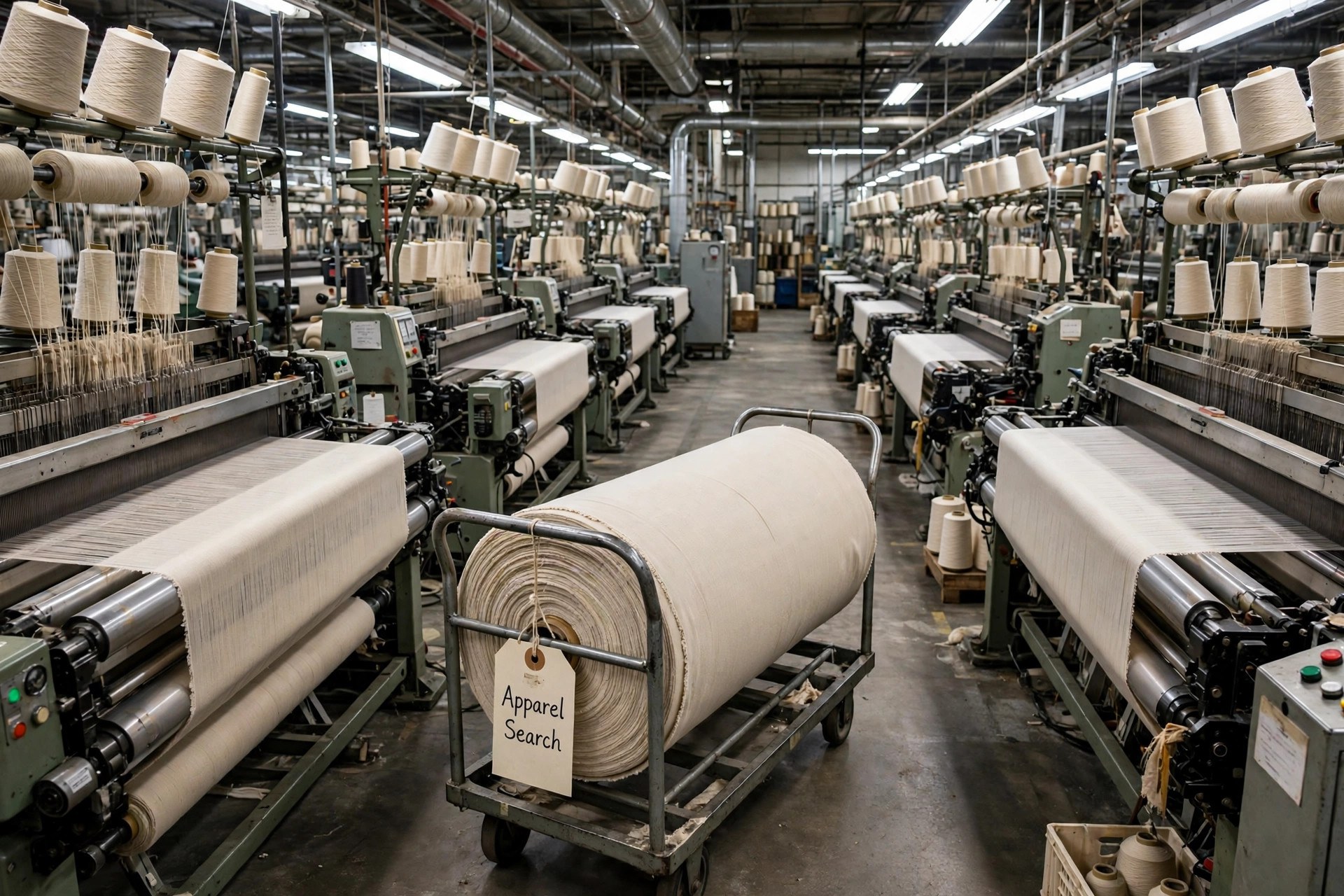
The Jobs on a Mill Floor
In spinning, workers operate carding, drawing, roving and spinning frames that convert cleaned fibre into yarn of a specified count, piecing up broken ends and doffing full packages. In preparation, warping and sizing crews build the warp beams that looms depend on — a sizing fault here becomes a weaving fault for days. Weavers and knitters mind banks of looms or knitting machines, patrolling for broken ends, weft faults and mechanical stops, and restarting production to a quality standard rather than merely a speed.
Downstream, cloth inspectors examine fabric over inspection frames, marking and grading faults; finishers run the stenter, calender and other finishing equipment that gives cloth its final hand and dimensions; and warehouse crews roll, wrap, label and dispatch. Around all of them work the mill's maintenance fitters, electricians, quality technicians and shift supervisors. When people say 'mill worker' they may mean any of these — which is why job adverts name the department, and why experience in one mill process rarely covers the whole floor.
Mills are also where fabric quality is decided long before any inspector sees the cloth. The care a preparation crew takes with a warp, the consistency of yarn a spinning team holds, and the honesty with which faults are marked rather than hidden determine whether the finished roll sews cleanly in a garment factory months later and thousands of miles away. Mill workers who grasp that downstream story — who picture the garment while minding the loom — are consistently the workers supervisors build a shift around.
Running and Minding the Machines
Mill work is machine minding at scale. A weaver may be responsible for dozens of looms; a spinner for hundreds of spindles. The skill is patrol and pattern-recognition: hearing a machine's note change, spotting a repeating fault that signals a mechanical cause rather than random breakage, and stopping a machine before it weaves a fault into yards of cloth. Workers record production, waste and stops, follow the mill's quality procedures, and hand over cleanly between shifts — mills run nights, and the incoming shift inherits whatever the outgoing shift failed to note.
Safety shapes everything. Looms, cards and spinning frames carry fast-moving parts, mills are noisy enough to require hearing protection, and fibre dust demands respiratory care and rigorous housekeeping. Mill workers are trained to lock out machines before intervention, never to reach into moving equipment, and to treat cleaning and oiling routines as part of the job rather than interruptions to it. Modern mills add computerised monitoring — screens flag stops and efficiency by machine — but the floor still runs on attentive people walking their sets.
Skills and Abilities the Work Requires
Mechanical aptitude comes first: mill workers who understand what their machines are doing fix small problems early and describe big ones precisely to the fitters. Manual dexterity matters in the piecing, threading and knotting tasks repeated hundreds of times a shift, and stamina matters throughout — the work is standing, walking and reaching, in shifts that include nights and weekends because looms earn nothing standing still.
Quality attention separates a mill hand from a mill worker a supervisor trusts. Faults caught at the machine cost seconds; the same faults found at final inspection cost the roll. Reliability is the other prized trait: a mill is a chain, and an unmanned set of looms stops warp prepared by one crew from becoming cloth for the next. Numeracy for counts, lengths and production records, and the discipline to keep them honestly, round out the profile employers screen for.
Training, Qualifications and Career Path
Mill workers are trained largely in the mill. New starters typically begin as learners or helpers on one process, supervised until their quality and output meet standard, then broaden across machines as vacancies and aptitude allow. Formal textile qualifications help for technician and supervisory tracks, but for floor roles employers test attitude, dexterity and shift reliability rather than certificates. Apprenticeships in textile manufacturing, where offered, combine floor training with the underlying fibre and machine theory.
Progression runs to senior operative, overlocker or chargehand roles, then shift supervision and production management; sideways moves lead into quality inspection leadership, maintenance trades, dyeing and finishing specialisms, or the laboratory. Mill experience is also respected far beyond the mill gate — fabric technicians, developers and sourcing staff who began on a mill floor carry a feel for cloth that office-trained colleagues spend years acquiring.
Common Questions
What shifts do fabric mill workers work?
Most mills run continuous production — typically two or three rotating shifts covering nights and often weekends — because weaving and spinning equipment is capital-intensive and cloth orders run to deadlines. Shift premiums usually apply to nights, and rosters are published well ahead.
Is mill work one job or many?
Many. Spinning, warping, weaving, knitting, inspection, finishing and warehousing are distinct occupations with different machines and skills, grouped under the mill worker heading because they share a workplace. Job adverts name the department and process, and experience transfers best within a process family.
Do you need qualifications to work in a fabric mill?
For floor roles, usually not formally — mills train their own processes and value dexterity, reliability and willingness to work shifts. Textile qualifications become important for technician, quality and supervisory roles, and apprenticeships combine both routes.
More to Explore
Fabric Resources
References & Further Reading
More Job Description Categories
- Buying Job Descriptions
- Design Job Descriptions
- Marketing & PR Job Descriptions
- Miscellaneous Job Descriptions
- Planning & Allocation Job Descriptions
- Production & Sourcing Job Descriptions (current)
- Sales & Selling Job Descriptions
- Transportation & Warehouse Job Descriptions