Shipping & Receiving Job Description
Both directions of the dock — checking clothing in and shipping it out in one combined role
Shipping and receiving is the combined dock role of the clothing warehouse: one job that works freight in both directions. Inbound, it receives deliveries of garments, checks them against orders and delivery notes, and books the stock into the building. Outbound, it prepares finished orders for dispatch, documents them and loads the carriers who collect them. Large distribution centres split these into separate receiving and shipping departments with their own managers; smaller warehouses, branches and factories combine them, and the combined role — broader than either half alone — is the one this page describes.
More Transportation & Warehouse Job Descriptions by Letter:
Receiving: Checking Clothing Into the Building
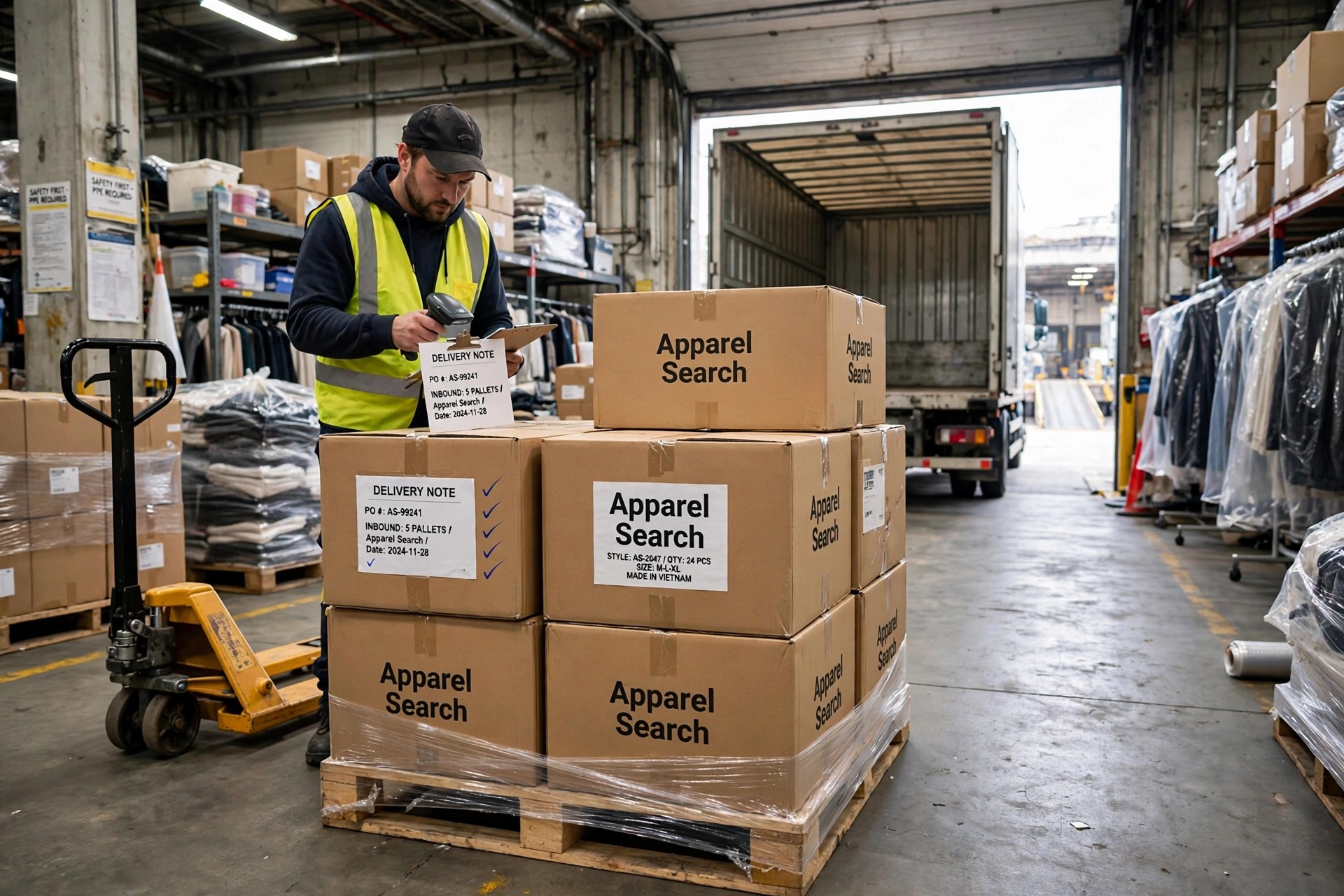
The receiving half of the day starts at the dock door. Deliveries are unloaded and counted: cartons against the delivery note, cartons opened on a sampling basis against the purchase order — style, size, colour and quantity — with damage, shortage and wrong-goods discrepancies recorded at the door, while the evidence and the driver are still present. A shortage signed for as complete is a shortage the company has agreed to own, so the check is unhurried even when the dock is busy; the paperwork signed here is what the buying office and the accounts department will settle the supplier's invoice against.
Accepted stock is booked in: quantities entered or scanned into the stock system, cartons labelled with their locations or contents, and freight moved to its put-away or inspection area in the order the warehouse works. In apparel, receiving also meets quality: deliveries may route through a checking or pressing area before they become saleable stock, and the receiver's booking-in record is what releases them onward. The accuracy of this half of the role decides whether the stock system can be trusted by everyone who sells from it later.
Shipping: Sending Finished Orders Out
The shipping half reverses the flow. Picked orders are checked against their documents, packed and carton-labelled to the customer's requirements, weighed, measured where the carrier charges by size, and documented — the dispatch note, the carrier label, the manifest entry. The worker stages completed shipments by carrier and collection time, loads vehicles so that freight travels safely and in delivery order, and obtains the driver's signature that closes the company's responsibility for the goods as agreed.
Because the same person often received the stock last week that ships this week, errors are caught with unusual speed in combined operations: the carton that was booked in short is recognised when the pick comes up short, and the mislabelled size run is spotted by the hands that labelled it. Good shipping and receiving workers use that continuity deliberately, reporting the patterns they see — a supplier whose cartons always split, a style always packed a size out — to the warehouse supervisor while the evidence is still on the dock.
Dock Discipline, Equipment and Safety
The dock is the warehouse's most hazardous shared space, and the role works inside its discipline: vehicles banked and restrained before loading, dock levellers and doors operated correctly, pallets and cages stacked so they travel and store safely, pedestrian routes kept clear of staged freight. The worker uses the building's handling equipment — pallet trucks, trolleys, cages and, where trained and authorised, forklift trucks — and reports damage to racking, doors and equipment rather than working around it.
Housekeeping is operational, not cosmetic. Inbound and outbound freight staged in marked lanes, by direction and by time, is what allows a small dock to serve both flows without the morning's deliveries burying the afternoon's collections. The combined role owns that order physically: nothing is left 'somewhere on the dock', because in a combined operation the next person looking for it is usually the same worker, against a carrier's deadline.
Skills, Qualifications and Career Path
Employers look for practical reliability: careful counting and checking, legible and accurate paperwork, confident use of scanners and basic stock systems, and the physical fitness for a dock role that lifts, moves and stands through the shift. Experience in either a goods-in or a dispatch environment transfers directly, since the role is the union of the two; forklift authorisation, where the site uses trucks, is a genuine advantage and often trained in the job. What distinguishes strong candidates is discrepancy instinct — noticing that a count feels wrong before the paperwork proves it.
Progression runs toward specialisation or supervision. The worker may deepen into the receiving side within larger operations, into the shipping office alongside the shipping clerk and shipping manager described in this letter, or upward to dock and warehouse supervision under W in this category. The combined role is one of the best general educations in warehousing precisely because it touches every flow the building has: goods in, stock accuracy, orders out and carriers.
Common Questions
What does shipping and receiving mean as a job?
One combined dock role covering both directions of freight in a clothing warehouse: receiving and checking inbound garment deliveries against orders, booking stock in, then preparing, documenting and loading outbound customer shipments for carrier collection.
Why do smaller operations combine shipping and receiving?
Volume. A large distribution centre keeps separate receiving and shipping departments busy all day; a smaller warehouse, branch or factory cannot, so one role covers both flows — which also gives the worker an end-to-end view of the stock that specialists in split operations rarely get.
How does shipping receiving differ from a shipping clerk?
The clerk is the shipping office's records role — documents, labels, bookings and files. Shipping and receiving is a dock role: physically checking, moving, documenting and loading the freight itself, in both directions. The two work together on every outbound shipment.
More to Explore
Shipping Resources
References & Further Reading
More Job Description Categories
- Buying Job Descriptions
- Design Job Descriptions
- Marketing & PR Job Descriptions
- Miscellaneous Job Descriptions
- Planning & Allocation Job Descriptions
- Production & Sourcing Job Descriptions
- Sales & Selling Job Descriptions
- Transportation & Warehouse Job Descriptions (current)