David Holah Fashion Week
Holah at fashion week — the shows that put British fashion back on the map.
For Bodymap, fashion week was not a trade ritual — it was the weapon. The label David Holah formed with Stevie Stewart in 1982 put on its first fashion show in 1984, and its controversial catwalk shows enticed international press and buyers and, in the record's own phrase, put British fashion back on the map. This page covers that campaign: the presentations, the honors circuit they fed — New York, Paris, the Royal Albert Hall — and the season cycle of a label that treated every showing as an argument for a new British fashion.
His collections debut in the shows before they are covered anywhere else in this guide. The runway page follows the shows look by look; the news page tracks the coverage; and the collections page files the results. The main David Holah page routes the wider searches.
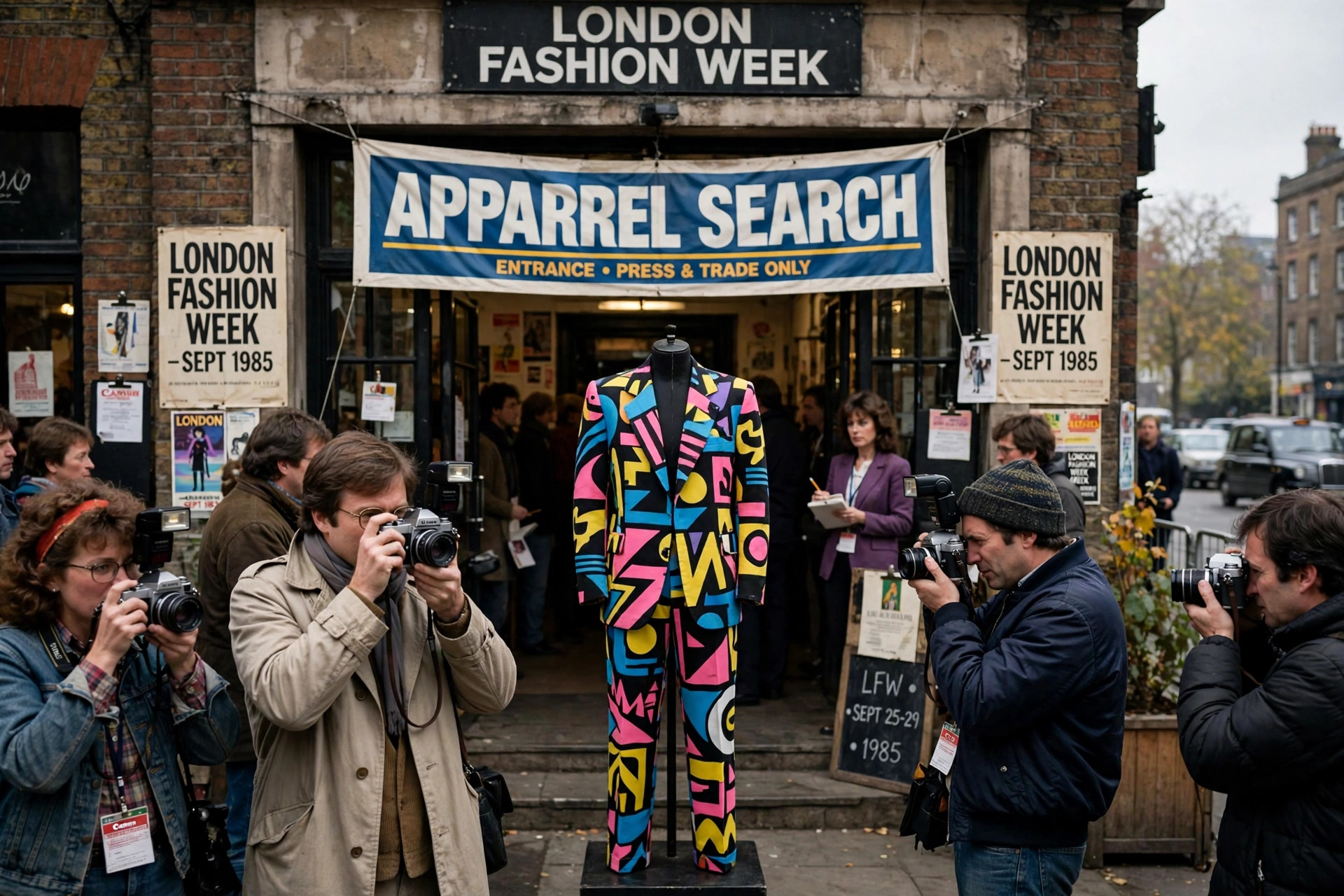
Illustrative image created for this guide — an artistic impression, not this designer's own garments.
News, Photos & VideoCollectionsFall FashionsFashion WeekNewsProfilesRunwaySpring Fashions
The Show as an Argument
Bodymap arrived with credentials already forming: the Martini Award for most innovative designer of the year, won in 1983 at the Individual Clothes Show, before the label's first full fashion show of 1984. The shows then made good on the award's promise. Graphic prints, layered body-conscious outfits and theatrical staging — informed by the partners' parallel work costuming Michael Clark's dancers — presented British fashion as young, physical and unafraid, in deliberate contrast to the conventional catwalk. International press and buyers responded exactly as intended: controversy, in Bodymap's hands, was a distribution strategy.
The honors circuit converted the attention into standing. In 1985 Bodymap represented Britain at the Wool Awards in New York and took part in Fashion Aid at the Royal Albert Hall; in 1986 came a BBC Designer of the Year nomination and an invitation to the Best of British at the British Embassy in Paris; in 1987 the Bessie Award for the Michael Clark costumes carried the label's name into dance's own honors. A fashion week page rarely gets to record a run like that — five years in which a two-person label became a national representative.
From Show to Season
Each showing set the label's clocks running: the reviews gathered on the news page, the freelance commissions — Benetton, Fiorucci, Itochu and others — that the visibility attracted, and, from 1989, the stock for Bodymap's own retail outlet. Following Holah through the show calendar is following the whole Bodymap mechanism: experiment on the catwalk, honors in the press, work from three continents in the studio.
Use the series links to move from this calendar view into the runway record, then into the fall and spring pages, where the two seasonal strands of the Bodymap years are separated out for a closer read.
Common Questions
What does the David Holah fashion week page cover?
Bodymap's place in the show calendar of the 1980s: the controversial catwalk shows, beginning with the label's first fashion show in 1984, that enticed international press and buyers — and the honors circuit, from the Wool Awards in New York to the Best of British in Paris, that the shows fed.
What were Bodymap shows known for?
Controversy by design: theatrical, graphic, body-conscious presentations unlike the conventional catwalk — the approach that won the Martini Award for most innovative designer of the year in 1983 and made the label the emblem of a British fashion revival.
How does this page relate to the runway page?
This page covers the label's place in the calendar and the honors circuit; the runway page in this series follows the shows themselves — the looks, the staging and the runway record.