David Holah Runway
The Bodymap show — controversy, choreography and clothes in motion.
The Bodymap runway show was the label's manifesto performed live. From the first fashion show in 1984, David Holah and Stevie Stewart presented their graphic, layered, body-conscious collections as theatrical events — controversial catwalk shows that enticed international press and buyers and put British fashion back on the map. A designer who was simultaneously costuming Michael Clark's dancers could not have presented clothes any other way: movement was the medium, and the catwalk was a stage that happened to sell clothes. This page follows the runway strand of his record in this guide.
The Photos and search routes gather runway imagery from the Bodymap years. Pair this page with the fashion week page for the calendar and honors around the shows, and with the collections page for the work filed by strand. The main David Holah page routes the wider news, photo and video searches.
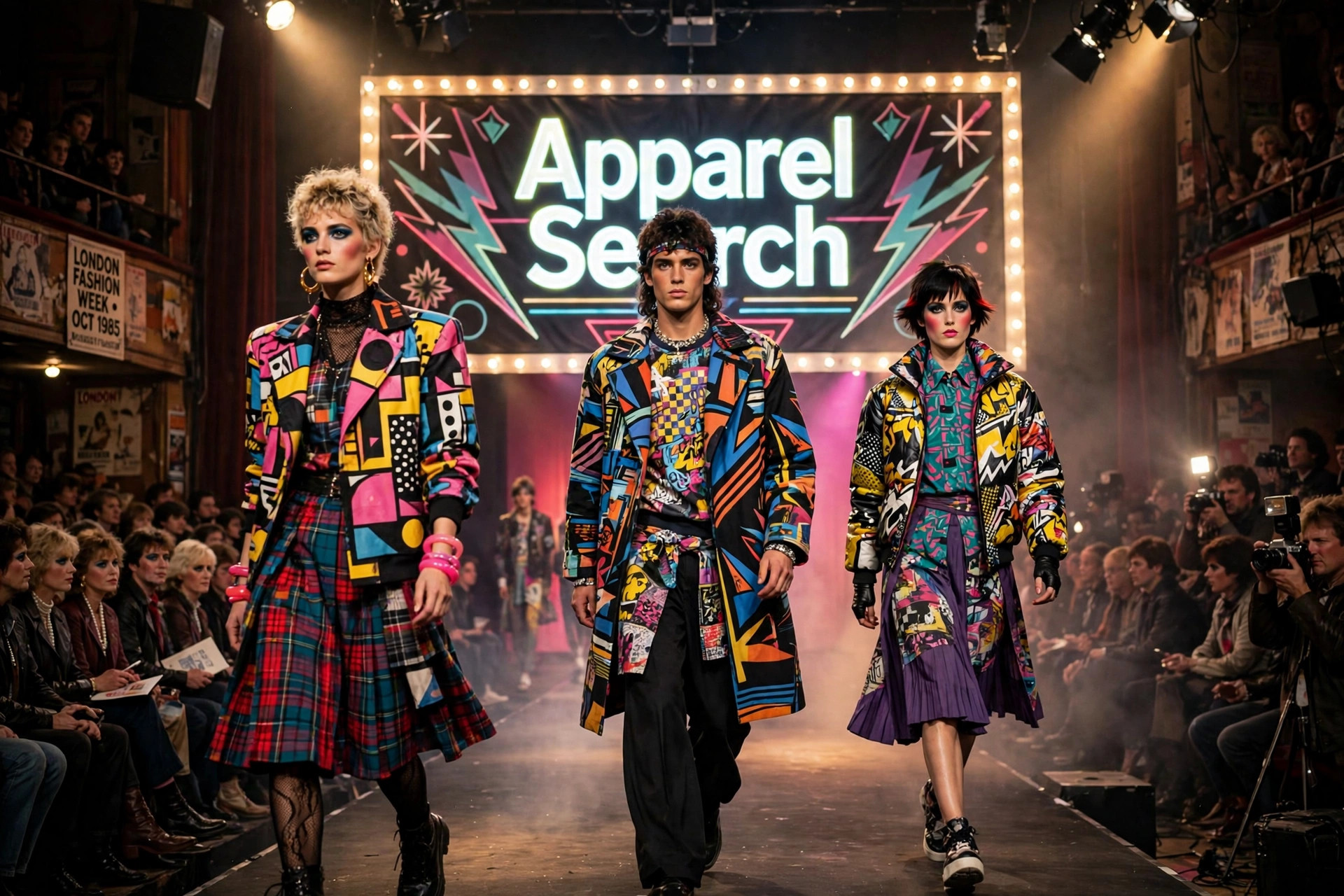
Illustrative image created for this guide — an artistic impression, not this designer's own garments.
News, Photos & VideoCollectionsFall FashionsFashion WeekNewsProfilesRunwaySpring Fashions
The Show as Theatre
Read a Bodymap show as choreography first and commerce second. The outfits — textile prints of Holah's design, layered and mapped to the body, as the label's name declares — were built to be seen in motion, and the presentations staged that motion: models as performers, the catwalk as a dance floor's straighter cousin. The connection was literal. Throughout the 1980s Bodymap designed costumes for Michael Clark's company and commissioned pieces for the Ballet Rambert and the Royal Festival Ballet, winning the Bessie Award in 1987 — so the runway borrowed from the stage the label was dressing in parallel, and the stage borrowed back the prints.
That method descends from the founding. The Martini Award for most innovative designer of the year in 1983 — won at the Individual Clothes Show before the first full fashion show — certified the approach early: innovation, in the judges' finding, was the label's defining quality, and the runway is where it was exercised in public, season after season, until the shows themselves became the record's centerpiece.
Reading Runway Photography
Bodymap shows reward the moving image above the still — the search routes to video matter here — because the design completes itself in motion. In stills, look for the layering: print answering print across pieces, the body's outline drawn by the clothes rather than hidden by them, the graphic scale that let a small label photograph as large as any house in London. The runway search routes in the references gather that photography show by show.
For the calendar view of the same events, turn to the fashion week page; for the founder's chronology, the profiles page. The fall and spring pages in this series follow the runway's two seasonal strands separately.
Common Questions
What are Bodymap runway shows known for?
Controversy and theatre: graphic printed, layered, body-conscious outfits presented as events rather than parades — the shows that enticed international press and buyers, won the Martini Award's promise good, and put British fashion back on the map.
When was Bodymap's first fashion show?
In 1984, two years after David Holah formed the label with Stevie Stewart in 1982 — and a year after the label won the Martini Award for most innovative designer of the year at the Individual Clothes Show.
How is this page different from the fashion week page?
The fashion week page covers the label's place in the calendar and the honors circuit. This page follows the shows themselves — the staging, the looks in motion, and what the photography preserves.