David Holah
Bodymap and beyond — graphic, experimental British fashion with a showman's edge.
David Holah is the British designer who, with partner Stevie Stewart, formed the fashion company Bodymap in 1982 — and with it, put British fashion back on the map. Bodymap's controversial catwalk shows enticed international press and buyers; its outfits are now displayed in museums worldwide, including the Victoria and Albert Museum. Holah's career did not end with the label: freelance design for houses from Benetton to Fiorucci, a decade of styling for commercials and pop promos, teaching in art colleges across the south of England, and, from 2006, an MA in Fine Art and a practice as a printmaker. This page is the main door to his record in this guide.
From here, the series links lead to his collections, fall fashions, fashion week, news, profiles, runway and spring fashions pages. The search routes in the references run David Holah news, photo and video searches, and the official website routes are linked there as well.
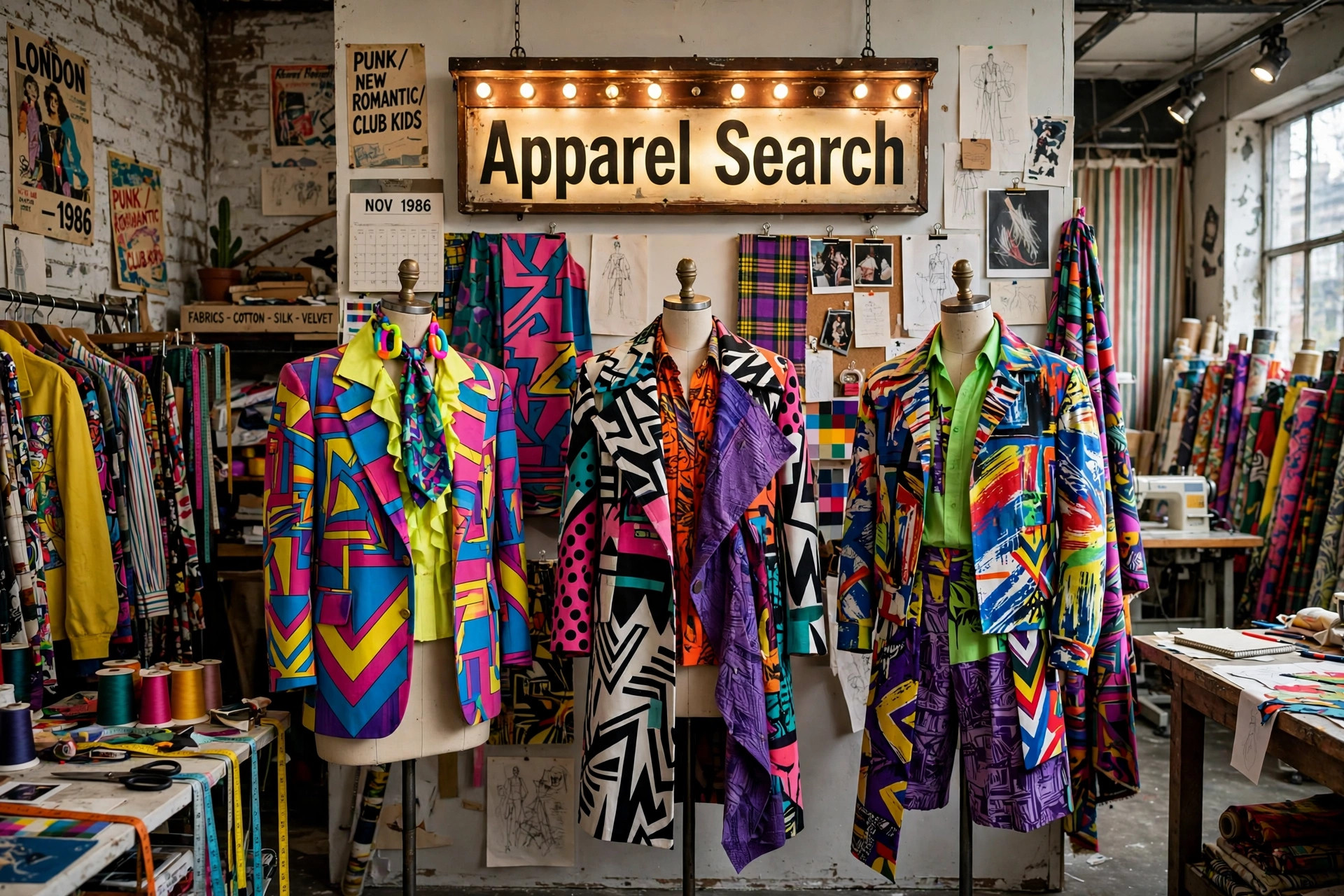
Illustrative image created for this guide — an artistic impression, not this designer's own garments.
News, Photos & VideoCollectionsFall FashionsFashion WeekNewsProfilesRunwaySpring Fashions
The Bodymap Proposition
Bodymap proposed that British fashion could lead by experiment. Formed in 1982, the label put on its first fashion show in 1984 and opened its own retail outlet in 1989; between those dates it collected the decade's honors — the Martini Award for most innovative designer of the year in 1983, representation of Britain at the Wool Awards in New York in 1985, a BBC Designer of the Year nomination in 1986 and the Best of British showing at the British Embassy in Paris. In addition to his own company, Holah designed womenswear, childrenswear, swimwear and textile prints freelance for companies worldwide — Goldie and Goldie Junior, Aqua Girl, Dimensione Danza, Benetton and Fiorucci in Italy, Arabella Pollen and Rifat Ozbek in England, and Itochu Fashion System in Japan.
The costume work ran in parallel: Bodymap designed costumes throughout the 1980s for Michael Clark's company and costumed commissioned pieces for the Ballet Rambert and the Royal Festival Ballet, winning the Bessie Award in 1987 for the Michael Clark costumes. At the beginning of the 1990s Bodymap closed; Holah continued to design freelance, became a visiting lecturer at art colleges including St Martins, Middlesex University, Epsom, Brighton and Barnet, and worked through the 1990s as a freelance stylist for commercials, pop promos and artistes.
News, Photos and Video
This page's route set — news, photos and videos — suits a designer whose medium was the show itself. Bodymap photography is a record of presentation as much as of clothing: layered, printed, body-conscious outfits staged theatrically, the images that enticed international press and buyers in the first place. The video routes matter most of all here, because a controversial catwalk show is an event in motion, and stills only half-report it.
Use the series block to move through his pages. Begin with the profiles if the full chronology — 1982 to the 2006 printmaking turn — is the question, with the collections if the work is, and with the runway page for the shows that made the name.
Common Questions
Who is David Holah?
David Holah is a British fashion designer who, after a first class BA with honours in Fashion and Textiles at Middlesex Polytechnic, formed the label Bodymap with partner Stevie Stewart in 1982. Bodymap put British fashion back on the map with controversial catwalk shows.
What does this David Holah page gather?
It is the main page for his record in this guide: the routes to Holah news, photos and videos, and the links to his collections, fall fashions, fashion week, news, profiles, runway and spring fashions pages.
What is Bodymap known for?
Pioneering, experimental design and theatrical presentation: the label won the Martini Award for most innovative designer of the year in 1983, represented Britain at the Wool Awards in New York in 1985, and designed costumes for the Michael Clark Company, Ballet Rambert and the Royal Festival Ballet.