Apparel Search · Fashion Show Production
Fashion Week Explained
Four cities, two main seasons a year, and the whole industry in the same rooms at the same time: how fashion week works, who it is for, and why the clothes arrive six months before the shops.
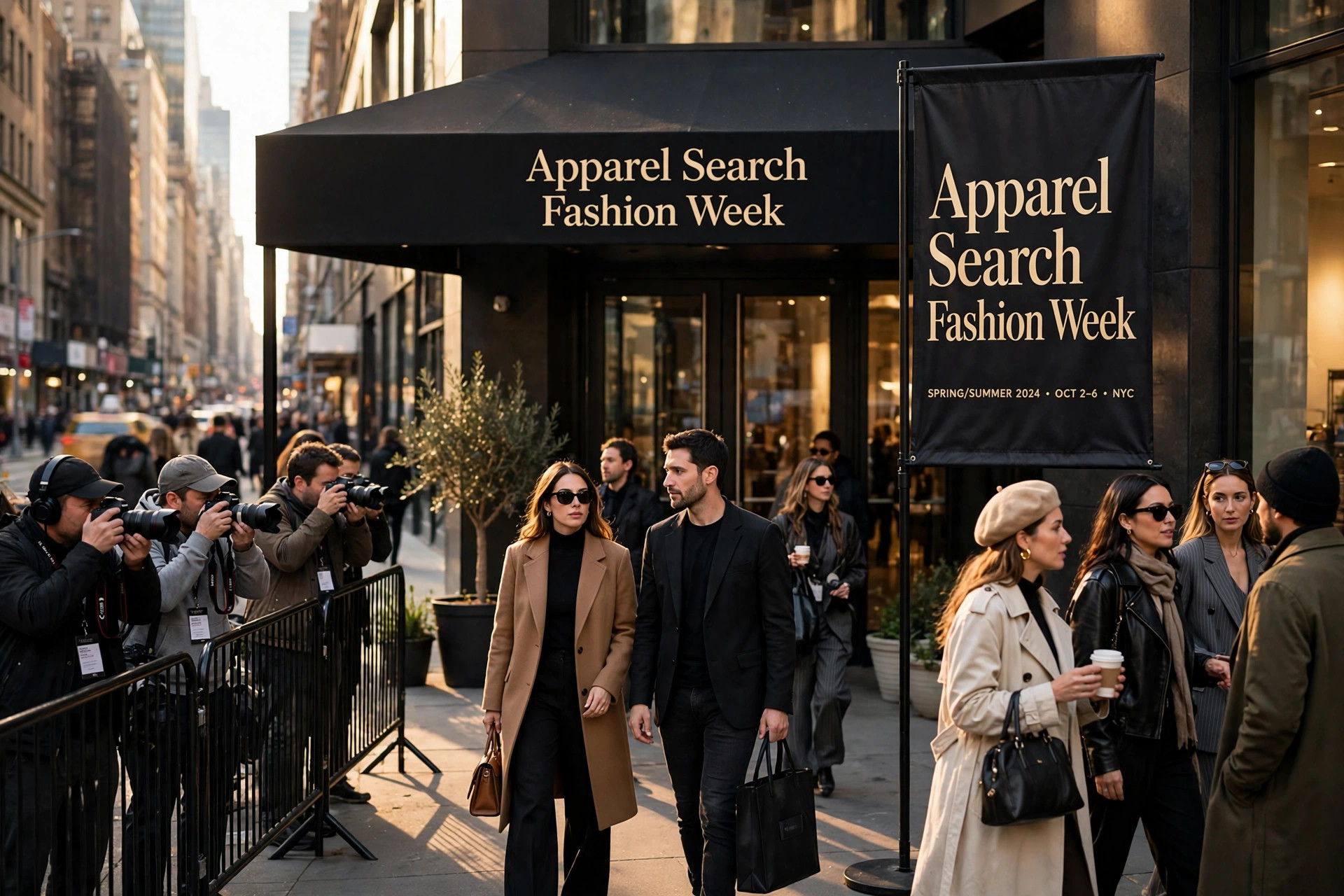
Most of the shows described in the Fashion Show & Runway Production Guide do not happen one at a time. They happen in battalions, city by city, in the concentrated seasons the industry calls fashion week. Understanding the week — its circuit, its calendar and its cast of attendees — is understanding how the fashion business organizes its year. Apparel Search’s fashion shows directory and fashion week directory list the events themselves; this guide explains the system they belong to.
The Big Four, in Running Order
The womenswear circuit runs in a fixed sequence. New York opens: commercially minded, the home of American sportswear and the week where young designers often make their first impression — see the directory’s New York Fashion Week page. London follows, the shortest and most experimental week, closely tied to its fashion schools and emerging designers (London Fashion Week). Milan is the week of the great Italian houses and the manufacturing excellence behind them (Milan Fashion Week). Paris closes the circuit and carries the most prestige: the historic home of haute couture, where the biggest houses show and the season’s story is settled (Paris Fashion Week). Beyond the four, dozens of other cities hold their own weeks — the fashion week directory covers them by country — but the big four remain the circuit the trade follows in full.
The Calendar: More Than Two Weeks a Year
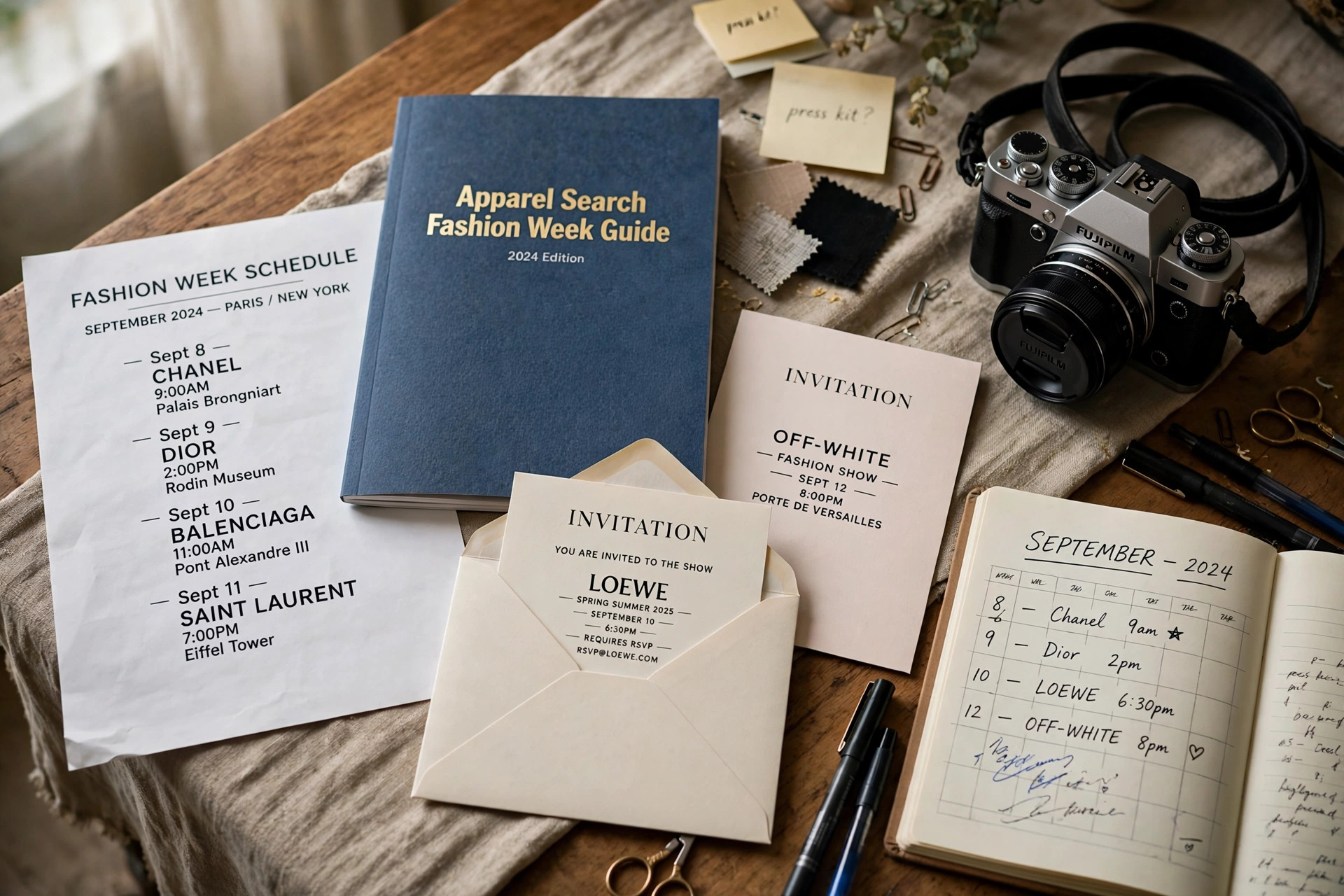
“Fashion week” is really several calendars sharing a name. The two main ready-to-wear womenswear circuits run in February–March and September–October. Menswear has its own weeks, mainly in January and in June. Paris adds haute couture weeks in January and July, at which only houses meeting the official couture criteria show. Between the main seasons sit the smaller resort (cruise) and pre-fall presentations, often shown in destination locations or as lookbooks rather than full runway productions. The practical effect is that the industry is almost always in a show season somewhere — which is why the production skills in this cluster, from producing a show to running its guest list, are a year-round trade, not a twice-yearly one.
Who Attends, and What They Are Doing There
Every seat at a fashion week show is a working seat. Retail buyers attend to choose the season’s stock; their order books, not the applause, decide a collection’s commercial fate. Editors and critics attend to select what to photograph and to write the reviews that frame a designer’s reputation. Stylists and photographers are planning shoots. Clients and celebrities, seated by the PR team as our PR and guest list guide explains, generate the photographs that carry the show to the public. The general public, for the most part, attends at one remove — through the photography and film that now leave the venue within minutes. Fashion week looks like a spectator event; it is actually a trade fair wearing a very beautiful disguise.
Six Months Ahead — On Purpose
New collections are shown roughly six months before they reach stores because the audience in the room needs that time: buyers to order, factories to manufacture, magazines to shoot and print. When you see a headline announcing “next season’s trends” over photographs from a show, you are reading the industry’s planning horizon, not a delay.
Common Questions
When is fashion week held?
The main womenswear ready-to-wear weeks run twice a year: in February and March for the autumn/winter collections, and in September and October for spring/summer. The circuit moves in a fixed order — New York first, then London, then Milan, then Paris. Menswear weeks are held separately, mainly in January and June, and Paris adds haute couture weeks in January and July.
Why are the clothes shown six months before they are sold?
Because the shows are working events for the trade. Buyers need to see collections, choose what to stock and place orders months before the season so factories can manufacture the garments and ship them to stores. The six-month gap is the supply chain's lead time — the show is the first step of a process that ends with the clothes on rails in shops at the start of the season they were designed for.
Can the public buy tickets to fashion week shows?
For the main designer shows, generally no: seating is by invitation, controlled by each brand's PR team, and the room is filled with buyers, press, clients and industry guests. Some cities run public-facing events, exhibitions, talks and consumer shows alongside the official calendar, and nearly every show is now photographed and widely streamed or published, so the public audience is large — it just watches from outside the room.
Why these four cities?
New York, London, Milan and Paris became the capitals over the twentieth century because each held a concentration of the industry: New York the commercial sportswear business, London the avant-garde and its fashion schools, Milan the Italian manufacturing and luxury houses, Paris the historic home of haute couture. Each city also has an official organizing body that publishes the calendar — which is what makes a 'fashion week' an official circuit rather than a coincidence of dates.
More in the Fashion Show & Runway Production Guide
Back to the Fashion Show & Runway Production Guide
The Fashion Show & Runway Production Guide hub explains the whole production — planning, casting, backstage, staging, fashion week and the guest list — with a map of every guide in this cluster.