Apparel Search · Fashion Show Production
Runway Casting & Model Direction
How the faces of a show are chosen — casting calls, composite cards and callbacks — and how direction turns a group of individuals into one coherent walk.
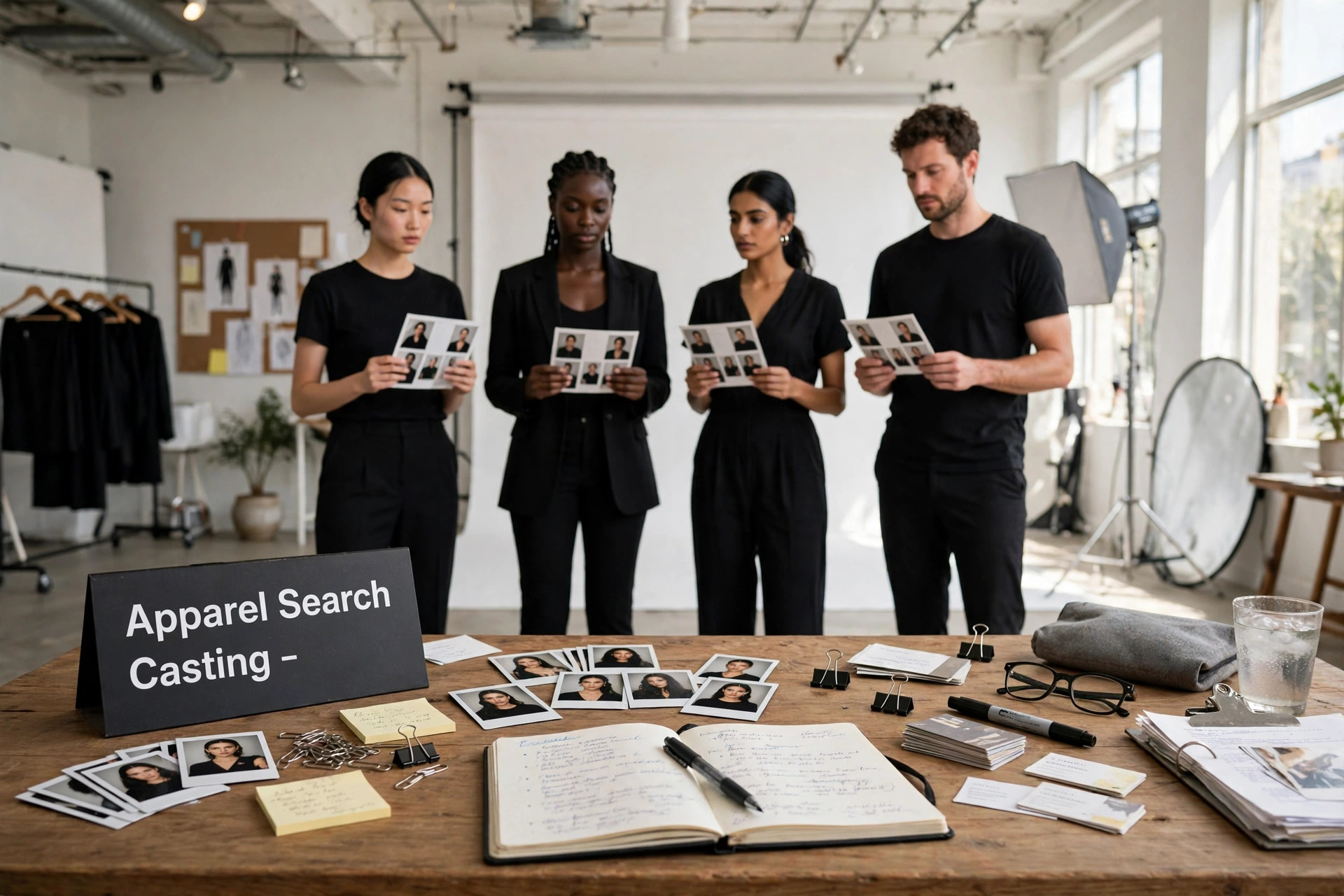
Casting is where a fashion show stops being an idea and starts being a specific group of people. Within the Fashion Show & Runway Production Guide, this is the stage that decides the visual character of the show as surely as the clothes do: the same collection reads completely differently on a cast chosen for elegance, for energy, or for individuality. This guide explains how that choice is made — the process, the documents, and the direction that follows it. It is written as knowledge for students and producers; casting itself is arranged between brands, casting directors and modeling agencies, and Apparel Search does not represent or book models.
How a Casting Works, Step by Step
- The brief. The designer, stylist and casting director agree what the cast should communicate — the attitude of the collection, the range of looks, practical requirements such as heights that keep hemlines consistent.
- Packages from agencies. Modeling agencies respond with packages: sets of composite cards and photographs for the models they propose. For a fashion week show, hundreds of packages may arrive for twenty places.
- The casting session. Shortlisted models attend in person, in simple fitted clothing and minimal makeup, so the team sees the person rather than a styled photograph. Each is asked to walk — a straight runway walk across the room — because runway casting is about movement, not only appearance.
- Callbacks and options. The strongest candidates are called back, sometimes to try sample garments. Agencies place holds, called options, on models’ time for the show date until bookings are confirmed.
- Fittings and the final cast. Confirmed models are fitted to their looks, photographed for the look boards, and the cast list is locked. From here, the running order in our production guide is built around real people and real change times.
Model Direction: The Walk Is a Performance
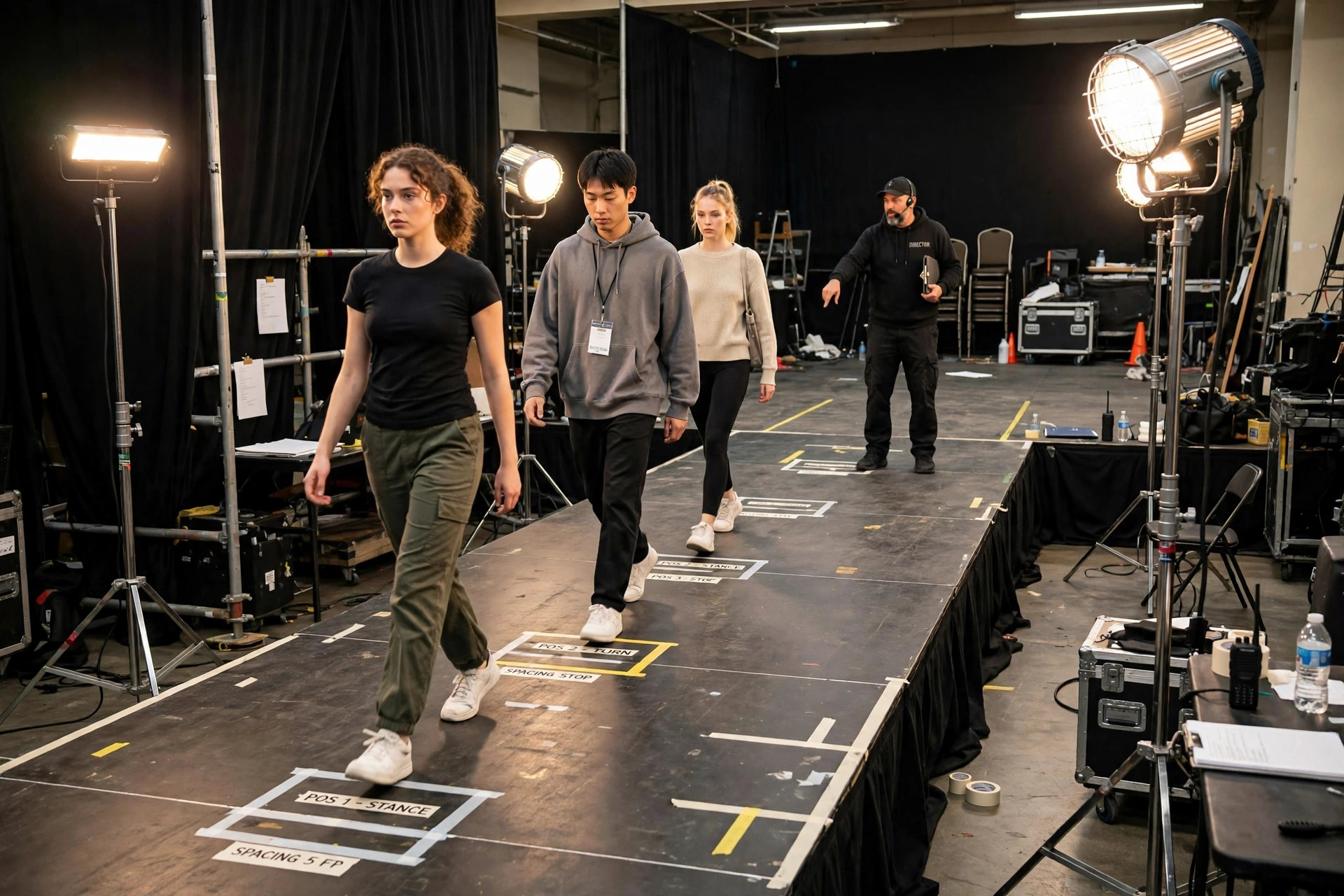
Casting chooses the people; model direction — usually led by the show director, choreographer or producer — tells them how to move as an ensemble. Direction covers pace (matched to the music and the number of looks), spacing (the interval between models, so photographers get a clean shot of each look and no model catches the one ahead), the turn at the end of the runway and how long to hold it, and the expression and attitude the concept calls for: serene, brisk, joyful, severe. Group moments need choreography too — the finale, in which all models walk together, and the designer’s closing walk, are rehearsed like everything else.
Direction also has a practical backstage half. Models are briefed on their change sequence, which dresser they report to, and where to line up — the machinery our backstage guide describes. A well-directed cast is not the one with the most famous faces; it is the one in which every model knows their marks, their changes and their cues, so the audience sees only confidence.
Why Designers Cast a “Type”
First-time viewers sometimes notice that a show’s cast shares a look or an energy. That coherence is deliberate. A collection is a story told in thirty to fifty outfits, and the cast is its cast of characters — chosen so the clothes, not forty unrelated personalities, hold the audience’s attention. The strongest casting balances that coherence with range, so the audience that buys the clothes can see themselves in the show.
Common Questions
What does a casting director do for a fashion show?
A casting director translates the designer's idea of the show into a cast. They request packages from modeling agencies, review hundreds of models, run the casting sessions, recommend a shortlist, and negotiate availability for fittings, rehearsal and show day. Designers and stylists make the final selections, but the casting director's eye — knowing who walks well, who fits the clothes, and who photographs as the concept requires — shapes every choice.
What is a composite card?
A composite card (or comp card) is a model's standard leave-behind: a card printed with a headshot, several additional photographs, the model's measurements and agency contact. At castings, the team collects comp cards for every model they see, and the pile of cards becomes the working shortlist from which callbacks and bookings are made.
How many models walk in a fashion show?
A typical single-brand show casts roughly 15 to 30 models for 30 to 50 looks, so most models change outfits at least once, and some several times. The ratio of models to looks is a production decision: more models means fewer frantic quick changes backstage but higher fees and more fittings to schedule.
What happens at a runway fitting?
At a fitting, each model tries on the specific looks they will wear, and the styling team adjusts the fit, assigns shoes and accessories, and photographs the result. The fitting produces the look board — a photograph of exactly how that outfit is worn — which the dressers backstage work from on show day. A look that does not work on its model is recast or restyled at the fitting, not discovered at the show.
More in the Fashion Show & Runway Production Guide
Back to the Fashion Show & Runway Production Guide
The Fashion Show & Runway Production Guide hub explains the whole production — planning, casting, backstage, staging, fashion week and the guest list — with a map of every guide in this cluster.