Apparel Search · Fashion Events Guide
Fashion Show & Runway Production Guide
A runway show looks effortless for about fifteen minutes. Behind those fifteen minutes sit months of planning, casting, building, rehearsing and cueing. This guide explains how fashion shows are actually produced.
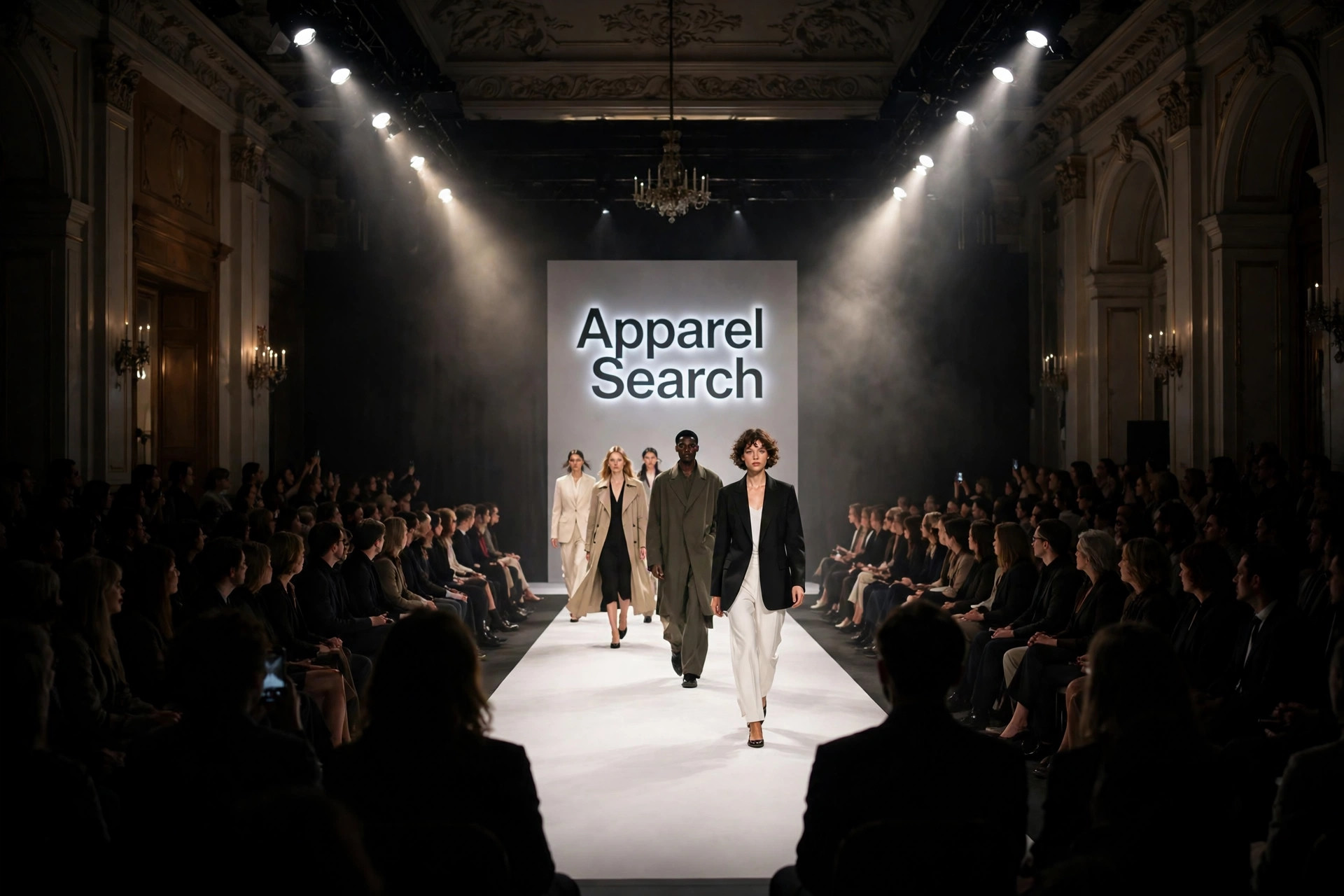
A fashion show is the most concentrated form of communication in the clothing business. In the time it takes to drink a cup of coffee, a designer has to show buyers what to order, show editors what to photograph, and show the public what the brand stands for this season. What the audience sees is the finished surface: music, lights, models, clothes. What makes it work is production — the planning, casting, construction, rehearsal and split-second cueing that this cluster of guides takes apart, piece by piece.
Apparel Search has listed fashion shows and fashion weeks for years in its fashion shows directory, which remains the place to find events themselves — the weeks, cities and schedules. This guide is the companion to that directory: it covers the knowledge layer underneath the listings, how the events in those listings are actually created. If you are a fashion student, a designer planning a first show, an event professional moving into fashion, or simply a reader who has wondered how forty outfits change hands backstage in fifteen minutes, start here.
Runway Show, Defined
A fashion show (or runway show) is a live presentation in which models wear a designer’s new collection and walk a runway before an audience of buyers, press and guests. Shows are typically held to present the collection to the retail buyers who will order it and the media who will publicize it. See the full glossary entry for fashion show in the Apparel Search definitions.
The Six Guides in This Cluster
Each guide below takes one part of show production in depth. Read in order, they follow a show from the first planning meeting to the morning-after press coverage.
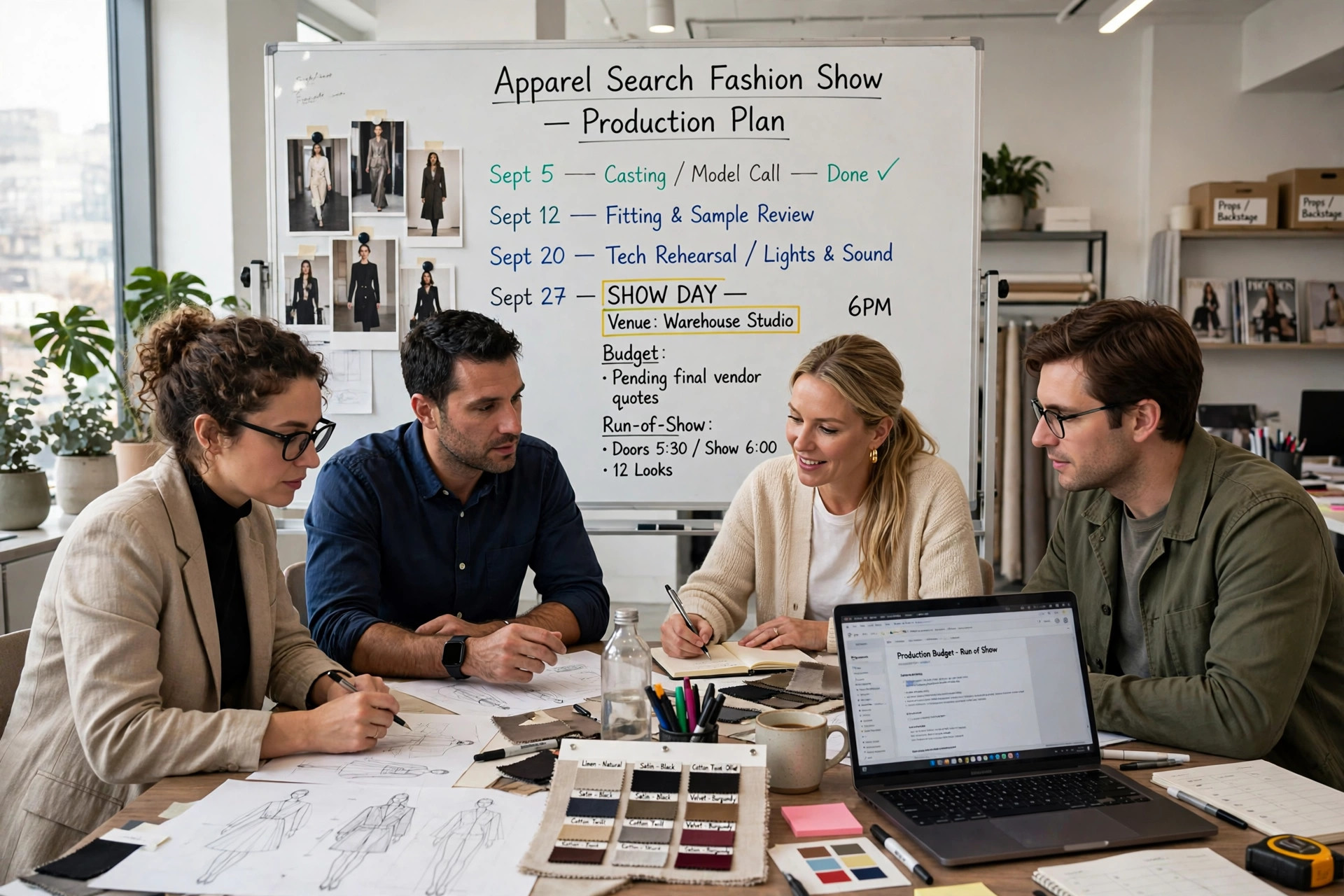 How to Produce a Fashion ShowThe production timeline, the budget lines and the team — how a show is planned month by month, from first concept to show day.
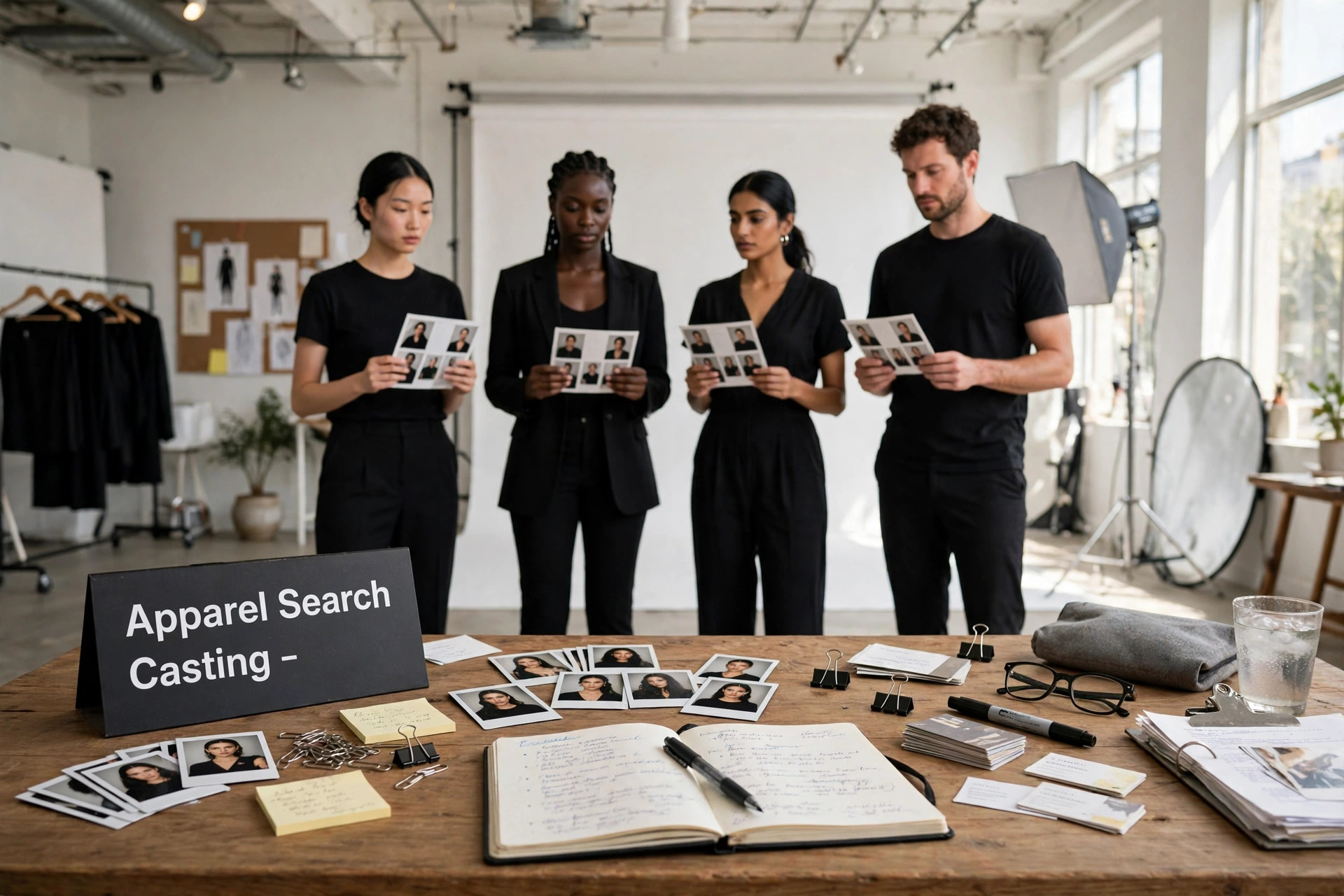 Runway Casting & Model DirectionHow casting calls, composite cards and callbacks choose the faces of a show, and how model direction shapes the walk itself.
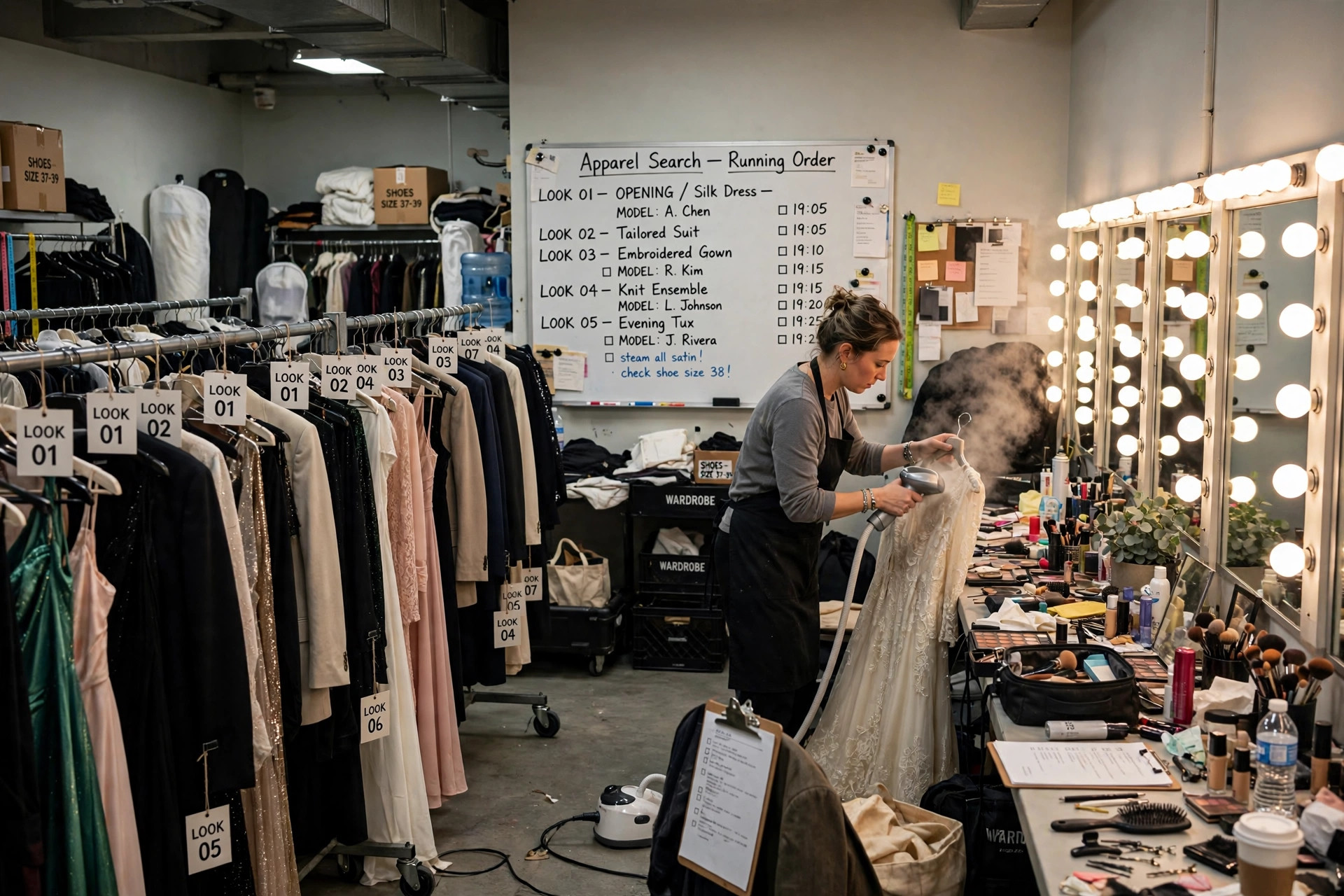 Backstage at a Fashion ShowDressers, quick changes, running orders and the headset cues that keep forty looks moving in the right order at the right second.
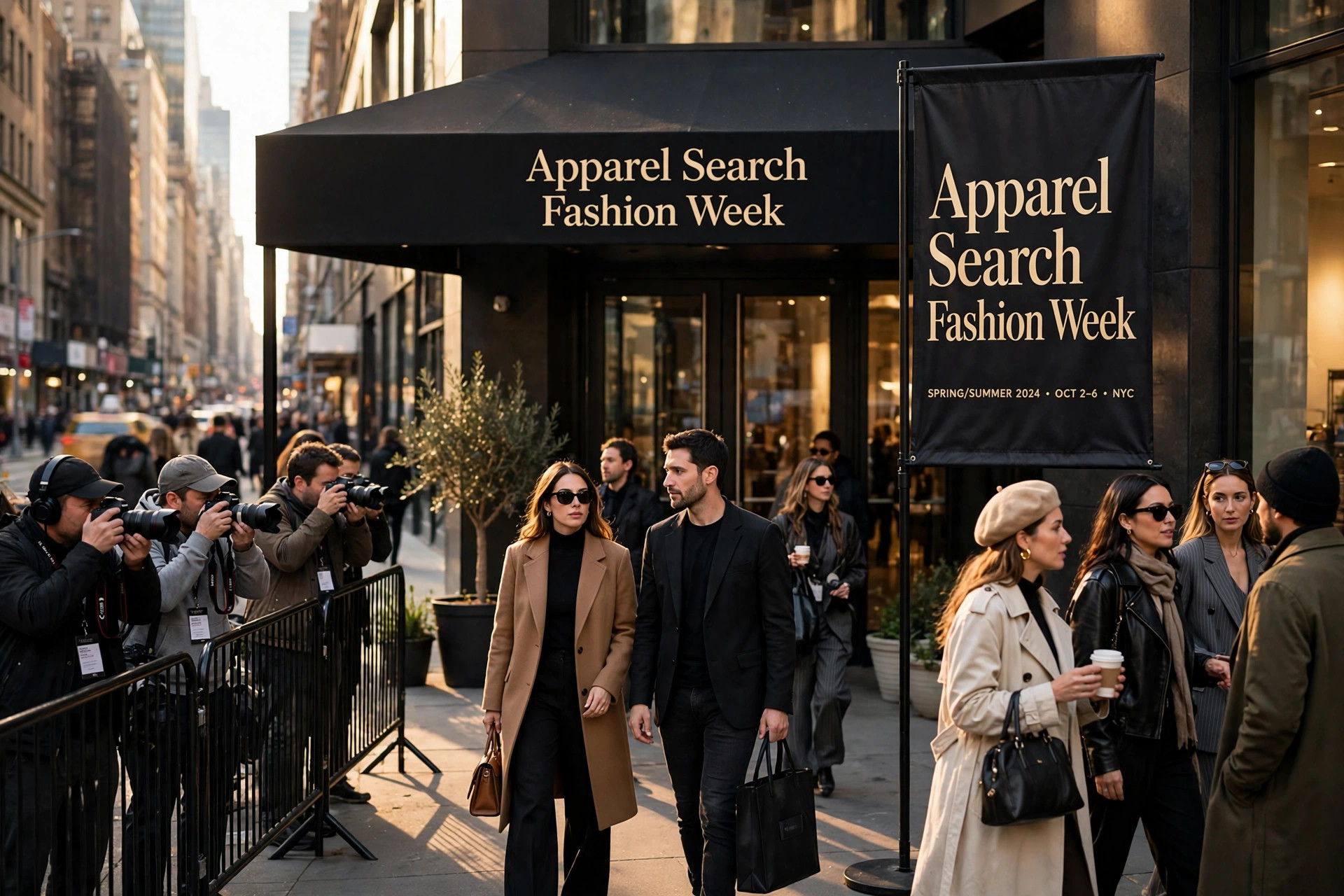 Fashion Week ExplainedNew York, London, Milan and Paris: the four capitals, the twice-yearly calendar, and who attends each week and why.
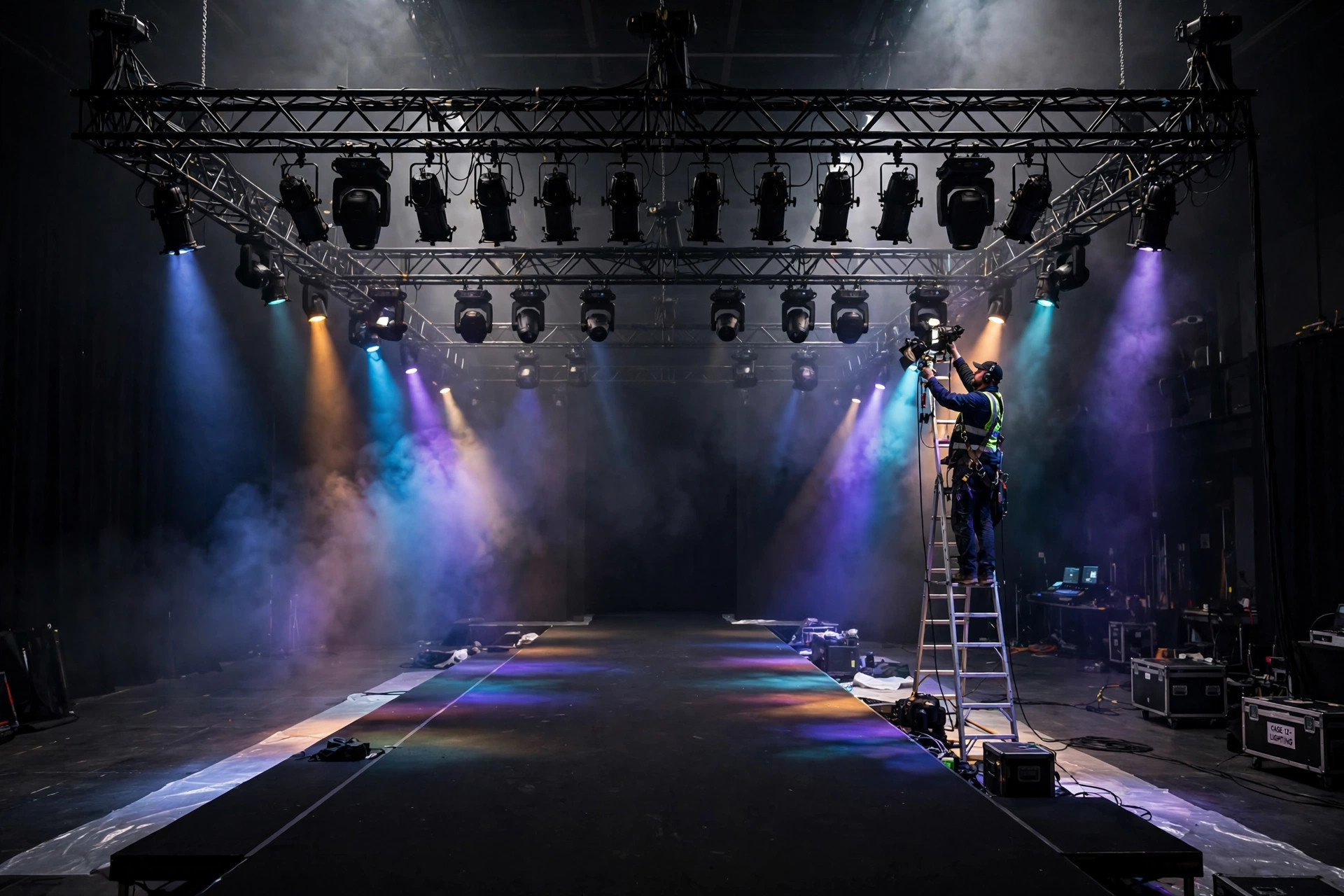 Runway Production DesignSet, staging, lighting, sound and choreography — the design decisions that decide how a collection is seen and remembered.
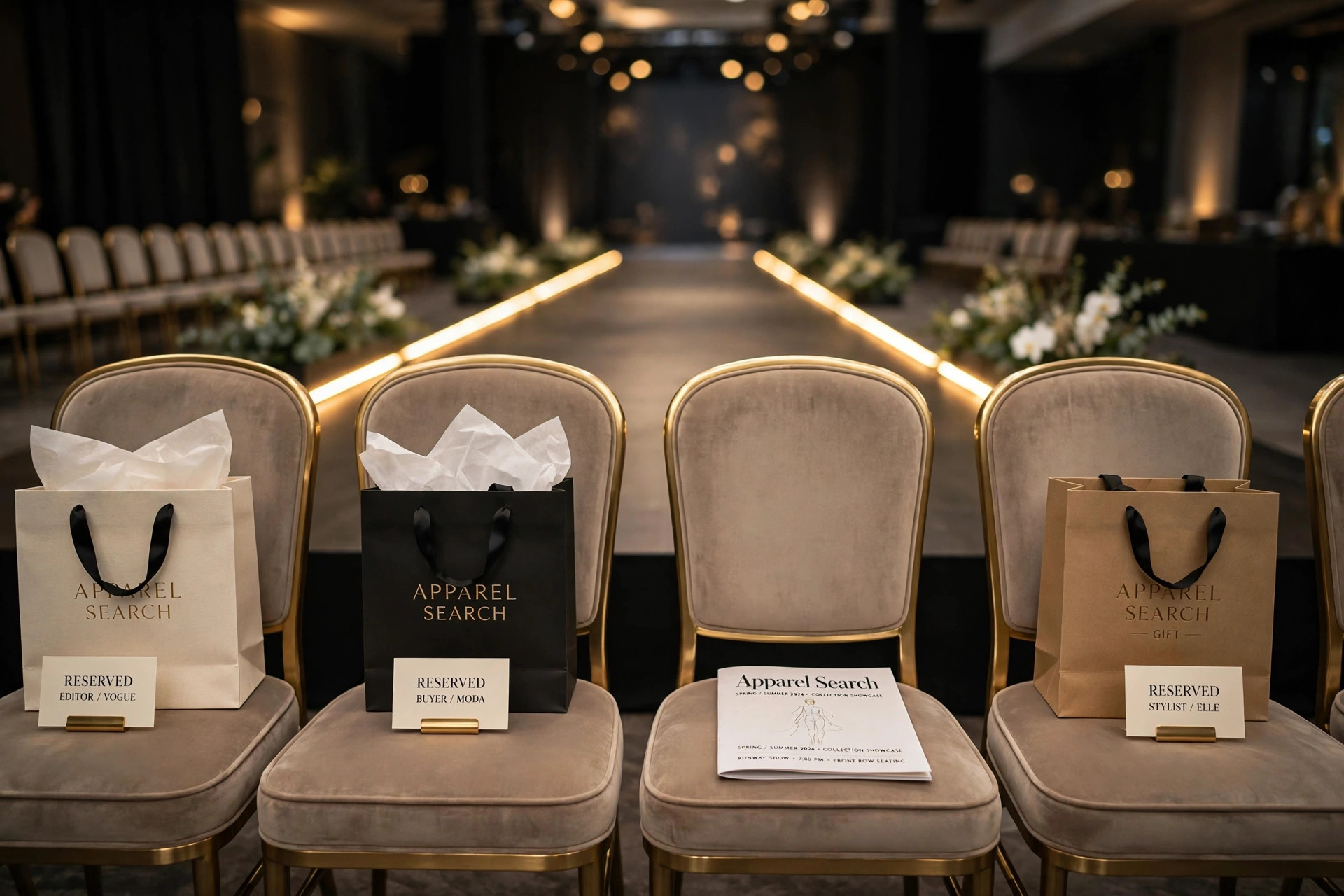 Fashion Show PR & Guest ListsHow the guest list is built, why the front row is a map of the industry, and how press coverage is planned long before show day.
A Show Is a Production, Not a Party
The single most common misunderstanding about fashion shows is that they are primarily social events. The champagne is real, but it is decoration. A show is a working presentation with a commercial job: the buyers in the seats place the orders that decide whether the collection is manufactured in volume, and the press in the seats decide whether anyone hears about it. Every production decision — which models, which music, which order the looks appear in, who sits where — is made in service of that job.
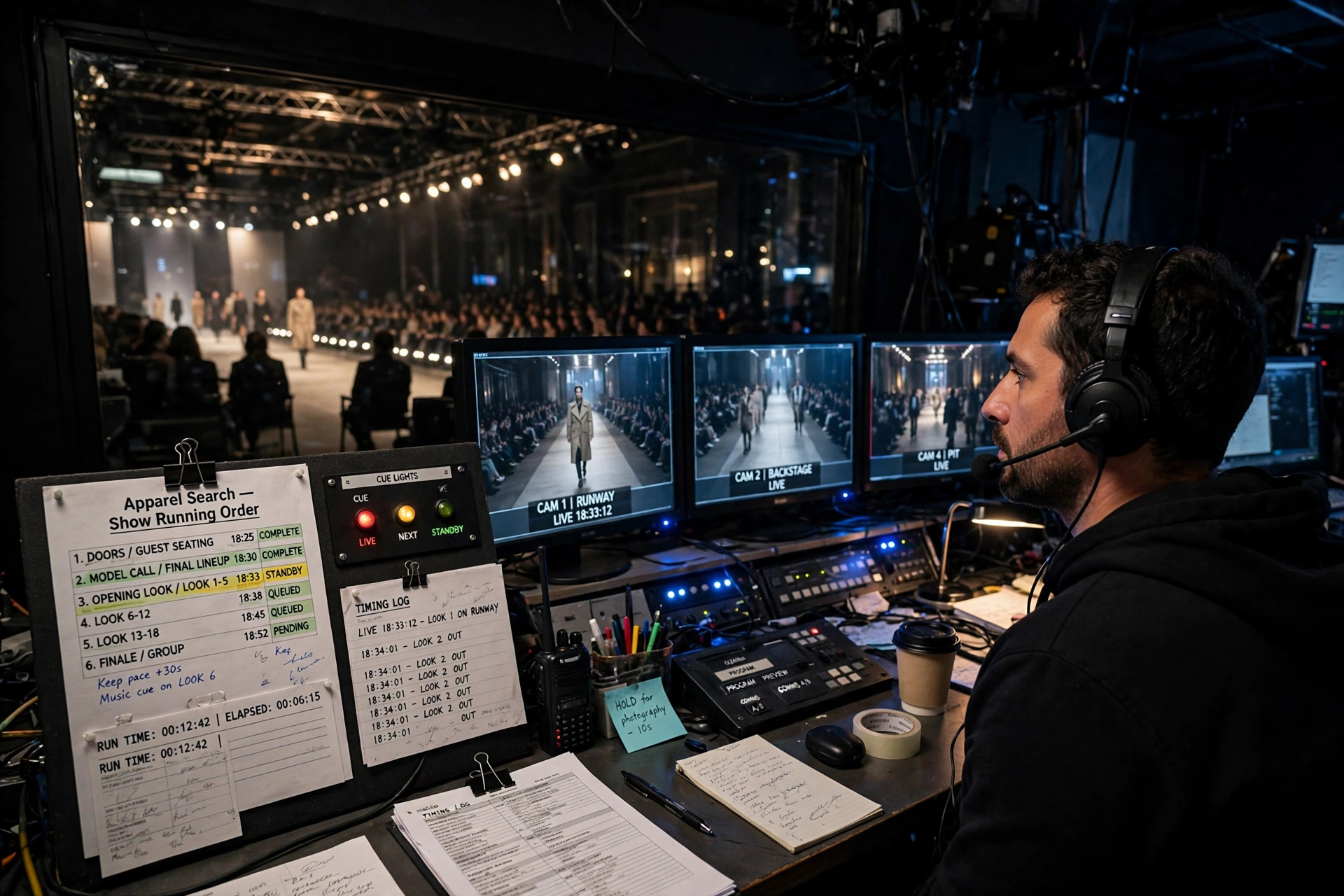
That is why professional shows run on cues, like theatre. A show caller, headset on, calls each look to the runway entrance against the music; dressers backstage work from printed running orders; the lighting and sound operators follow a cue sheet built in rehearsal. When it works, the audience perceives none of it — just a smooth, confident procession. Our backstage guide shows the machinery in detail.
The Production at a Glance
- Concept and budget. The designer and producer agree what the show must achieve, what it can spend, and the creative idea — venue, mood, scale — that everything else serves.
- Team and venue. The producer books the space and assembles the team: casting director, stylist, set and lighting designers, backstage manager, hair and makeup leads, PR.
- Casting and fittings. Models are cast to the collection, looks are assigned and fitted, and the running order of outfits is set.
- Build and rehearsal. The set and runway are built, lighting and sound are programmed, and models rehearse the walk, spacing and finale in the real space.
- Show day. Guests are seated from the PR team’s plan, the show caller runs the cue sheet, and dressers execute the changes backstage.
- Coverage and sales. Photographs and reviews go out within hours; buyers book appointments to write orders — the commercial result the whole production was for.
Shows and the Fashion Calendar
Individual shows matter, but the industry organizes them into fashion weeks — concentrated seasons in which dozens of designers show in one city, so that buyers and press can attend everything in a single trip. The circuit of New York, London, Milan and Paris, and the way the calendar places new collections roughly six months ahead of the season they are sold in, is explained in our Fashion Week Explained guide. To find the weeks and shows themselves, city by city, use the fashion shows directory and the fashion week directory.
Related Guides on Apparel Search
Start With the Timeline
If you read only one guide in this cluster, make it How to Produce a Fashion Show. The month-by-month timeline is the frame every other guide hangs on — casting, backstage, design and PR all take their deadlines from it.
Common Questions
What does a fashion show producer do?
A fashion show producer is responsible for the event as a whole: the budget, the venue, the production team, the schedule and the hundred decisions that turn a designer's collection into a show an audience can watch. Producers hire and coordinate the show caller, casting director, stylist, set and lighting designers, backstage crew and PR team, and they own the timeline that brings all of them together on show day.
How long does a runway show last?
Most runway shows run about 10 to 20 minutes, even though they take months to prepare. A typical show presents 30 to 50 looks, each on the runway for well under a minute. Couture shows and large spectacle productions can run longer, and multi-designer group shows are often broken into short segments, but the standard single-brand runway show is deliberately brief.
How far in advance is a fashion show planned?
Planning commonly begins three to six months before show day for a seasonal collection show, and major fashion week productions can start earlier still. The collection itself is being designed and sampled on a parallel track, so casting, venue booking and production design all proceed while the clothes are still being finished.
Who sits in the front row of a fashion show?
Front row seats are assigned, not sold, and they go to the people a show most needs to reach: senior fashion editors and critics, retail buyers, key clients, stylists, and the celebrities and public figures whose presence generates coverage. Seating is a deliberate map of professional importance, planned by the PR team weeks ahead — our PR and guest list guide explains how it is built.