Apparel Search · Fashion Show Production
Runway Production Design
Set, staging, lighting, sound and choreography: the design decisions that decide whether a collection is merely shown, or actually remembered.
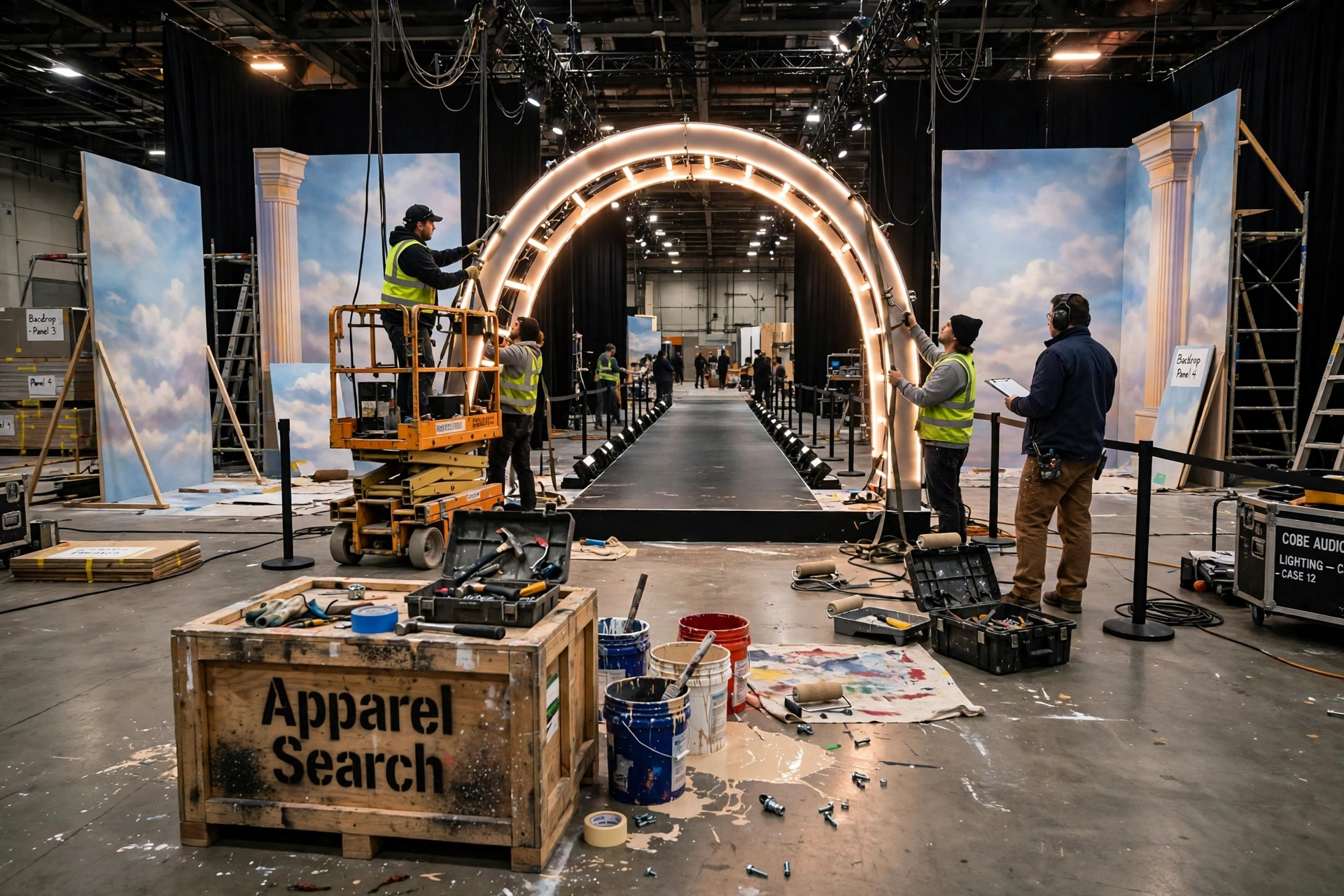
Two shows can present the same collection and leave completely different memories. The difference is production design — the discipline this guide adds to the Fashion Show & Runway Production Guide. Production design is everything the audience perceives that is not the clothing: the room, the set, the shape of the runway, the light, the sound, and the movement of the models through all of it. Designers of shows think like theatre designers with a commercial brief — the atmosphere is free to be art, provided the garments stay perfectly readable and the cameras stay happy.
Set and Staging: Building the World of the Collection
The set gives the collection its context in one glance: a bare white box says modern and lets the clothes speak; a constructed garden, a mirrored hall, a raw industrial shell each argue something about what the clothes mean. Set designers work from the same concept the producer and designer agreed at the start, and their work is inseparable from logistics — the set must leave a working backstage, safe routes for models in heels and long hems, and sightlines down which every seat can see. The backdrop at the runway’s entrance end carries the designer’s name and is composed for photographs, because the single most-published image of any show is a model framed against it.
Lighting and Sound: The Invisible Half
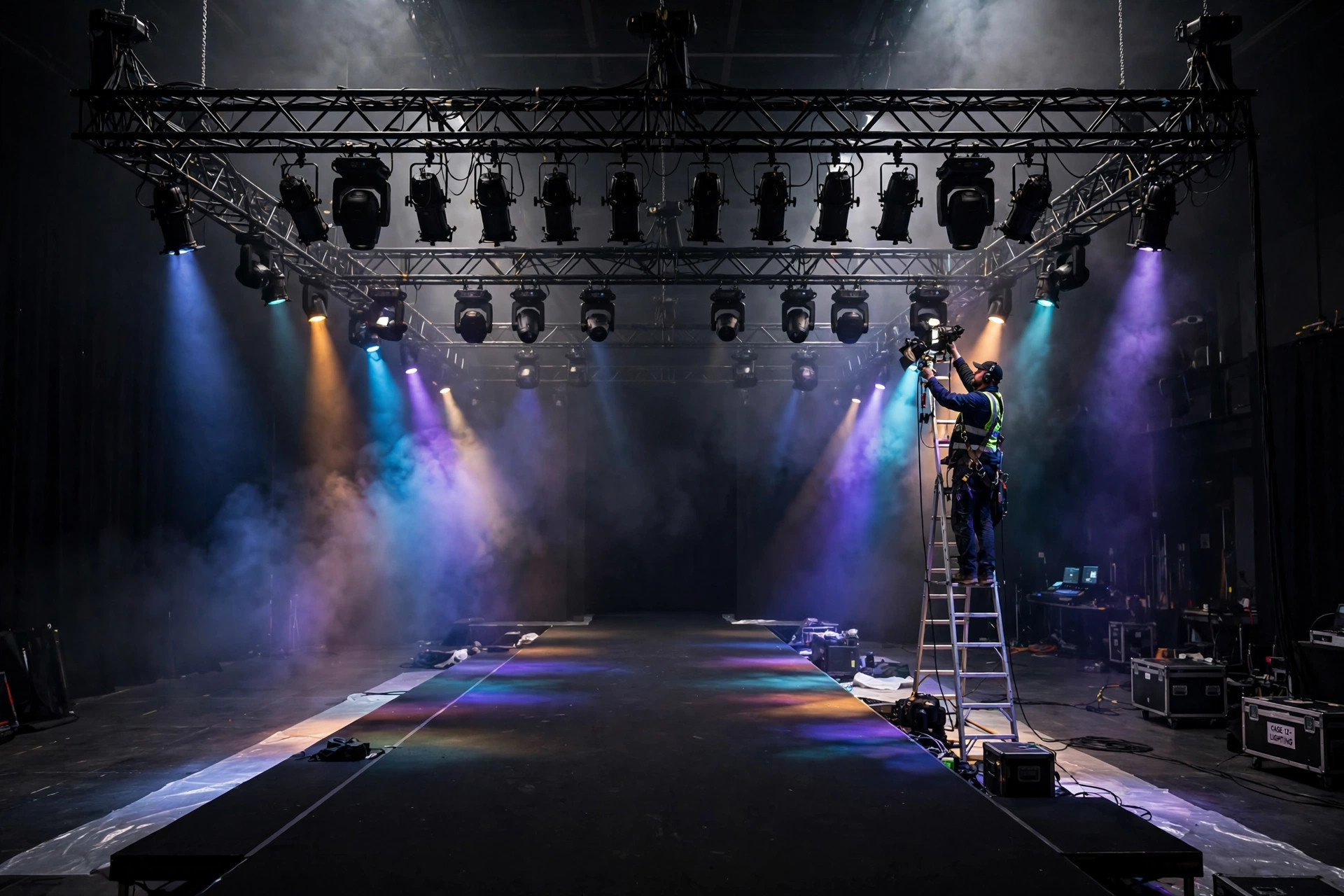
Lighting design for runway is a negotiation between drama and documentation. The base state must be bright, even and color-true along the whole walk, so buyers see the garments and photographers — whose pit position and needs are coordinated with the Fashion Photography & Media Production Guide — can expose every look identically. On top of that base, the lighting designer builds the show’s weather: entrance washes, changes of intensity between sections of the collection, and the finale’s lift. Sound works the same way. The music’s tempo effectively choreographs the show, because models walk to its beat; transitions between tracks mark the collection’s chapters; and volume is balanced so front-row conversation — and the audience’s attention — never has to compete.
Choreography and Show Flow
Choreography in a runway show rarely means dance; it means the composed movement of the whole event. It decides the walking route when the staging is not a simple straight line, the spacing between models, the held pose at the turn, the pattern of any group exits, and the finale formation in which the full collection appears at once before the designer’s bow. Flow also governs what the audience feels as pacing: a dense, fast sequence reads as energy, a slow sparse sequence as luxury. This movement design is taught to the cast as model direction — the subject of our casting and model direction guide — and it is rehearsed in the finished set, because choreography drawn on paper often changes the first time real bodies move through the real space.
Design Serves the Photograph
Far more people will see a show in photographs than will ever sit at it, and experienced production designers plan for that audience from the first sketch: backdrop contrast behind a model’s head, floor color against shoe leather, light levels at the exact spot where models pause and turn. A show that photographs badly has failed at half its job, however beautiful it was in the room.
Common Questions
Why is runway lighting usually so bright and white?
Because the lighting has two jobs: let the audience read the garments accurately, and expose correctly for the photographers whose pictures will carry the show worldwide. Bright, even, color-accurate front light shows fabric and detail truthfully. Dramatic colored or dim lighting may suit a mood, but it distorts the clothes' colors in photographs — so designers use it sparingly and deliberately, not by accident.
What are the main runway formats?
The classic format is the straight catwalk: a long raised runway with audience on both sides and a backdrop at the entrance end. Variations include the U-shaped or square runway that loops back through the room, in-the-round staging with the audience surrounding the action, salon-style presentations in small rooms, and fully immersive sets where models move through a constructed environment rather than a single runway.
Who chooses the music for a fashion show?
The selection is made by the designer with the producer and often a dedicated music designer or DJ. Music sets pace and mood, and its tempo is matched to the walking speed the show needs. Because shows are filmed and streamed, the rights to use recorded music in that context are cleared as part of production — a practical detail handled in advance, not at the venue.
What is a technical rehearsal for a fashion show?
The technical rehearsal (or tech) is when the production elements are set in the venue without worrying about the clothes: lighting states are programmed and cued to the music, sound levels are balanced, video and screens are checked, and the show caller builds the cue sheet. Models then rehearse the walk in the finished space. The tech is where design on paper becomes timings in the cueing system.
More in the Fashion Show & Runway Production Guide
Back to the Fashion Show & Runway Production Guide
The Fashion Show & Runway Production Guide hub explains the whole production — planning, casting, backstage, staging, fashion week and the guest list — with a map of every guide in this cluster.