Apparel Search · Fashion Show Production
Fashion Show PR & Guest Lists
The audience of a fashion show is produced as carefully as the show itself: who is invited, where they sit, and what they publish afterward is planned weeks in advance by the PR team.
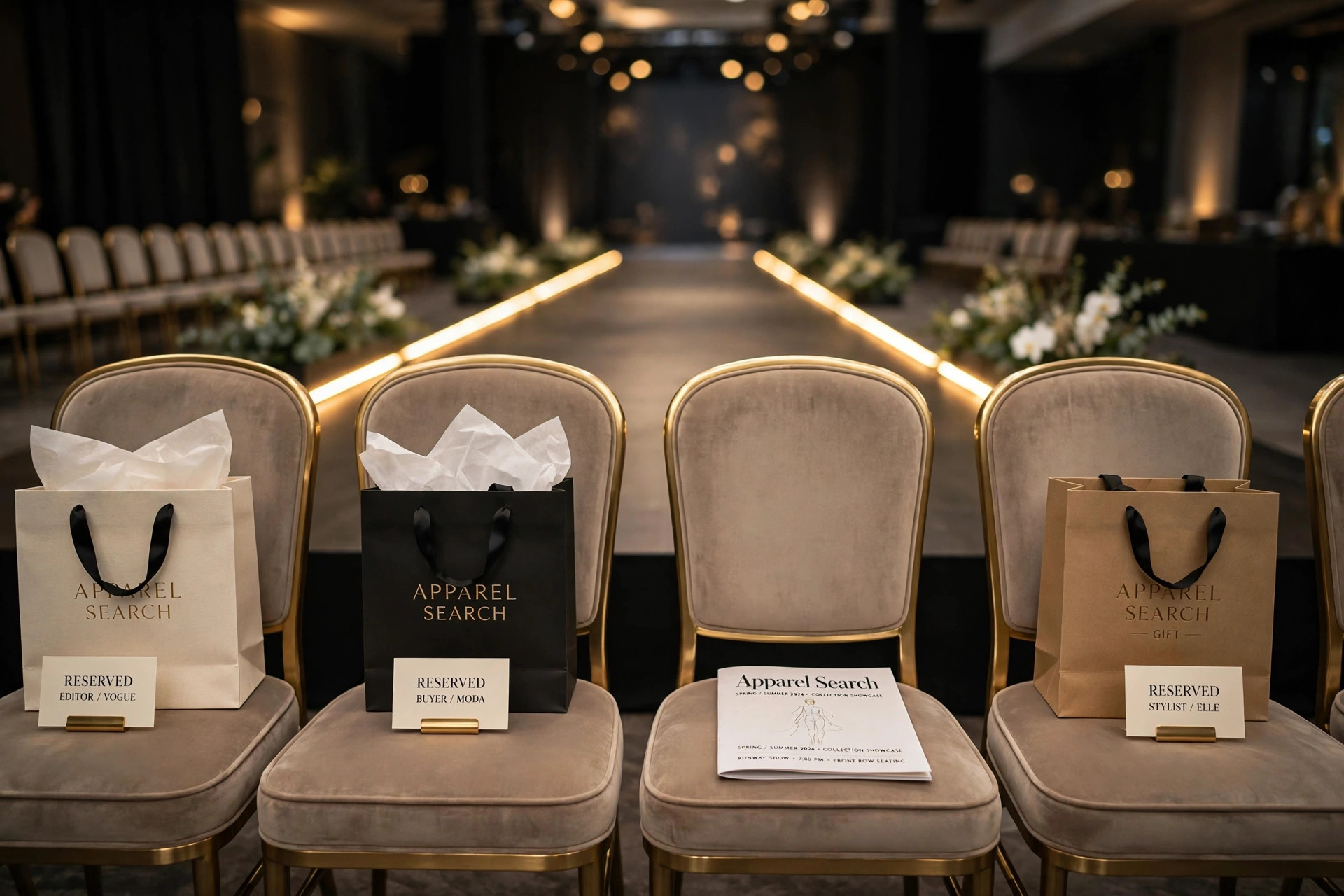
Ask a producer and they will tell you a fashion show has two productions: the one on the runway, and the one in the seats. This guide — the audience-facing chapter of the Fashion Show & Runway Production Guide — is about the second: how a PR team decides who is in the room, where each person sits, and how a fifteen-minute event is converted into a season of coverage. The broader strategy behind show PR — positioning the brand across a whole season — is covered by the fashion public relations guide in our Fashion Marketing & Branding Guide; here we stay with the show itself.
Building the Guest List in Tiers
The guest list starts from the venue’s hard number: seats. From there it is built in tiers of professional importance to the collection’s success. First come the critics and senior editors whose reviews and pages shape reputation, and the retail buyers whose orders shape revenue — the two audiences the fashion week system itself is organized around. Then key clients, stylists who pull clothes for shoots and red carpets, and the public figures whose presence draws cameras. Industry guests, junior press and standing invitations fill the remaining capacity. The list is a living document until the doors open: confirmations, cancellations and the eternal plus-one requests are managed daily in the final weeks, and every change ripples into the seating plan.
Invitations, Seating and the Front Row
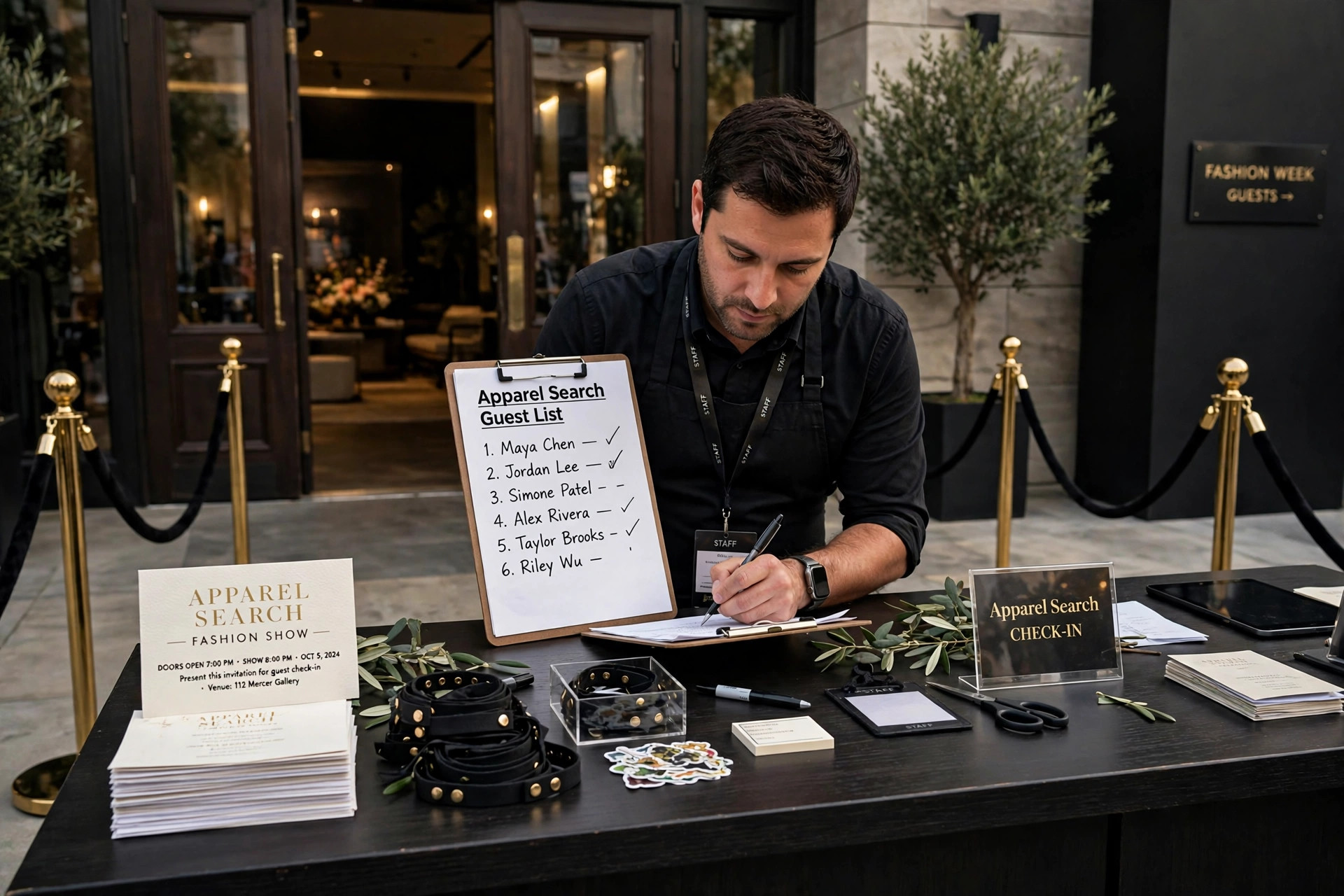
The invitation is itself a piece of brand communication — traditionally printed and delivered, now often digital, but always designed to be photographed and kept. It states the essentials (designer, date, time, venue) and, on the day, its presentation at check-in is what gets a guest to their seat. Seating is assigned by the PR team on a plan of the venue: front row for the highest tier, with sightlines and neighbor placement considered — who sits beside whom is diplomacy. Name cards or seat numbers mark the plan in the room, and ushers seat guests as they arrive, holding the most important seats against the late arrivals who inevitably include the most important guests. Late starts, within reason, are usually this process working as intended, not failing.
Press Operations and the Morning After
Press at a show are working, and the production treats them accordingly: an accredited photographers’ position at the end of the runway — coordinated with the production design in our production design guide and the photography workflows in the Fashion Photography & Media Production Guide — a media check-in separate from the guest flow, and collection notes and imagery ready to distribute. When the finale ends, the PR team’s second shift begins: distributing photographs, answering sample requests, and gathering the reviews. Designers feel the show for fifteen minutes; the PR team measures it over the following weeks, in column inches, posts and buyer appointments — the returns the entire guest-list effort was built to earn.
The Seat Is the Message
Outsiders sometimes treat show seating as vanity. Inside the industry it is read as information: a buyer promoted to the front row learns what the brand thinks of their business; an editor moved back learns the opposite. PR teams plan seating with that legibility in mind — every placement is a sentence the room can read.
Common Questions
How do people get invited to fashion shows?
Invitations are issued by each brand's PR team; there is no central box office for the main shows. Editors, critics and buyers receive invitations through their publications and stores, whose importance to the brand determines both the invitation and its seat. Clients, stylists, celebrities and their representatives are invited through the relationships the PR team manages year-round. Being on a list one season does not guarantee the next — lists are rebuilt for every show.
Why does front row seating matter so much?
Because it is read as a public ranking. The front row is photographed as heavily as the runway, and placement in it signals a guest's standing with the brand and in the industry. It also has a practical logic: the most important buyers and critics need the clearest view of the clothes, at the distance where fabric, cut and detail can actually be judged.
What is a standing ticket at a fashion show?
When seated capacity is filled, PR teams issue standing invitations — guests watch from a designated standing area, usually behind the seats. Standing is common for junior editors, assistants, students on industry programs and additional press. It is a real invitation tier, not an afterthought: in a small venue, standing guests can outnumber the seated.
What happens after the show for the PR team?
The work accelerates. The team distributes the official photographs and collection notes to press who could not attend, fields requests for samples for photo shoots, tracks the reviews and coverage as they appear, and begins the follow-up with buyers' offices. A show's coverage over the following week is largely determined by how well this follow-through is organized.
More in the Fashion Show & Runway Production Guide
Back to the Fashion Show & Runway Production Guide
The Fashion Show & Runway Production Guide hub explains the whole production — planning, casting, backstage, staging, fashion week and the guest list — with a map of every guide in this cluster.