Apparel Search · Fashion Show Production
How to Produce a Fashion Show
Timelines, budget lines and the team that makes fifteen minutes of runway possible — the producer’s view of a fashion show, from first concept to final walk.
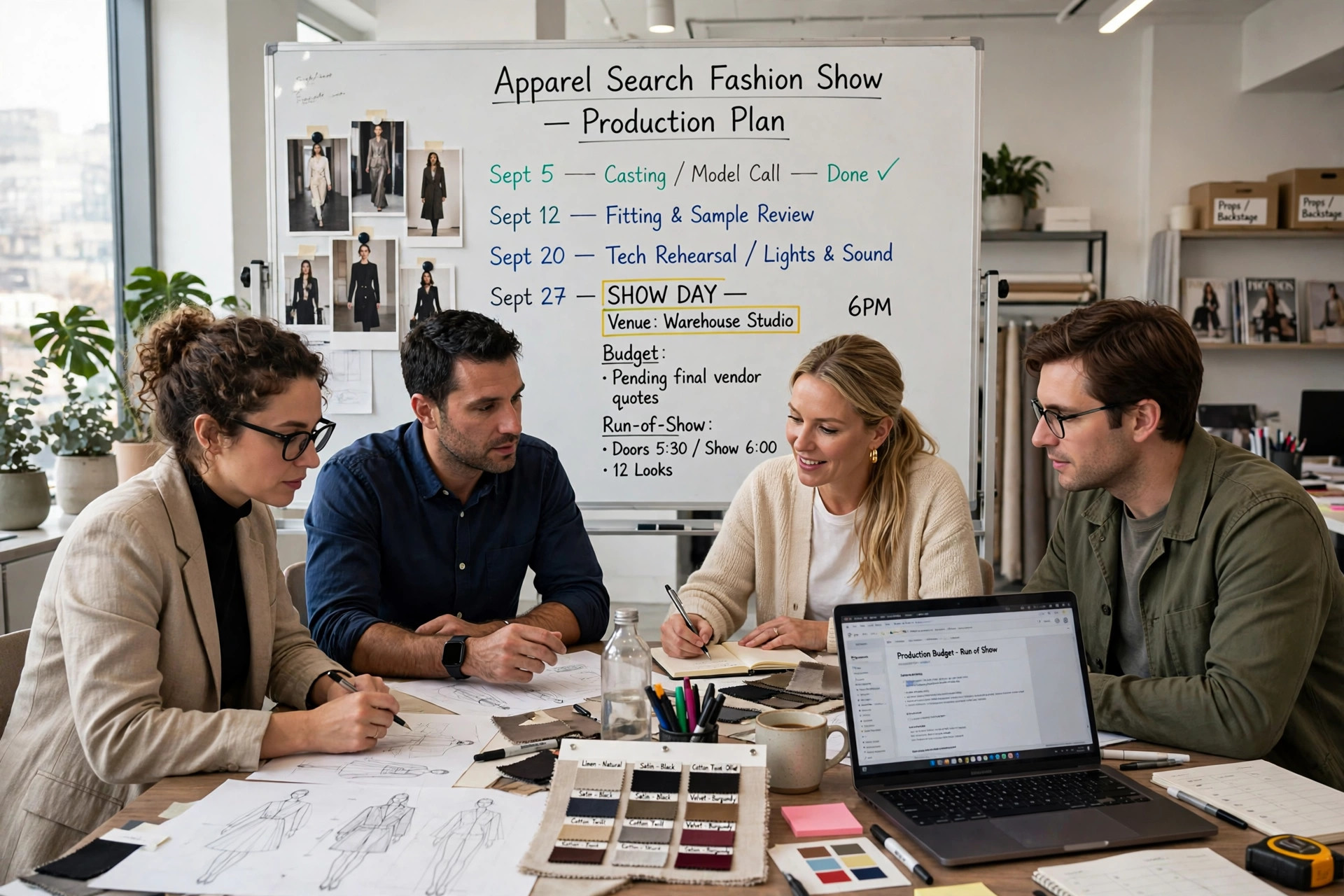
Producing a fashion show means holding two clocks in your head at once. One counts down in months: venues, budgets, teams and sets. The other counts down in seconds: the cue that sends each look onto the runway. This guide follows the first clock — the planning process that the Fashion Show & Runway Production Guide hub places at the center of the whole cluster — because almost everything that goes wrong on show day was decided, or left undecided, months earlier.
The Production Timeline
- Set the concept and the budget (about 4–6 months out). Before anything is booked, the designer and producer agree the show’s job: impress buyers, win press, celebrate a launch, or all three. That decision fixes the scale, and the scale fixes the budget. The creative concept — the mood the audience should leave with — is stated now, because casting, set design and music all take their direction from it.
- Book the venue and the date (about 3–5 months out). The venue determines the runway length, the backstage space, the seating capacity and the technical possibilities, so it is chosen before designs are drawn. During fashion week, the date and time slot also have to be negotiated against every other show the same guests are attending.
- Assemble the team (about 3–4 months out). The producer hires the show caller, casting director, stylist, set and lighting designers, sound designer or DJ, backstage manager, hair and makeup leads, and the PR team that will build the guest list. Each gets the concept and the budget line they own.
- Casting, fittings and the running order (about 1–2 months out, then final week). Models are cast and fitted to specific looks; the order in which looks appear — the running order — is drafted and then revised as the collection is finished. The process is covered in depth in our casting and model direction guide.
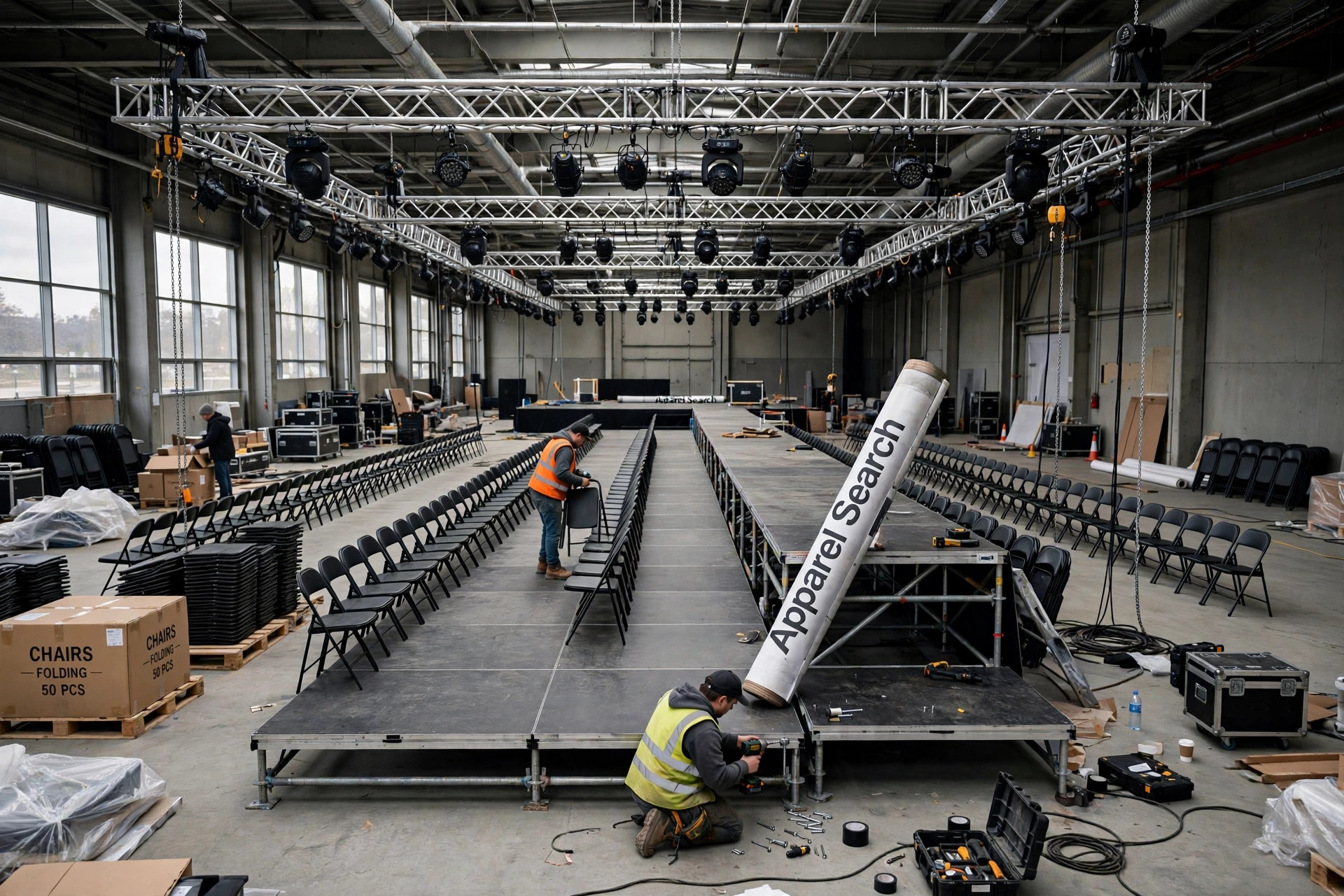
- Build, program and rehearse (the final week). The set is built in the venue, lighting states and music cues are programmed, and the full show is rehearsed in the space: walks, spacing, quick changes, finale. Anything that cannot survive rehearsal is cut or simplified now, while there is still time.
- Show day, then the follow-through. Guests are checked in and seated, the show caller runs the cues, and within hours the photographs are with the press. In the following days the team does the unglamorous work the show was for: buyer appointments, press follow-up, and returning every borrowed item.
The Budget Lines Every Show Carries
Show budgets differ in size, not in shape. The venue and its staffing come first, then technical production: runway and set construction, lighting, sound, and any screens or video. People costs follow — model fees, the show team’s day rates, hair and makeup teams, dressers and security. Then the audience-facing lines: seating, invitations, check-in staffing, hospitality, and the photography and video that turn a fifteen-minute event into coverage that lasts a season. A contingency line is not optional; live events generate surprises, and the contingency is what keeps a surprise from becoming a cancellation. Producers who work in fashion repeatedly say the same thing: the lines are predictable, and the shows that go over budget are usually the ones where a line was wished away instead of priced.
Show Day: The Two Hours That Matter
On show day the production splits into two operations running in parallel. Front of house, the PR team checks in guests, manages the seating plan, and holds the start — shows rarely begin exactly on time, and a short, managed delay while key editors are seated is normal practice. Backstage, the operation described in our backstage guide takes over: models in hair and makeup, dressers at their rails, the show caller counting down. The producer’s job on the day is not to do any of these jobs personally; it is to be the one person who can solve a problem in any of them without stopping the show.
The Running Order Is the Show
The running order — the numbered list of looks in the order they will walk — is the single document every department works from. Dressers dress by it, the show caller cues by it, the lighting operator programs to it, and the photographers’ shot lists are keyed to it. When a look is dropped or swapped, the running order is re-issued to everyone, because a show cannot run on two versions of the truth.
Common Questions
How much does it cost to produce a fashion show?
Costs vary enormously with scale — from a few thousand dollars for a small independent presentation in a rented studio to sums with many more zeros for a fashion week spectacle with a custom-built set. The budget lines are the same at every scale: venue, staging and technical production, models, hair and makeup, crew, hospitality and security, invitations and PR, and photography and video. Small shows save by shrinking each line, never by deleting one.
How long should a fashion show be?
Plan for roughly 10 to 20 minutes of runway for a single-brand show of 30 to 50 looks. Shorter risks feeling rushed; longer tires an audience that is often attending several shows in a day. The running order should build: strong opening look, a developing story through the middle, and the most memorable pieces, then the finale walk, at the end.
Do I need a permit or insurance for a fashion show?
In most cities, yes to both in some form. Venues typically require event insurance, and permits can apply to occupancy, amplified sound, temporary staging and serving alcohol. Requirements are local, so the producer confirms them with the venue and the city early — this is administrative work that belongs at the start of the timeline, not the week of the show.
What is the difference between a runway show and a presentation?
In a runway show, models walk a set route in sequence, one look at a time. In a presentation, models stand or move informally in a space while guests circulate and look at the clothes up close, usually over one to two hours. Presentations cost less, let buyers and press examine garments closely, and suit smaller collections — many emerging designers choose them over a full runway production.
More in the Fashion Show & Runway Production Guide
Back to the Fashion Show & Runway Production Guide
The Fashion Show & Runway Production Guide hub explains the whole production — planning, casting, backstage, staging, fashion week and the guest list — with a map of every guide in this cluster.