Textile Dyeing & Finishing · Methods
Garment Dyeing Explained
Sew it first, dye it after. Garment dyeing reverses the usual order of production — and produces the soft colors, tonal seams and fast color decisions that dyeing fabric first cannot.
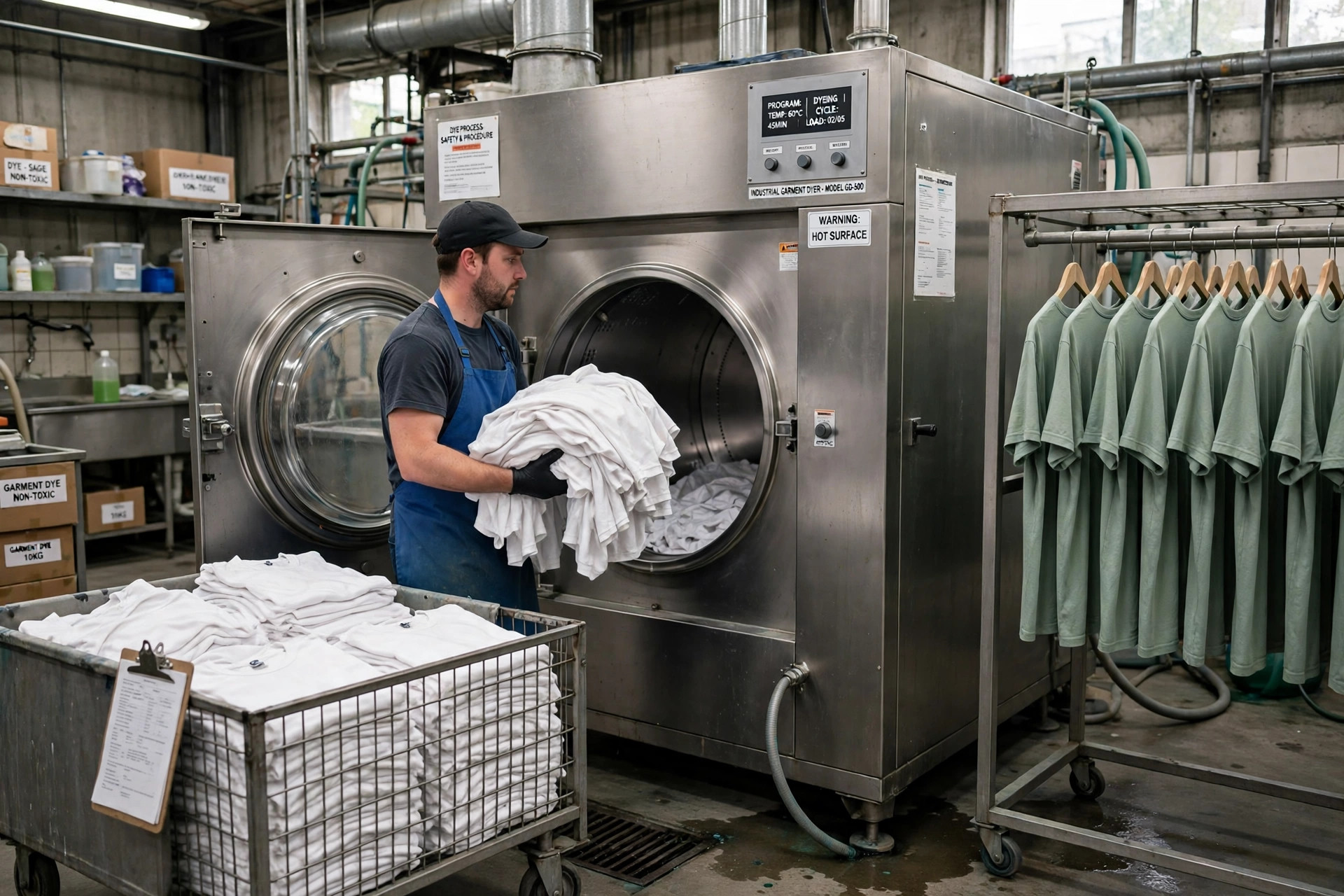
When a label says garment-dyed, it is describing a production decision as much as a look. Instead of dyeing fabric, cutting it and sewing it, the factory cuts and sews the garment from undyed cloth and dyes the finished piece — shirt, dress, sweatshirt and all. This guide, part of the Textile Dyeing & Finishing Guide, explains how the process works, why its colors look the way they do, and what it costs in consistency and planning. The method is used mostly on cotton and other cellulosic garments, with the reactive and pigment dye systems from the dye types guide.
How the Process Works
Make the Garment Prepared for Dyeing
Garments are sewn from undyed, scoured fabric — the trade calls them PFD, prepared for dyeing. Every component must be chosen for the dyebath: sewing thread is usually cotton so it dyes with the garment, labels must survive hot alkaline liquor, and patterns are cut with extra allowance for the shrinkage the dye process will cause.
Load the Dyeing Machines
Finished garments go into paddle or rotary garment dyeing machines — in effect, industrial laundries engineered for dye chemistry. Loads are sorted by weight so every batch sees the same liquor ratio, and the garments tumble freely so dye and water reach every fold.
Dye, Wash and Soften in One Sequence
The machine runs a full wet cycle: scouring if needed, dyeing at the recipe's temperature and time, rinsing, and a softening finish. Because the garment spends so long in hot water, it emerges with the washed, broken-in hand that is part of the method's appeal.
Dry, Press and Inspect
Garments are dried, pressed and inspected piece by piece. The shrinkage has already happened, so what is measured at inspection is the size the customer will keep — one reason garment-dyed basics are marketed as pre-shrunk.
The Look: Why Garment-Dyed Color Is Different
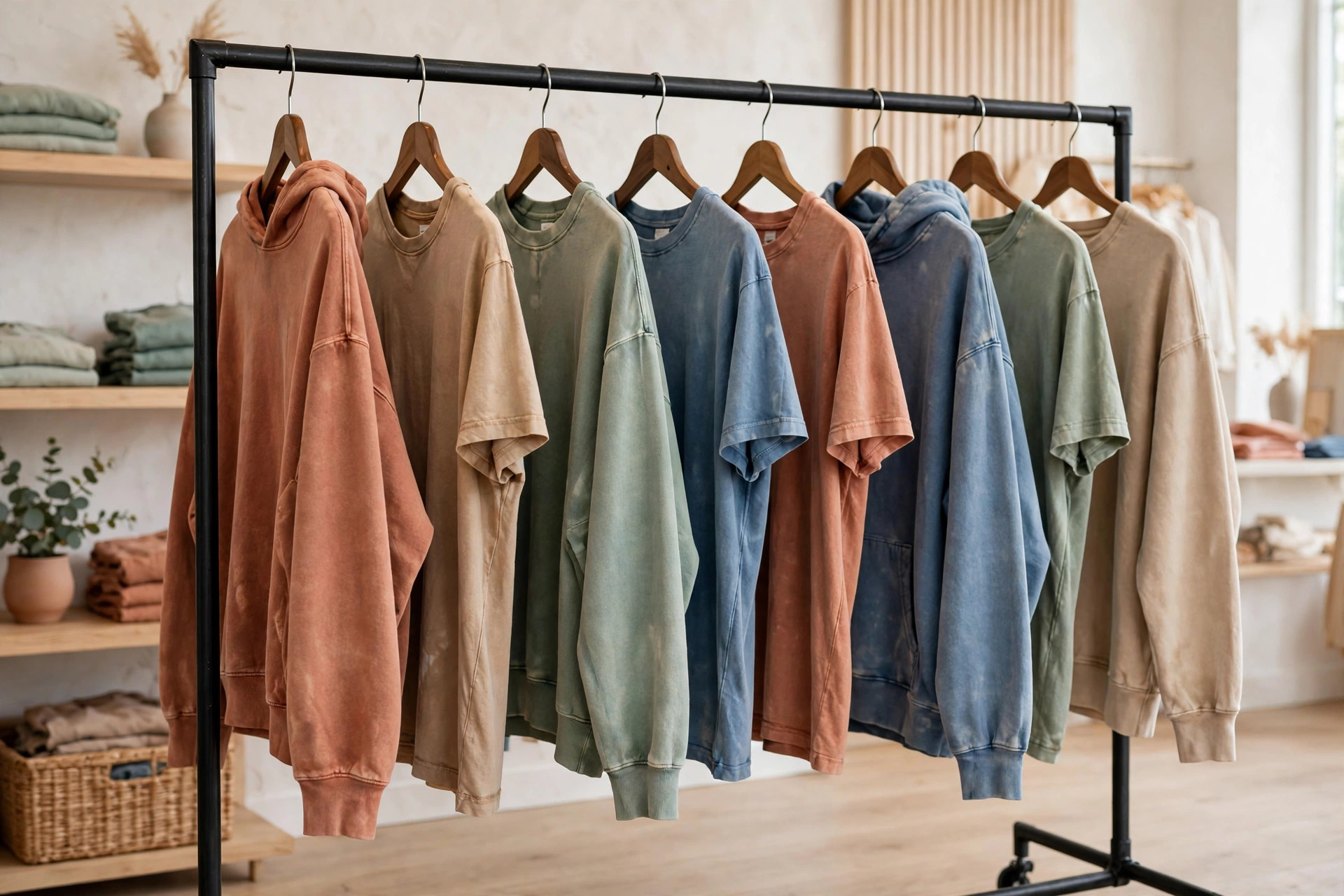
A dyebath does not treat a sewn garment the way it treats flat cloth. Seams, hems, collars and pocketing are thicker, folded or doubled, so they take up dye a little differently from single-layer panels — the result is the subtle tonal variation across a garment-dyed piece that reads as depth rather than defect. Thread makes the effect visible: cotton thread dyes to match, while polyester thread resists cellulosic dyes and stays pale, giving the contrast stitching seen on many garment-dyed styles. And when pigment dyes are used — colorants that bind to the surface rather than the fiber — each wash lifts a little more color away, producing the progressive fade of vintage-look garments.
Why Brands Choose It
The strategic reason is timing. A brand producing piece-dyed clothing commits to colors months ahead, fabric first; a brand garment-dyeing can sew a season of undyed garments, watch early sales, and dye toward the colors customers are actually buying — a hedge against the costliest mistake in fashion, the right garment in the wrong color. The method also lowers the barrier to offering many colors in small quantities, since undyed inventory is shared across all of them. The soft hand and pre-shrunk fit are genuine product benefits, and dyeing only what will be sold means fewer finished garments in unsold colors heading for markdown or landfill.
The Trade-Offs
Consistency is the price. Shade varies slightly from batch to batch and can vary within a garment, so garment-dyed products are sold with variation as an accepted characteristic rather than a defect — managed, as the shade approval guide explains, by approving dyeings against a standard and keeping each retail unit from a single batch. Mixed materials are a second constraint: a garment combining cotton body cloth with polyester trims, elastic or plastic buttons must be designed so every part either dyes compatibly or is meant to contrast. Finally, sizing engineering is unforgiving — patterns must carry the right shrinkage allowance, because there is no finished-fabric testing stage to catch an error before the garment exists.
More in the Textile Dyeing & Finishing Guide
Common Questions
What does garment-dyed mean on a label?
It means the item was sewn together first and dyed as a complete garment, rather than being cut from pre-dyed fabric. Garment-dyed clothing typically has softer, slightly varied color, tonal stitching and a pre-washed feel — and it has already done most of its shrinking during the dye process, so its fit is stable from the first wear.
Why do some garment-dyed shirts fade unevenly?
Some garment dyeing uses pigment dyes, which are bound to the fabric surface instead of bonding inside the fiber. Surface color wears and washes away gradually, especially at folds, seams and edges, producing the faded, vintage effect the style is known for. Garments dyed with reactive dyes hold their color far more evenly, because the dye is chemically bonded to the cotton.
Can any garment be garment-dyed?
No. The method suits cellulosic fibers such as cotton and linen best. Every component — shell fabric, thread, labels, lining and trims — must survive the dyebath and either take the dye compatibly or be deliberately chosen to resist it. Polyester thread, for example, stays undyed by cotton dyes, which is either a defect or a designed contrast effect, depending on intent.
Is garment dyeing more sustainable?
It reduces one specific waste: unsold colors. Because brands commit to color late and dye closer to actual demand, fewer finished garments in the wrong colors are discounted or discarded. The dyeing itself uses water and chemistry like any other wet process, so the advantage lies in inventory accuracy rather than in a cleaner process.
Back to the Textile Dyeing & Finishing Guide
The Textile Dyeing & Finishing Guide hub covers the whole of wet processing — dye types, dyeing methods, garment dyeing, finishing, natural dyes and shade approval — with a map of every guide in this cluster.