Textile Dyeing & Finishing · Quality
Color Matching & Shade Approval
A brand's navy has to be the same navy in every factory, on every fabric, under every store light. Lab dips, shade bands, light boxes and Delta E tolerances are how the industry makes that happen.
Color looks simple until you have to manufacture it. A buyer approves a shade in one country, a mill dyes it in another, and the garments are sold under a third set of lights — and at every step the question is the same: is this the color we agreed on? Shade approval is the system the apparel industry built to answer that question consistently, and this guide, part of the Textile Dyeing & Finishing Guide, explains its moving parts: the standard, the lab dip cycle, the controlled light that defeats metamerism, the instruments that put numbers on difference, and the shade sorting that keeps production honest.
From Standard to Lab Dip
Everything begins with a standard: the physical swatch (or a numbered master standard) that defines the color a style must be. The mill's dye lab prepares lab dips — small dyeings, usually a few grams of the actual production fabric — and submits them for approval before any bulk fabric is committed. On the brand's side, the dips are evaluated against the standard, and the comments that go back are directional and specific: too red, too yellow, too dull, too light. The dyer adjusts the recipe and resubmits; most colors take two or three rounds before approval. Printed fabrics follow the parallel route with strike-offs, the print equivalent covered alongside the lab-dip spoke of the Apparel Product Development Guide, which places this cycle in the development calendar where it actually happens.
Metamerism: The Match That Is Not
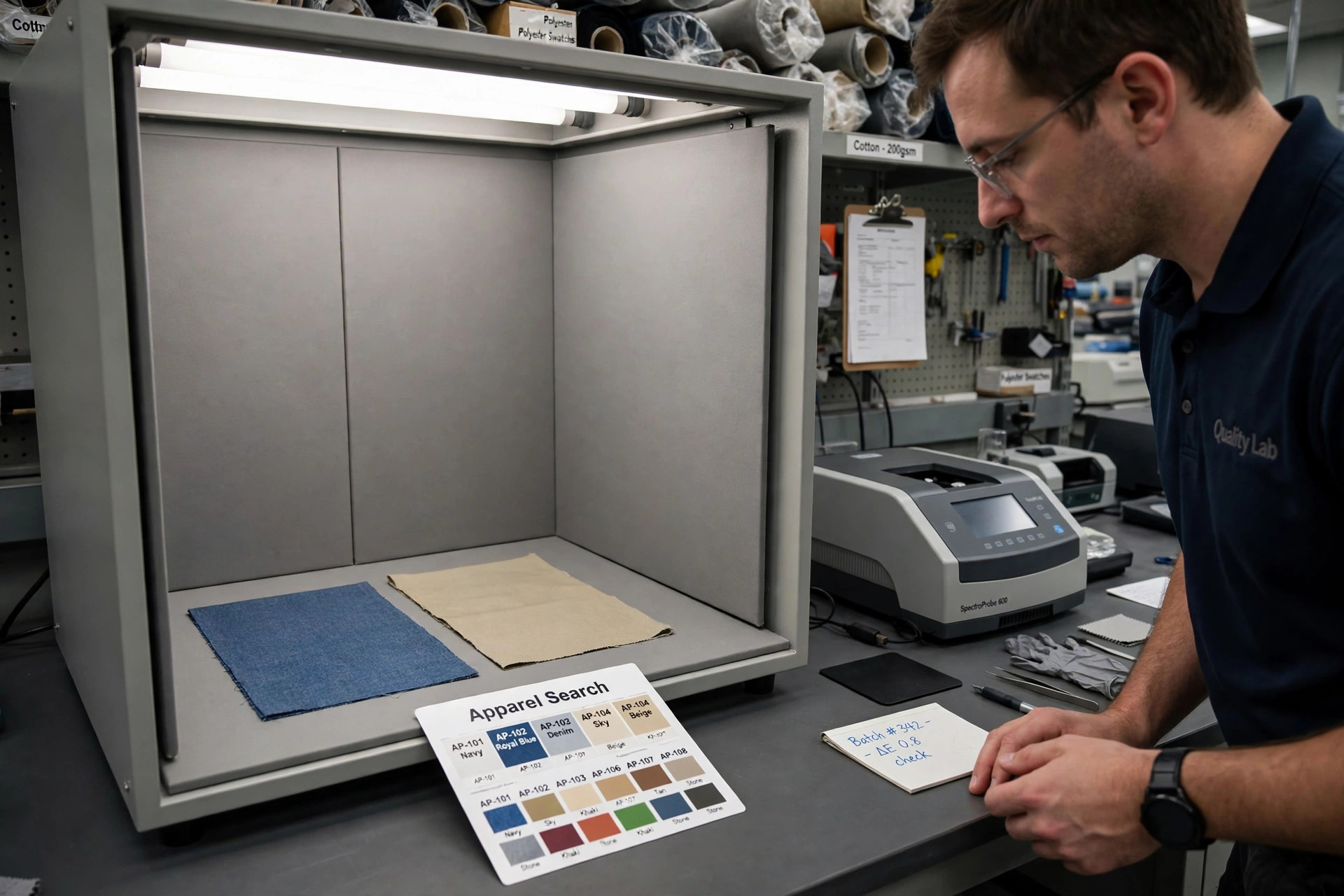
The most treacherous failure in shade approval is metamerism: two samples that match under one light source and visibly differ under another. It happens when the samples were made with different dye recipes or different fibers — their underlying color curves coincide in daylight but separate under store fluorescent light or warm home lighting. The defense is to approve shades in a light booth under several standardized sources: D65, the daylight simulator used as the primary reference in apparel; a store light such as TL84; and a warm incandescent source. A match that survives all three is a match a customer will never see break. Metamerism is also why a brand may reject a technically close lab dip whose recipe differs from the approved one: the numbers match today, under one lamp, and diverge in the store.
Putting Numbers on Color: Spectrophotometers and Delta E
Human eyes disagree, fatigue and adapt; instruments do not. A spectrophotometer measures a sample's reflectance across the spectrum and converts it to coordinates in the L*a*b* color space — lightness, red-green and yellow-blue values. The distance between a sample and the standard in that space is its Delta E: a single number for how far off the shade is. Brands set a maximum tolerance, commonly around one Delta E unit under a CMC formula weighting that reflects how the eye perceives differences, and dyeings outside tolerance are rejected, adjusted or re-dyed. Instrumental pass/fail does not replace the light booth — a metameric pair can measure close and still fail visually — but it gives distant factories and buyers one shared, unambiguous language for color.
Keeping Bulk Production in Shade
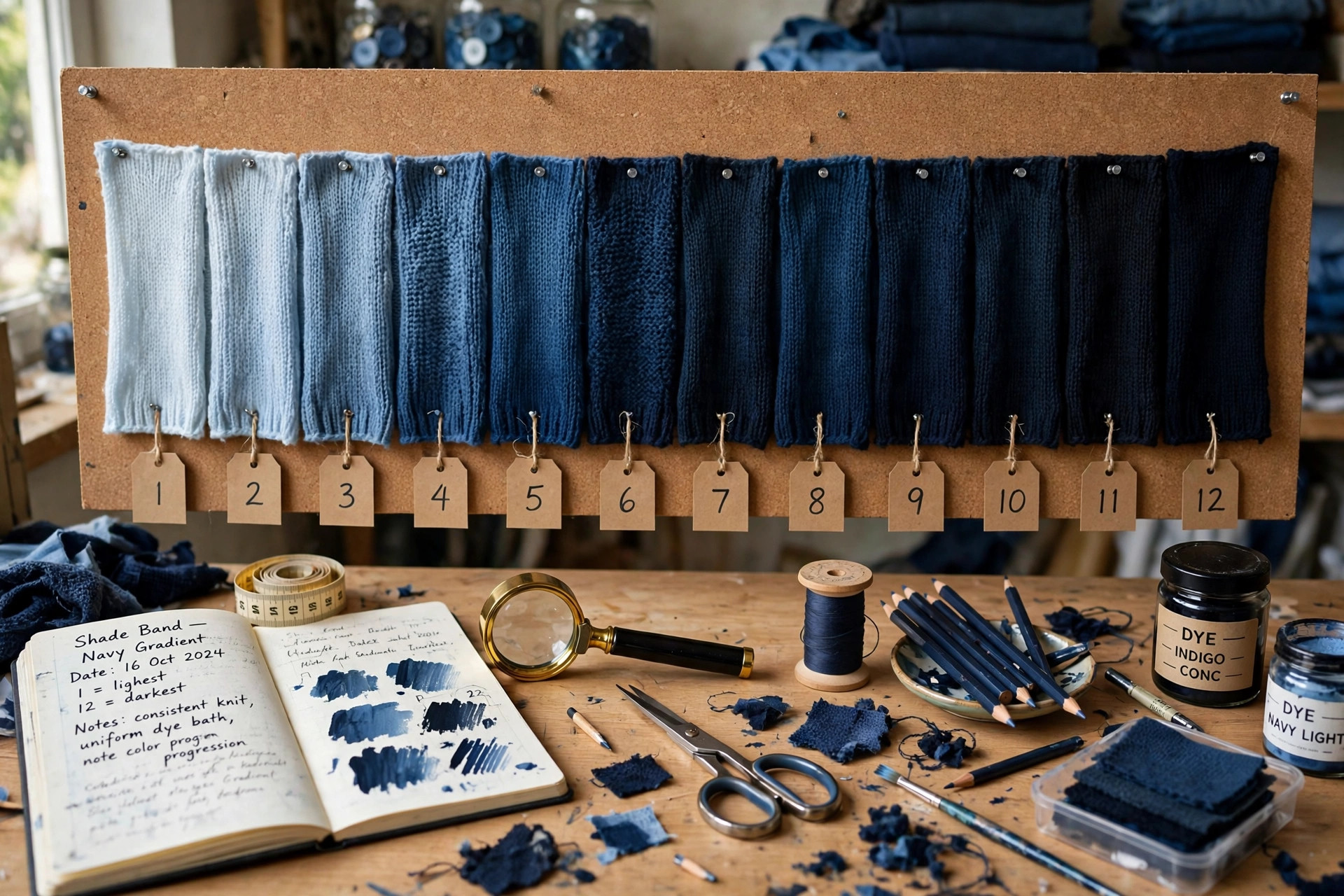
Approval is not the end. Bulk dyeing varies subtly from lot to lot, so mills sort production into shade bands — graded groupings from slightly light to slightly deep — and mark every roll with its lot. Cutting respects the bands: all panels of one garment come from a single lot, so a shirt never mixes two almost-identical navies across body and sleeve. At final inspection, garments are checked against the approved standard again, and fastness is verified separately, because a shade can match perfectly and still fail in washing — that side belongs to the colorfastness testing guide in the Textile Testing cluster. Approval, banding and inspection together are what make a re-order, two seasons later, come back as the same color.
More in the Textile Dyeing & Finishing Guide
Common Questions
What is a lab dip?
A lab dip is a small sample dyeing a mill prepares on the actual production fabric to match a brand's color standard. The brand evaluates it under controlled light and returns comments — approved, or corrections such as too red or too light — and the mill resubmits until the shade is approved for bulk dyeing. Most colors take two or three rounds.
What is metamerism?
Metamerism is when two samples match under one light source but not under another. It happens when the samples are made with different dyes or different fibers: their colors coincide under daylight but separate under store or home lighting. Approving shades under several standard lights — daylight, store light and incandescent — is how buyers catch it before production.
What does Delta E mean in color matching?
Delta E is a number expressing the distance between two colors in the L*a*b* color space, measured by a spectrophotometer. A small Delta E means a close match; brands set a maximum tolerance, often around one unit under a CMC formula for apparel, and bulk dyeings outside it are rejected, corrected or re-dyed.
Why do the sleeves and body of a shirt sometimes differ slightly in shade?
Garment panels are cut from fabric that may come from different dye lots. If shade sorting slips, panels from two lots — each individually within tolerance but slightly different — end up in one garment, where the eye catches the step between them. Mills prevent it by grouping production into shade bands and cutting every garment from a single lot.
Back to the Textile Dyeing & Finishing Guide
The Textile Dyeing & Finishing Guide hub covers the whole of wet processing — dye types, dyeing methods, garment dyeing, finishing, natural dyes and shade approval — with a map of every guide in this cluster.