Textile Dyeing & Finishing · Natural Color
Natural Dyes & Low-Impact Color
Every dye was a natural dye until 1856. This guide covers the classic sources — indigo, madder, cochineal, weld — the mordants that make them stick, and an honest look at what low-impact color means at industry scale.
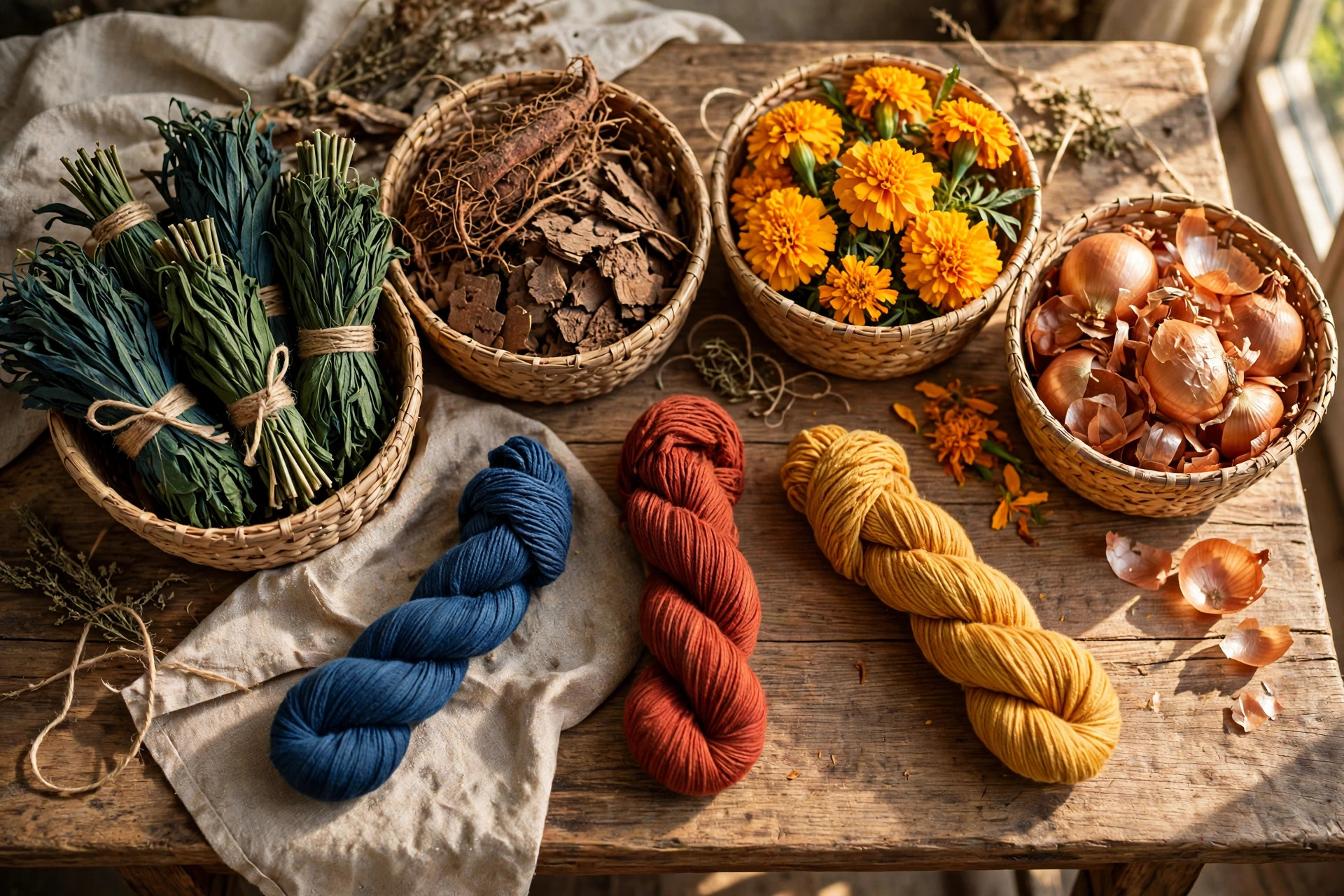
For almost all of human history, color came from plants, insects and minerals, and the palette of the pre-industrial world was built from a surprisingly small set of great dye sources. The synthetic era that began with Perkin's mauveine in 1856 displaced them for sound industrial reasons — consistency, cost, range — but natural dyes never disappeared, and current interest in them is genuine. This guide, part of the Textile Dyeing & Finishing Guide, covers the classic sources and the mordant chemistry most of them need, then assesses honestly where natural color works, where it struggles, and which lower-impact synthetic routes the industry uses when natural dyes cannot scale. (The site also keeps a directory of the trade at natural dyes.)
The Classic Sources
Four sources carried most of the world's natural color. Indigo, from the leaves of Indigofera and related plants, is the great blue — chemically a vat dye that needs no mordant, and the same molecule as the synthetic indigo that colors denim today; its story is told in the Apparel Search indigo definition and the Denim Fabric Guide. Madder, from the roots of Rubia tinctorum, is the great red — the basis of the famous Turkey red process on cotton. Cochineal, an insect that lives on prickly pear cactus, gives the most brilliant natural reds and pinks on wool and silk. Weld is the clearest, most light-fast natural yellow, while logwood with iron produces the deepest natural blacks. Around these anchors sits a long supporting cast — marigold, onion skins, turmeric, pomegranate rind, walnut hulls — each useful, most of them less fast or less consistent than the leaders.
Mordants: The Bridge Between Dye and Fiber
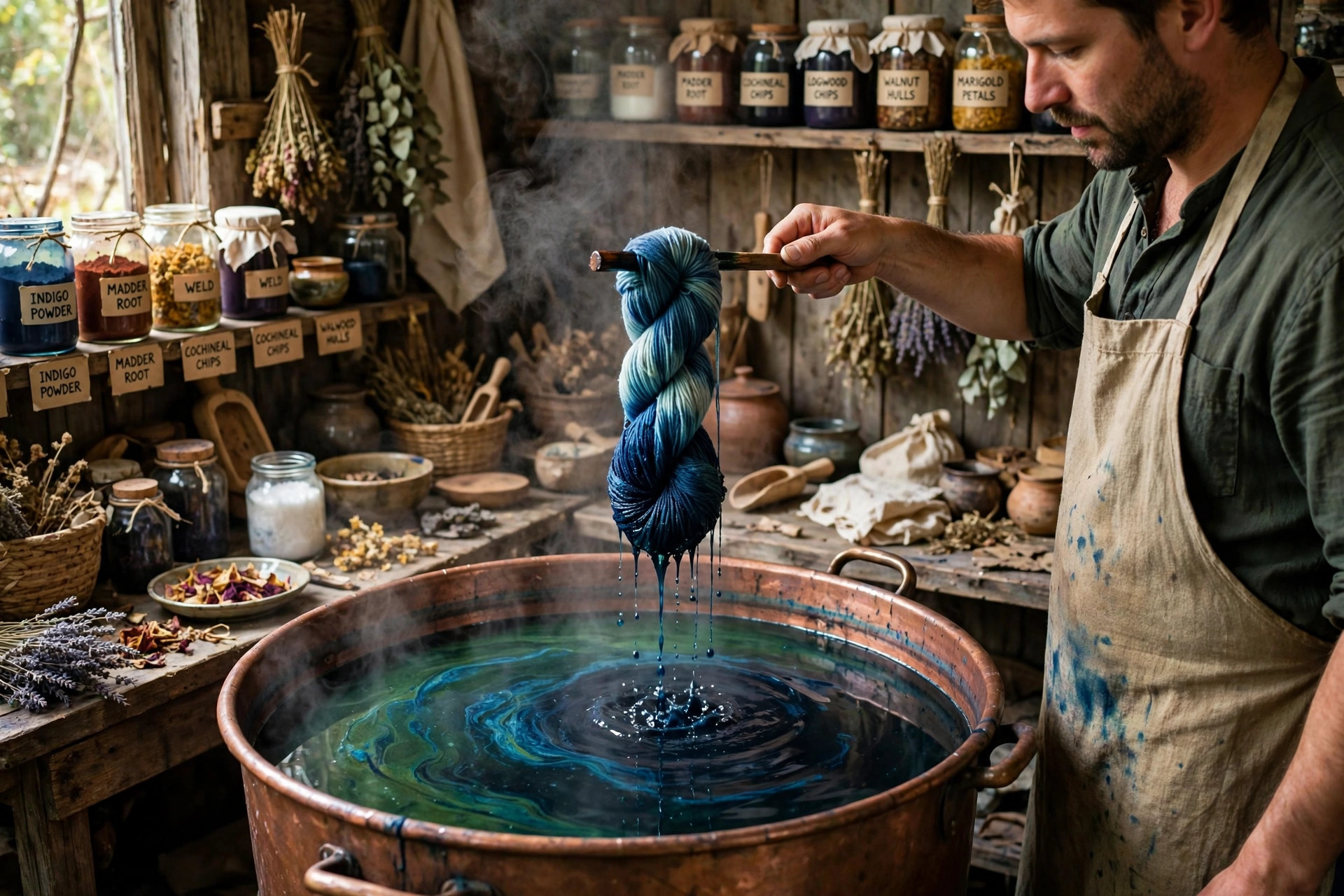
Most natural dyes have little grip on fiber by themselves. They need a mordant — typically a metal salt such as alum (potassium aluminum sulfate) or iron (ferrous sulfate) — that attaches to the fiber and offers the dye a partner to bind to, forming a three-way bridge that dramatically improves uptake and wash fastness. The Apparel Search definition of mordant gives the glossary version. Mordant choice is also a color tool: iron darkens and dulls shades, an effect dyers call saddening, so the same madder bath gives bright red on alum-mordanted wool and a muted plum-brown on iron. Cellulosic fibers are harder to mordant than protein fibers and are usually prepared with tannin-rich materials first. Traditional mordants included chrome and copper compounds, now avoided in responsible practice for their toxicity — an early reminder that natural dyeing is chemistry too.
An Honest Sustainability Assessment
Natural dyes are often marketed as automatically green, and the truth is more interesting. In their favor: the colorants are renewable and biodegradable, the artisan processes built around them are low-energy, and the palette has a depth and variability many brands and customers value for its own sake. Against them at scale: growing dye crops takes agricultural land and water for a modest yield of color; shades vary with harvest, soil and water, so the reproducibility industrial buyers require is hard to guarantee; light and wash fastness are generally below good synthetics; and the metal mordants many recipes rely on have their own environmental ledger. At artisan and capsule-collection scale, natural dyeing can be a genuinely low-impact and meaningful choice. At mass-market volumes, the footprint comparison usually favors the improved synthetic processes described next.
Lower-Impact Routes That Scale
The industry's main answers to cleaner color are engineering, not nostalgia. High-fixation reactive dyes and low-salt dyeing processes put more of the dye on the fiber and send less of it down the drain. Solution (dope) dyeing of synthetics, described in the dyeing methods guide, colors fiber at the melt stage with a fraction of the water of piece dyeing. Waterless dyeing of polyester using supercritical carbon dioxide as the medium exists commercially, though still at small scale. Digital textile printing cuts waste in patterned goods because color goes only where the design sits — the Textile Printing Methods guide covers that side. And for buyers who want the claims audited rather than asserted, the fashion certifications hub explains the standards — GOTS, OEKO-TEX, bluesign and others — that police dye chemistry and mill effluent.
More in the Textile Dyeing & Finishing Guide
Common Questions
What is a mordant?
A mordant is a substance — usually a metal salt such as alum or iron — that helps a dye attach to fiber. Most natural dyes have little hold on cloth by themselves; the mordant forms a bridge between the fiber and the dye molecule, improving both color uptake and wash fastness. Different mordants also shift the color: iron darkens and dulls shades, an effect dyers call saddening.
Are natural dyes better for the environment?
Not automatically. Natural dyes come from renewable sources and avoid some synthetic chemistry, but growing dye plants takes land and water, shades are harder to reproduce from batch to batch, and the metal mordants many recipes require have their own footprint. At artisan scale they can be a genuinely low-impact choice; at mass-market scale, improved synthetic processes often outperform them on water, land and consistency.
Why is indigo different from other natural dyes?
Indigo is a vat dye, so it needs no mordant: the chemistry does the work. Indigo is insoluble in water, so it is reduced in an alkaline vat to a soluble form that enters the fiber, then turns blue as air oxidizes it. It also concentrates near the fiber surface, which is why indigo-dyed denim fades toward white with wear.
Can natural dyes be used on polyester?
Generally, no. Natural dyes evolved alongside natural fibers — they bind to cotton, linen, wool and silk with the help of mordants — and they have little affinity for synthetic fibers such as polyester, which needs disperse dyes and high heat to color at all. Natural coloration of synthetics is an active research area, but it is not standard practice.
Back to the Textile Dyeing & Finishing Guide
The Textile Dyeing & Finishing Guide hub covers the whole of wet processing — dye types, dyeing methods, garment dyeing, finishing, natural dyes and shade approval — with a map of every guide in this cluster.