Textile Dyeing & Finishing · Finishing
Textile Finishing Processes
Dyed fabric is not finished fabric. Calendering, sanforizing, mercerizing and dozens of other treatments decide how cloth feels, drapes, shrinks and performs — this is where fabric becomes a specified product.
Finishing is the stage of production most consumers never hear about and every consumer feels. Two shirts cut from the same dyed cotton can wear completely differently — one soft and stable, the other harsh and shrinking — purely because of the finishes applied after dyeing. This guide, part of the Textile Dyeing & Finishing Guide, explains the main mechanical and chemical finishing processes: what each machine or treatment does to the cloth, and why a finisher chooses it. A finish is best understood as a specification: width, weight, shrinkage, hand, luster and performance are all set here, and then verified by the tests in the Textile Testing & Quality Standards Guide.
Before Finishing: Preparation and Mercerizing
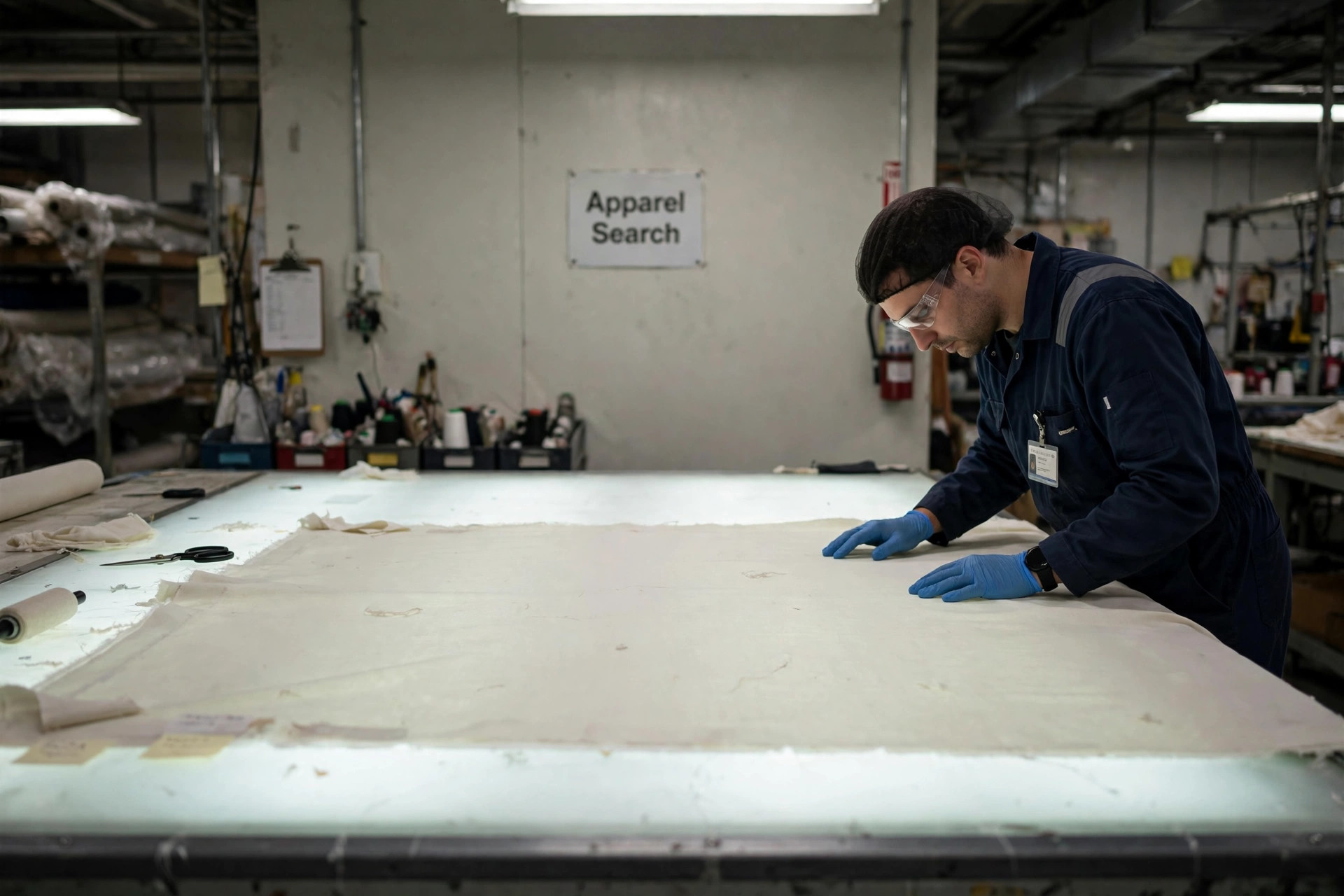
Most finishing happens after dyeing, but a few foundational treatments come first, when the grey cloth is prepared. Singeing burns protruding fibers off the surface over gas flames for a cleaner print and dye result; desizing removes the starch applied to warp yarns for weaving; scouring washes out natural oils and waxes so the fabric will absorb dye evenly; bleaching whitens cloth that must be pure white or take pale shades. The Apparel Search textile finishing overview walks through these preparation steps in their production order. One treatment straddles the line between preparation and finishing: mercerizing, in which cotton yarn or fabric is treated with strong caustic soda under tension. The fibers swell and round out, gaining luster, strength and a markedly better appetite for dye — mercerized cotton takes deeper, brighter color than untreated cotton, which is why it appears in quality shirting, polos and sewing thread.
Mechanical Finishes: What Machines Do to Cloth
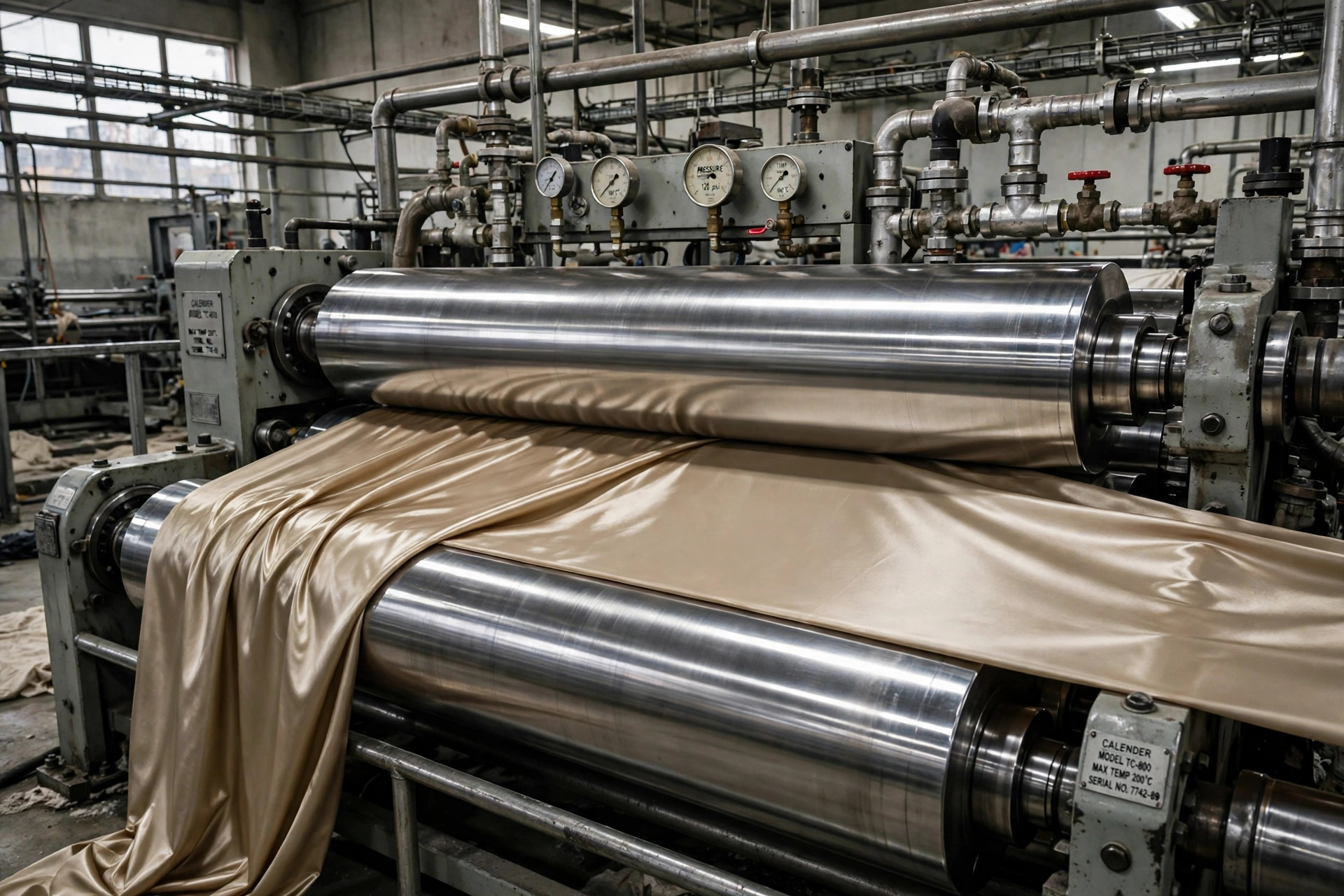
Mechanical finishes change fabric with pressure, heat, tension and abrasion rather than chemistry. Calendering passes cloth between heavy, heated rollers that flatten and polish the surface — adding smoothness and luster, closing the weave of down-proof and wind-resistant fabrics, or embossing a pattern; the Apparel Search definition of calendering covers the process in glossary form. Sanforizing, the trade name for compressive shrinkage, mechanically pre-shrinks cotton fabric so garments made from it shrink very little in the wash. Raising and brushing lift fiber ends to create flannel, fleece and brushed finishes, and shearing then cuts the raised surface level. Embossing presses a design into the cloth with engraved heated rollers. Finally, the stenter (or tenter) frame — a wide machine that grips fabric by its edges, dries it and sets its width — performs the quiet, essential finishing step for nearly all knitted and woven cloth, heat-setting synthetics so their dimensions stay put.
Chemical Finishes: What Chemistry Adds
Chemical finishes apply a substance that changes how the fabric behaves. Softeners are the most common, coating fibers so cloth feels smooth and drapes better. Easy-care and wrinkle-resistant finishes crosslink cellulose fibers with resins so cotton garments recover from creasing — the durable-press shirt is their best-known product. Water-repellent finishes lower the fabric's surface energy so rain beads and rolls off rather than wetting through. Flame-retardant finishes serve workwear, children's sleepwear and contract textiles where regulations demand them. Antistatic, antimicrobial and soil-release finishes round out the catalogue, each aimed at a specific end use. A key distinction runs through all of them: non-durable finishes wash away within a few launderings, while durable finishes are engineered — through fiber-reactive chemistry or heat curing — to survive the life of the garment, and their claims are tested after repeated washing, not just when the fabric leaves the mill.
Performance Finishes: The Next Guide Over
One family of finishes deserves its own map. Moisture-management (wicking) treatments, durable water repellents engineered for outdoor use, stretch and recovery systems, and cooling or warming finishes are designed as part of a performance fabric's whole construction — fiber, yarn, weave, dyeing and finish tested together against athletic demands. Rather than duplicate that coverage here, this guide hands off to the Performance Fabrics Guide, whose finishes coverage treats technical finishes in the context of the fabrics they complete. Come back to this page for the foundation finishes that all apparel fabric shares; go there for the ones engineered for sport and weather.
Finding Finishing Services
Finishers-for-hire — commission finishers offering everything from sanforizing to specialty coatings — are listed in the Apparel Search dyeing and finishing directory, and the textile finishing page links the finishing contractor directories alongside its process background. Knowing the processes above is what lets a brand write a finishing specification a contractor can actually be held to.
More in the Textile Dyeing & Finishing Guide
Common Questions
What is sanforizing?
Sanforizing is a mechanical pre-shrinking process — compressive shrinkage — in which fabric is fed against a heated cylinder and a thick rubber blanket that compresses it lengthwise, so a garment made from it shrinks very little in washing. It is standard on quality cotton fabrics, and the Sanforized name is a trademark for fabric certified to meet a residual-shrinkage standard.
What does mercerized cotton mean?
Mercerizing treats cotton yarn or fabric with a strong caustic soda solution under tension. The fibers swell into a rounder cross-section, which increases luster and strength and, most usefully for dyeing, affinity for dye — so mercerized cotton takes deeper, brighter color. It is common in quality shirting, knitted polos and sewing thread.
What is calendering?
Calendering passes fabric between heavy heated rollers under pressure, flattening the surface. Depending on the rollers and conditions, it can add smoothness, luster or a slight glaze, close the weave for down-proof or wind-resistant cloth, or emboss a pattern. The effect is mechanical and can diminish with washing unless resins or heat-setting are used to make it durable.
Do finishes wash out?
Some do. Simple softeners and surface treatments fade over a few washes, while durable finishes — wrinkle-resistant resins, heat-set synthetics, properly cured water repellents — are engineered to survive many launderings, though even they decline gradually. That is why finish performance is tested after repeated washing, not only when the fabric is new.
Back to the Textile Dyeing & Finishing Guide
The Textile Dyeing & Finishing Guide hub covers the whole of wet processing — dye types, dyeing methods, garment dyeing, finishing, natural dyes and shade approval — with a map of every guide in this cluster.