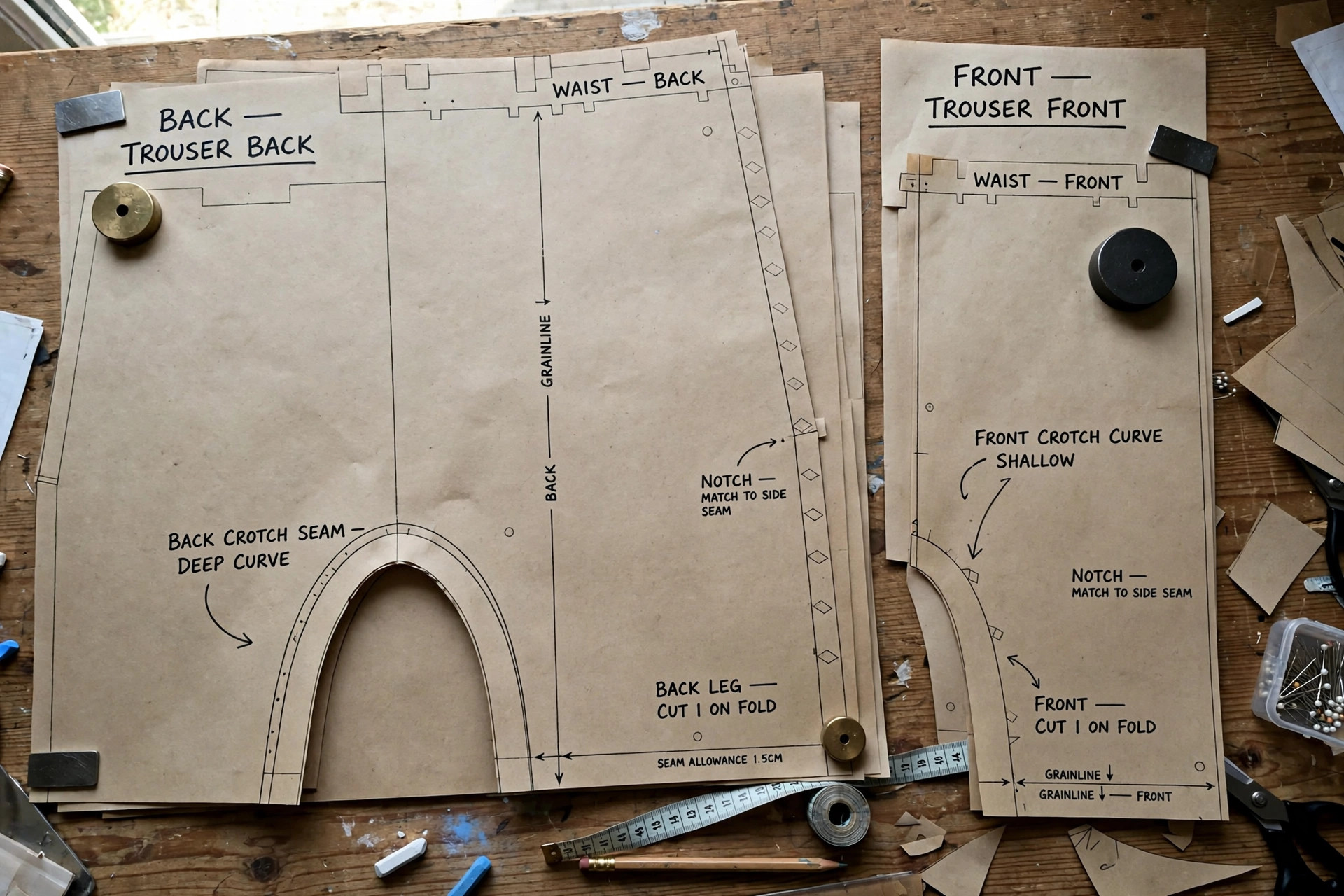
The crotch curve is the J- or L-shaped seam that runs from the centre-front waist of a pair of trousers, under the body, and up to the centre-back waist — the combined front and back rise curves. Its total length (the rise), the depth of its scoop, and how length is divided between front and back determine whether trousers allow sitting and walking without pulling, wedging or sagging. More trouser fitting problems trace to this one curve than to any other part of the pattern.
Anatomy of the Curve
The front curve is short and shallow; the back curve is longer and more deeply scooped, because the body needs more cloth to sit and bend behind than in front. On the pattern, each half is drawn from the waist through a crotch point extended from the inseam; the back extension is longer and angled lower. The shape is checked by walking the front and back seams together and comparing the total rise with the body's measurement taken from front waist, between the legs, to back waist.
- Sewing — the Apparel Search sewing section
- Too short or too shallow — the trousers wedge, pull down at the back waist when sitting and show strain smiles at the front.
- Too long or too deep — folds hang under the seat, the fork sags, and the legs look baggy no matter how the waist fits.
Adjusting the Curve
Fitting corrections are small and specific: scoop the back curve for a flat seat, extend the back point for a full seat, raise or lower front and back rises independently for balance, or reshape for a swayback so the back waist sits where the body puts it. Each change is a few millimetres at a time, re-trued and re-walked — the curve punishes guesswork, which is why trouser fitters work from a fitting shell and change one variable per muslin.
Fitters read the curve through the cloth: diagonal pulls from the fork point toward the hips mean the curve is fighting the body; a smile of folds under the seat means excess length behind; whiskers at the front mean the front curve is too scooped or the rise too short for the abdomen. Each symptom maps to a specific few millimetres of reshaping, which is why bespoke trouser makers guard a client's corrected crotch curve as the most valuable part of their pattern — copy it wrongly by a centimetre and the trousers are somebody else's.
FAQs
- What measurement controls the crotch curve?
- The rise: the distance from front waist through between the legs to back waist, plus its split between front and back and the body's seat shape, which sets the scoop.
- Why is the back crotch curve longer than the front?
- Sitting and bending lengthen the body's back surface far more than the front. The deeper, longer back curve supplies that cloth; equal curves would pull the back waist down.
- Can a ready-to-wear crotch curve be altered?
- Only slightly — a seam can be deepened a little or the waist raised. Large corrections need fabric that was never cut into the garment, so they belong at the pattern stage.
Detailed Guides: see Crotch Curve in the glossary A–Z listing of the Apparel Search fashion glossary for related terms.