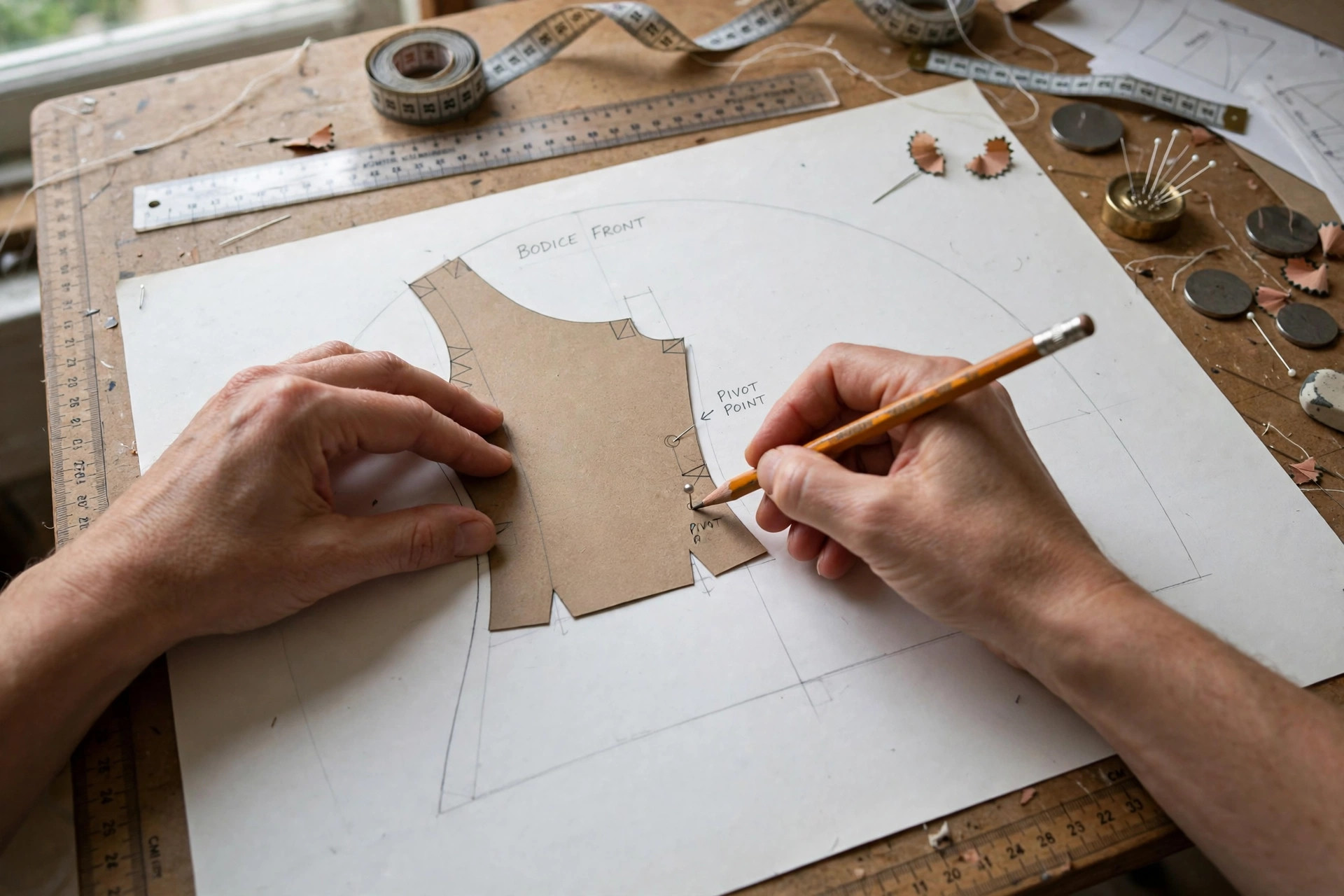
The pivot method is a dart-manipulation technique in which the pattern is pinned through a single pivot point — usually the bust point — and rotated in stages while the drafter traces around it. Each partial turn closes part of the old dart and opens the same amount of fullness at the new location, so the shaping moves without the pattern ever being cut. Because the original block survives intact, the method is a favourite for developing many styles from one treasured basic pattern.
How Pivoting Works
The drafter marks the new dart position, pins the block at the bust point, and traces from the new position to one leg of the old dart. The pattern is then rotated until the other dart leg meets the traced line — closing the old dart — and tracing continues around the rest of the piece. The space left between the start and finish of the trace is exactly the new dart. Nothing is added or removed; the wedge simply changes address.
- Sewing — the Apparel Search sewing section
- Best for — bodice dart moves: waist to shoulder, shoulder to armhole, combined darts, and dart-to-style-line conversions.
- Tools — a push pin or awl at the pivot point, a tracing wheel or pencil, and fresh paper beneath.
Pivot or Slash?
The pivot method and slash and spread reach identical results; the choice is practical. Pivoting keeps the master block uncut and is fast for simple one-dart moves, but becomes awkward when several slashes must open by measured amounts, as in a flared skirt. Slashing suits measured, multi-line spreading. Skilled pattern makers use both, sometimes on the same piece, and always finish by walking and trueing the result.
Accuracy in pivoting depends on small disciplines: the pin must pass exactly through the marked bust point on both paper layers, the pattern must be weighted so it cannot creep between traces, and each traced segment is labelled before the pattern moves again. Beginners are taught to pivot clockwise in one unbroken sequence, because reversing direction mid-move loses track of which segments have been traced. A well-pivoted pattern needs no repair work afterwards — its seams walk correctly and its dart legs match — which is why the method remains the fastest route from a sketch to a testable pattern.
FAQs
- Why is the bust point the pivot?
- Darts shape the garment around the bust apex, so rotating around that point moves the dart wedge while keeping its size and the garment's fit exactly the same.
- Does the pivot method work for skirts and sleeves?
- Yes — any piece can pivot around a chosen point, for example the hip point on a skirt or the sleeve cap — though measured spreading is usually easier for large amounts of flare.
- Do I need to cut my basic block to manipulate darts?
- No. That is the point of pivoting: the block is traced and rotated, never cut, so the original stays available for the next style.
Detailed Guides: see Pivot Method in the glossary A–Z listing of the Apparel Search fashion glossary for related terms.