What Knit Fleece Is
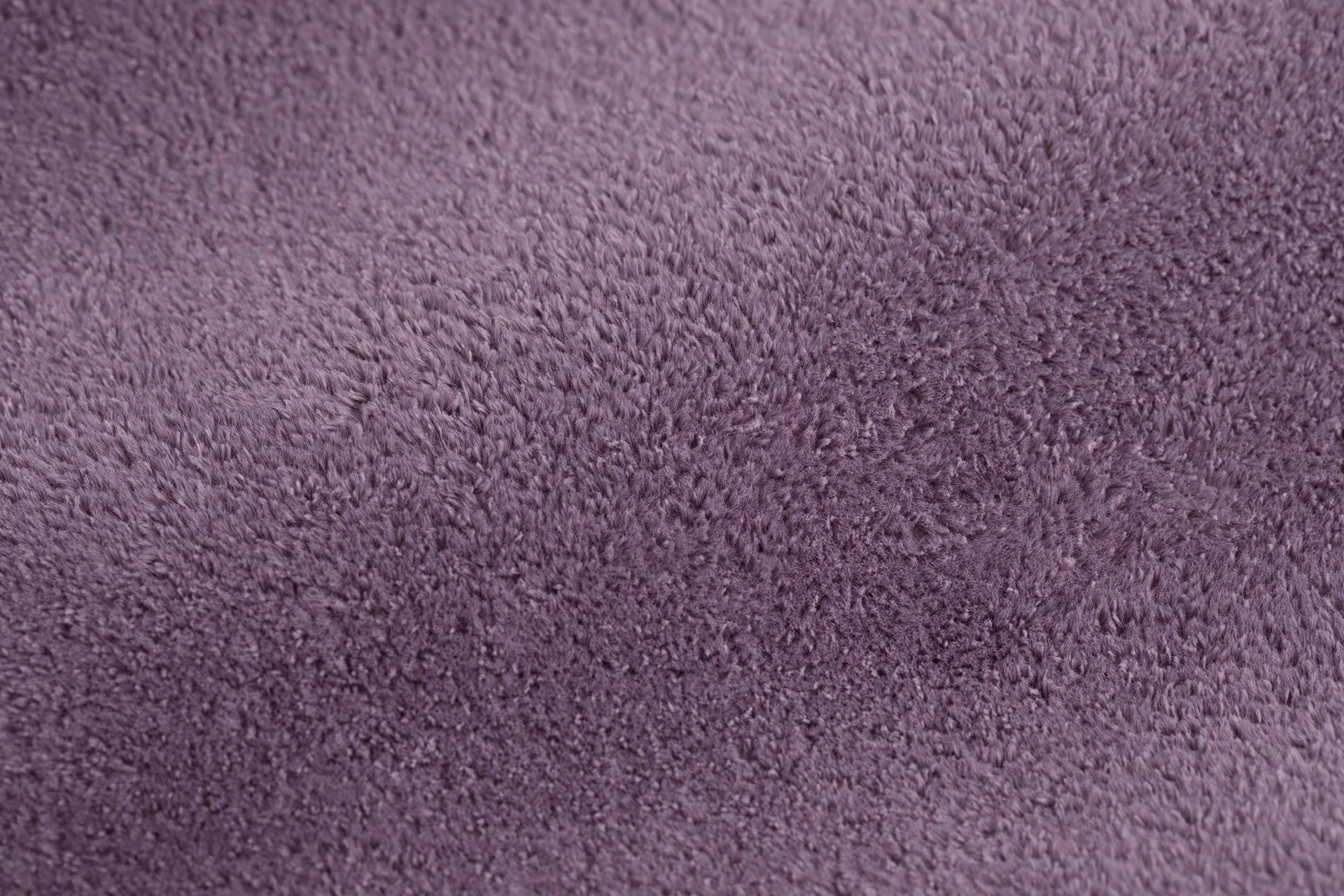
Pull on a hoodie on a cold morning and the soft, fuzzy inside that warms you straight away is knit fleece. Unlike the smooth looped back of its cousin French terry, fleece hides its construction under a brushed pile: the inside feels like a soft, dense nap with no visible loops at all. That pile is not a separate layer. It is the fabric’s own back yarn, floated across the rear of the cloth during knitting and then torn open by brushing until thousands of fibre ends stand up and trap warm air. Almost every sweatshirt, jogger, tracksuit and cosy casual jacket in the world relies on some version of this structure.
Knit fleece belongs to the weft-knit family set out in Weft vs Warp Knitting, and in trade language the standard quality is three-thread fleece (also called three-end fleece), because three yarns work together in every course. This page explains what each of those yarns does, how the inlay yarn is held on the back, and how brushing turns a flat-looking knit into the warmest casual fabric in the wardrobe. For the wider fabric picture — weights, types and buying — the Apparel Search fleece fabric guide is the companion resource.
Knit fleece is a weft-knitted fabric, usually a three-thread (inlay) construction, in which a coarse yarn is laid into the back of a jersey ground and held there by a binding yarn. Brushing raises the laid-in yarn into a soft pile on the back, giving the fabric its warmth, while the face stays smooth.
How Knit Fleece Is Knitted
Three-thread fleece is knitted on a circular machine with three yarn feeds working in sequence. The ground yarn (or face yarn) is usually the finest of the three and forms a plain single-jersey structure — this is the smooth outside of your sweatshirt. The inlay yarn, also called the fleece or pile yarn, is much coarser, softly twisted, and is not really knitted into loops at all: it is laid into the fabric so that it floats across the back, passing behind several needles at a time in a regular pattern. The third yarn, the binding yarn (or tie-in yarn), knits a course that catches and locks the inlay floats at intervals, tying them to the ground so they cannot pull out.
The order matters. Because the inlay yarn is held mostly on the technical back and only anchored at binding points, long lengths of it sit exposed on the inside of the cloth, exactly where the finishing department wants them. A two-thread fleece omits the separate binding yarn and relies on the ground to hold a shorter float; it is cheaper and thinner, and the difference shows in durability — three-thread fleece holds its pile and its shape through far more washing, which is why it is the standard for quality sweatshirting.
Knitting is only half the making. Off the machine, fleece looks unremarkable: a jersey with a slightly hairy back. The transformation happens at brushing (also called raising). The fabric passes over rollers covered in fine wire teeth that comb into the inlay floats and pull fibre ends out of the yarn, course by course, until the back is covered in a continuous soft pile. One pass gives a light raising; repeated passes build the deep, warm nap of heavyweight fleece. A shearing step may follow to level the pile, and anti-pill and softening finishes are commonly applied, because a raised surface made of broken fibre ends is naturally prone to pilling if it is left untreated.
Fibre choice tunes the result. Cotton-rich fleece brushes into a soft, absorbent pile that feels natural against the skin but can mat and pill; polyester in the inlay yarn brushes into a springier pile that resists flattening and dries fast; blends try to keep the virtues of both. The all-polyester branch of the family, brushed on both sides and sheared, becomes the polar fleece of outdoor jackets and blankets — same inlay-and-brush logic, different fibre and finishing. The parent survey of these structures is Knit Stitches & Structures.
Properties of Knit Fleece
Warmth is the headline property, and it comes from air, not weight. The brushed pile holds a thick layer of still air against the body for very little extra mass, so a fleece sweatshirt insulates far beyond what its jersey face would suggest. Because the pile is on the inside, the smooth face sheds light rain, takes print and embroidery well, and slides comfortably under jackets and coats.
- Warmth without weight. The raised back traps air efficiently; fleece is the warmest of the everyday sweatshirt knits at a given weight.
- Softness and comfort. The brushed surface feels warm on first contact, unlike a cold flat knit, which is why fleece dominates loungewear and children’s casual clothing.
- Stretch and easy care. As a weft knit it stretches, resists creasing, does not fray, and washes and dries with little ceremony.
- Pilling tendency. Brushing works by breaking fibre ends free; short or weak fibres roll into pills under friction. Long-staple yarns and anti-pill finishes are the countermeasures, and they separate premium fleece from cheap fleece within a season.
- Reduced absorbency. Once brushed, the back absorbs less readily than the intact loops of French terry, and cotton fleece that gets wet feels heavy — one reason outdoor performance fleece is polyester.
Fleece also compacts over time. The pile that starts lofty flattens where a seatbelt, a backpack strap or a chair back presses it, and warmth falls with loft. Good construction slows this: a well-bound inlay, a dense ground and a resilient fibre keep the pile standing through years of wear, while a loose, cheaply bound fleece can feel thin within months.
Where Knit Fleece Is Used
Sweatshirts and hoodies are the centre of the fleece world, with joggers, sweatpants, tracksuit tops and casual jackets close behind. It is the default fabric wherever a garment must feel warm and soft the moment it is put on: school and team kit, workwear sweatshirts, children’s play clothes, and the whole loungewear category that blurred the line between pyjamas and daywear. Heavier fleece lines casual coats and gilets; lighter fleece serves as a warm mid-layer under uniforms and outdoor shells.
Beyond clothing, brushed fleece backs throws and blankets, lines pet bedding, and pads protective covers, anywhere a soft, warm, non-fraying surface is useful. In garments, it is frequently combined with its neighbours in this series: a French terry body with fleece-lined hood, or fleece panels beside the sheared pile of velour in tracksuits that play the two textures against each other.
Buying well means testing the pile, not the label. Rub the inside hard with your palm: good fleece feels dense and springy and sheds almost nothing; poor fleece feels thin, squeaky or dusty and leaves fibres behind. Stretch the cloth and check that the face does not grin through with pale binding points, and look at the back under light — an even, continuous nap with no bare tracks is the sign of careful brushing. Weight helps too: very light fleece at sweatshirt size is rarely hiding much pile.
Recognising Knit Fleece — and Its Neighbours
The field test is touch. If the inside of a sweatshirt is a uniform fuzzy nap with no loops you can hook a fingernail under, it is fleece. If you can see and lift individual loops, it is unbrushed French terry — remember that fleece and French terry are finishing cousins, and a mill can brush one batch and leave the next unbrushed. If the pile is on the face, dense and velvety with a shade change as you stroke it, you have moved to velour, where pile formation and shearing replace inlay and brushing.
Fleece also gives its name loosely to fabrics outside this construction, including all-polyester polar fleece, which is a knit finished by the same raising logic, and to woven brushed fabrics, which are not knits at all. When the distinction matters — stretch, recovery, edge behaviour — check for the jersey face and the knitted ground: true knit fleece always has them. Its place among the weft-knit structures is mapped in Knit Stitches & Structures.
Common Questions
- What does three-thread fleece mean?
- It means three yarns work in every course: a ground yarn that forms the smooth face, a coarse inlay yarn that floats across the back, and a binding yarn that locks the inlay in place. After knitting, the inlay floats are brushed into the warm pile.
- Is knit fleece the same as polar fleece?
- They are close relatives. Sweatshirt fleece is usually cotton-rich, brushed on the back only, with a smooth jersey face. Polar fleece is polyester, brushed on one or both sides and sheared, and is used for outdoor jackets and blankets. Both rely on a raised pile to trap air.
- Why does fleece pill?
- Brushing raises the pile by pulling fibre ends free from the back yarn. Under friction those loose ends roll into small balls called pills. Longer, stronger fibres and anti-pill finishes reduce pilling; short-staple, loosely bound fleece pills fastest.
- Which is warmer, fleece or French terry?
- Fleece, at the same weight. Its brushed pile traps more still air than the open loops of French terry. French terry absorbs sweat better and feels cooler, which is why it is preferred for active and warm-weather sweatshirting.
- How should knit fleece be washed?
- Wash inside out on a gentle cool cycle to protect the pile, avoid fabric softener on polyester fleece because it coats the fibres and reduces performance, and dry gently. Brushing the pile lightly when dry helps restore loft.
More Knit Structures
- Knit Stitches & Structures — the parent guide to every structure in this series.
- French Terry (Knit) — smooth face, uncut loops standing on the back.
- Velour & Plush Knits — pile loops sheared level for a plush face.
- Pointelle Knit — transferred stitches open lace-like eyelets.
- Purl Knit Structure — links-links fabric that reverses course by course.
- Ponte di Roma — the stable double-jersey for structured garments.
Back to Knit Stitches & Structures
This page is one part of Knit Stitches & Structures, Apparel Search’s deep guide to the structures inside the Knitwear Construction Guide series on how knitted fabric is made.
Search Apparel Search