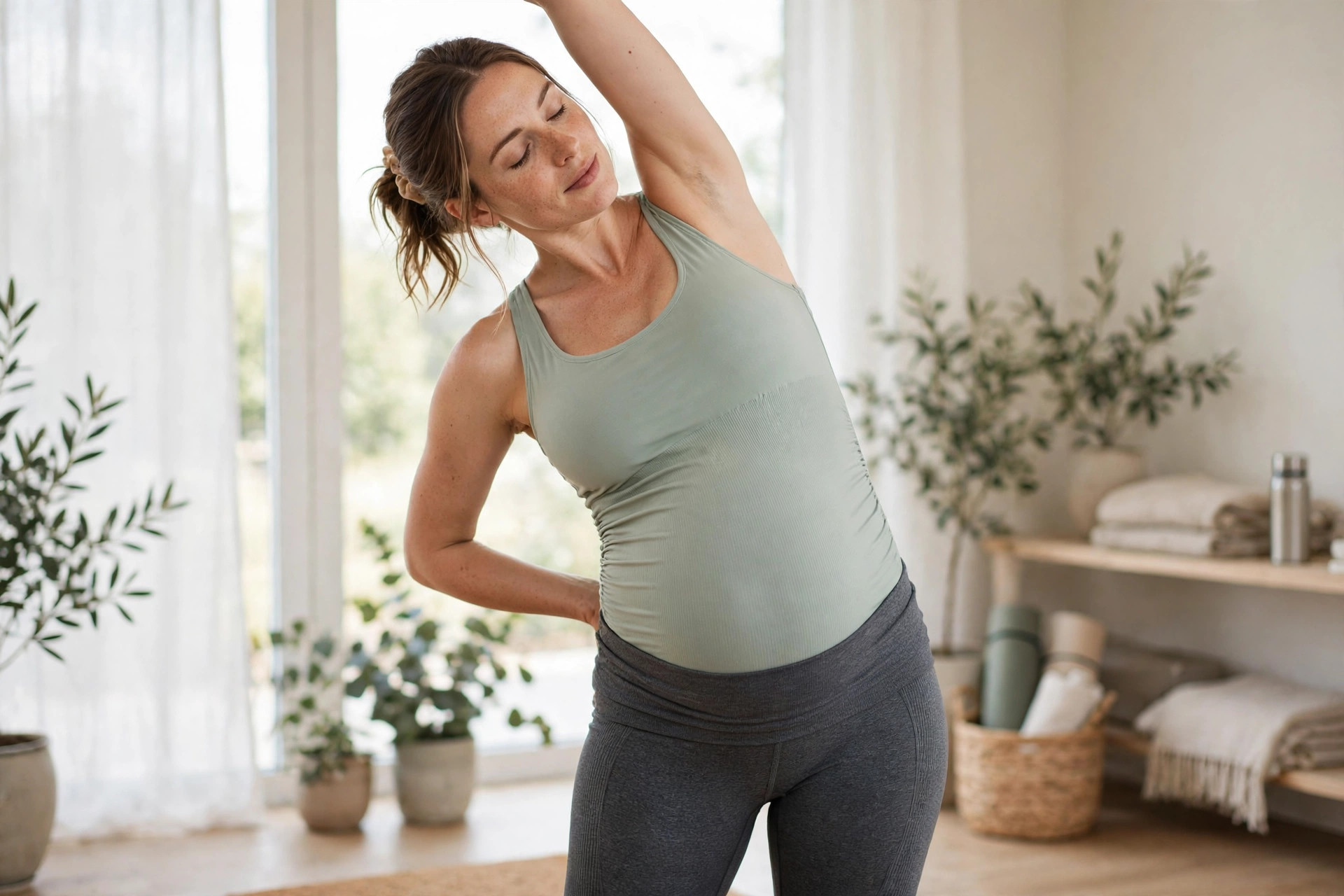
Maternity activewear is exercise clothing patterned for pregnancy: leggings and shorts with waistbands engineered to sit over or under a growing bump, tops with room that arrives through ruching, stretch panels, and longer cuts rather than simple extra size, and sports bras whose support adapts as cup size changes. It exists because ordinary activewear fails pregnancy in specific, predictable places — and each maternity design answers one of them.
The Waistband Question: Over-Bump, Under-Bump, Crossover
Every maternity bottom is a waistband decision. The over-bump panel — a wide, soft, stretchy band that rises over the whole bump — distributes support, smooths the line under tops, and is the late-pregnancy favorite because nothing presses a waistband edge into the belly. The under-bump band sits low, below the bump, like a regular waistband placed deliberately; it feels freer and cooler and is often the early-pregnancy and warm-weather preference. Crossover panels split the difference and, as a bonus, frequently keep working postpartum, sitting comfortably over a recovering midsection.
Preference shifts as pregnancy progresses, which is why many women end up owning both styles rather than crowning a winner. The test that matters is movement: walk, squat, and bend in the fitting room. An over-bump panel that slides down at week twenty may be perfect at week thirty-two; an under-bump band that feels free standing may dig when seated. Buy for the trimester you are entering, not the one you are leaving.
Tops and Sports Bras That Adapt
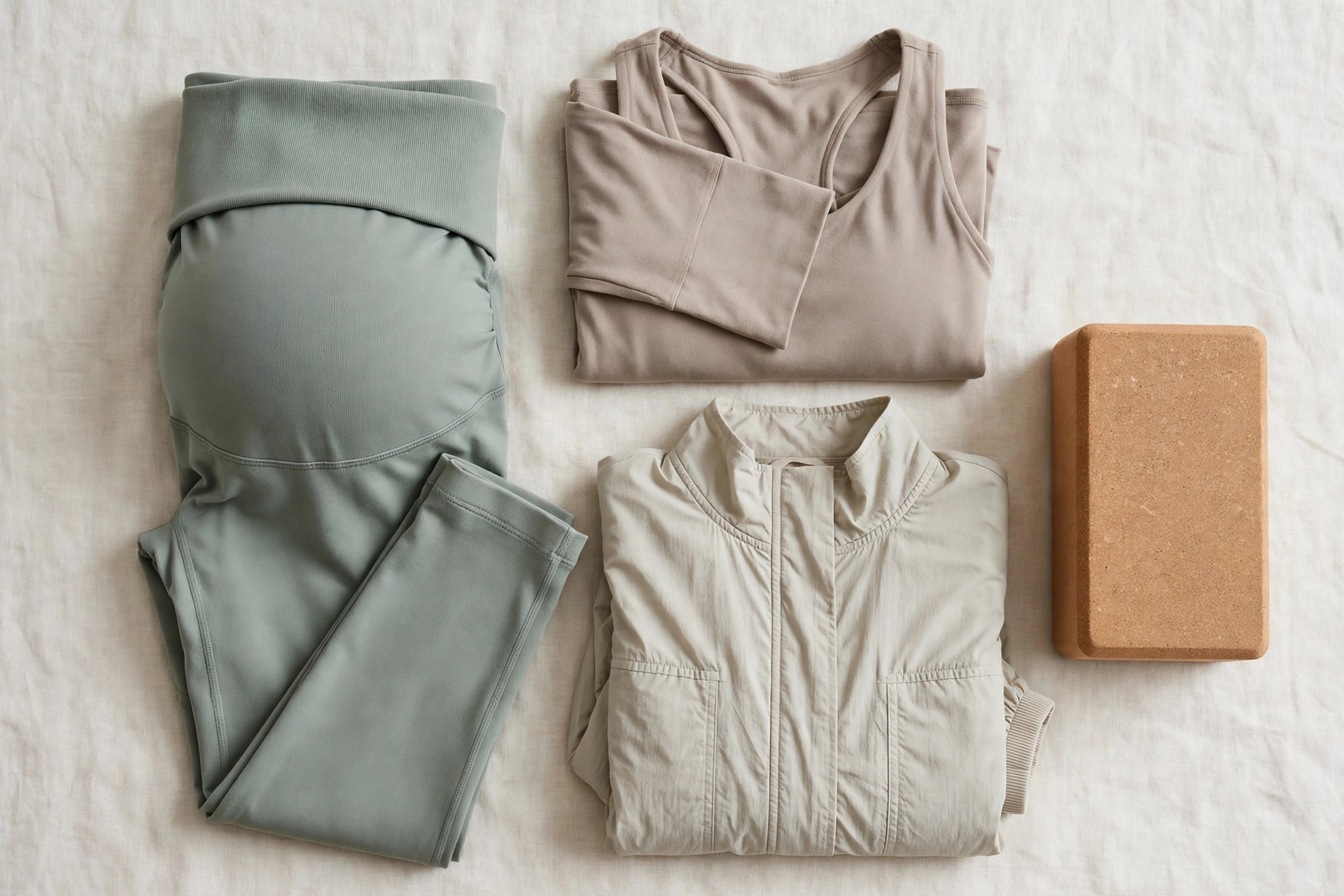
Maternity workout tops earn their place through engineered room: side ruching that unfolds as the bump grows (and gathers it back afterward), empire seams that sit above the bump, four-way stretch with a longer cut, and fabrics that do not go sheer stretched over a third-trimester belly. The failure mode of simply sizing up in regular activewear is a top that is tent-like everywhere except where room is needed, riding up with every reach — pattern, not size, is what pregnancy changes.
Sports bras change on two axes: cup size commonly grows, sometimes more than once, and ribcage expands, so adjustability outranks any fixed fit. Look for wide straps, several rows of hooks or a highly adjustable band, and encapsulation-style structure for anything beyond gentle exercise; the impact-level framework still applies — most prenatal exercise is low to medium impact, and the bra should match it. Many maternity sports bras add nursing clips, quietly converting a pregnancy purchase into a postpartum one. For general maternity wardrobe planning, the maternity clothes guide maps the whole capsule by trimester.
What to Buy, and When
- First trimester: often your regular activewear with an extender's worth of grace; buy the sports bra first — it is usually the earliest true need — and one over-bump legging as insurance.
- Second trimester: the core purchase window. Two maternity leggings (one over-bump, one under-bump or crossover), two to three ruched tops, and a supportive bra will carry most prenatal exercise wardrobes.
- Third trimester: support dominates — over-bump panels, a bra refit if cup size has moved again, and a light layer for warm-ups and the walk home.
- Postpartum: crossover leggings, nursing-friendly tops, and your maternity bra rotation keep working; nothing in this wardrobe has a hard expiry date.
A note of proportion that applies to this whole guide: exercise in pregnancy is a question for your own clinician, who knows your history. This page is about clothing — what the garments do, how they fit, and how to choose them — and takes your activity choices as yours and your care team's to make.
Fabrics and Care
Maternity activewear uses the same performance knit families as regular activewear — nylon and polyester with strong spandex — with two pregnancy-specific preferences: softer, less compressive hand feel for skin that is often more sensitive, and genuinely opaque fabric at full stretch, since maternity panels stretch further than any regular garment is asked to. Moisture management matters more, not less; pregnant exercisers run warm, and a wicking top is a comfort feature, not a luxury.
Care is standard activewear care — cool, gentle washing, no fabric softener on performance knits, air drying to protect the elastics that maternity panels depend on. One addition: dry maternity leggings fully and store them unrolled, because the tall over-bump panels hold fold creases and moisture longer than a standard waistband. Ruched tops repay gentle handling; the gathering stitches are doing structural work and last longest washed inside out.
Common Questions
- When should I switch to maternity activewear?
- When your regular kit starts failing in specific places: waistbands digging or rolling under the bump, tops riding up or going sheer across the belly, and a sports bra that no longer contains comfortably. For many women the bra is first, in the first trimester; leggings and tops typically follow in the second.
- Is an over-bump or under-bump waistband better?
- Neither, universally — they suit different stages and preferences. Over-bump panels support and smooth, and are often favored later in pregnancy. Under-bump bands feel cooler and freer and are often preferred early on and in warm weather. Many women own both and choose by the day and the workout.
- Can I just size up in regular activewear for pregnancy?
- Sometimes, briefly — but pattern beats size. Regular leggings sized up give you a waistband that still sits in the wrong place and fabric that pools elsewhere, and regular tops ride up over a bump regardless of size. Maternity patterning puts the room at the bump and keeps the rest fitted, which is why it works.
- Will maternity activewear be useful after the baby?
- Much of it, yes. Crossover and under-bump leggings sit comfortably postpartum, ruched tops skim a recovering midsection without clinging, and maternity sports bras with nursing clips convert directly into feeding-friendly exercise wear. Buying pieces that cross over is the economical way to build the wardrobe.
- What sports bra support do I need for prenatal exercise?
- Match the impact, as with any sports bra: most prenatal exercise — walking, prenatal yoga, swimming, stationary cycling — is low to medium impact. Prioritize adjustability, since band and cup sizes both change: wide straps, multiple hook rows, and a fit rechecked each trimester.
Swim, Active and Maternity Series
This guide is part of the Apparel Search Swim, Active and Maternity Series: practical guides to swimwear, workout clothing, and clothing for pregnancy and nursing.