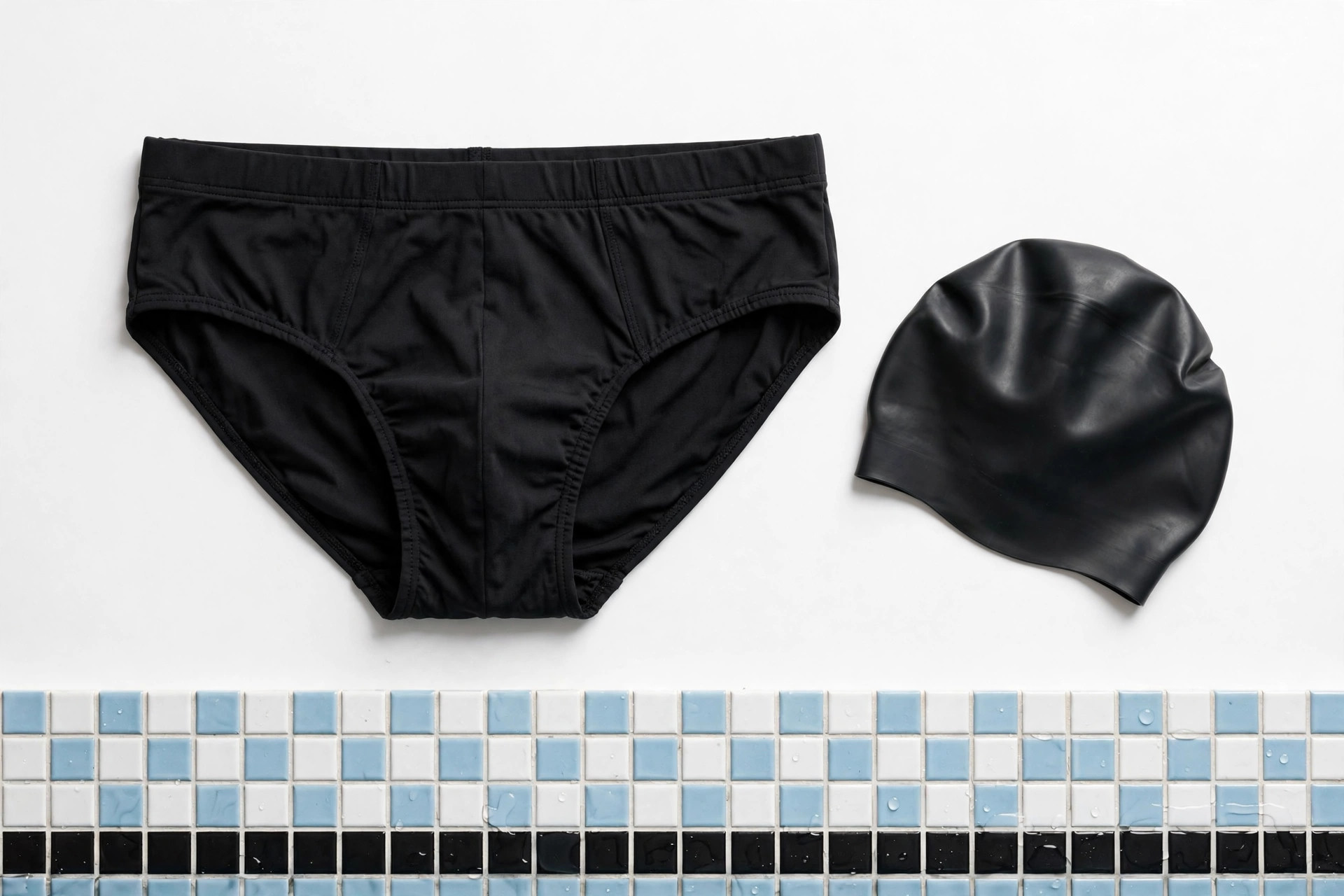
Men's swim briefs are the minimal, close-fitting swimsuit cut: a shaped front pouch, a seat that follows the body, narrow sides, and nothing else. Developed for racing, where every fold of loose fabric costs time, briefs remain the training choice of competitive swimmers and a normal, unremarkable sight on beaches across Europe, Australia, and Brazil — and a practical one anywhere drag and drying time matter.
Racing Briefs, Training Briefs, and Fashion Briefs
Not all briefs are cut alike. Racing and training briefs are the functional core of the category: a contoured front, an internal drawstring, a front lining, and side seams typically between one and three inches wide. They are built in chlorine-resistant polyester blends and sized by true waist measurement, because a racing fit tolerates no guesswork.
Fashion briefs borrow the silhouette and spend the budget elsewhere — softer nylon blends, prints, contrast piping, sometimes a lower rise. They are beach and resort suits rather than lane suits, and they age faster in chlorinated water. Between the two sits the square-leg swimsuit, which adds a short straight leg to the same fitted idea for men who want the function with more coverage. Knowing which family a brief belongs to tells you how it will fit, how long it will last, and what it should cost.
Fit: The Two-Inch Rule and Other Honest Checks
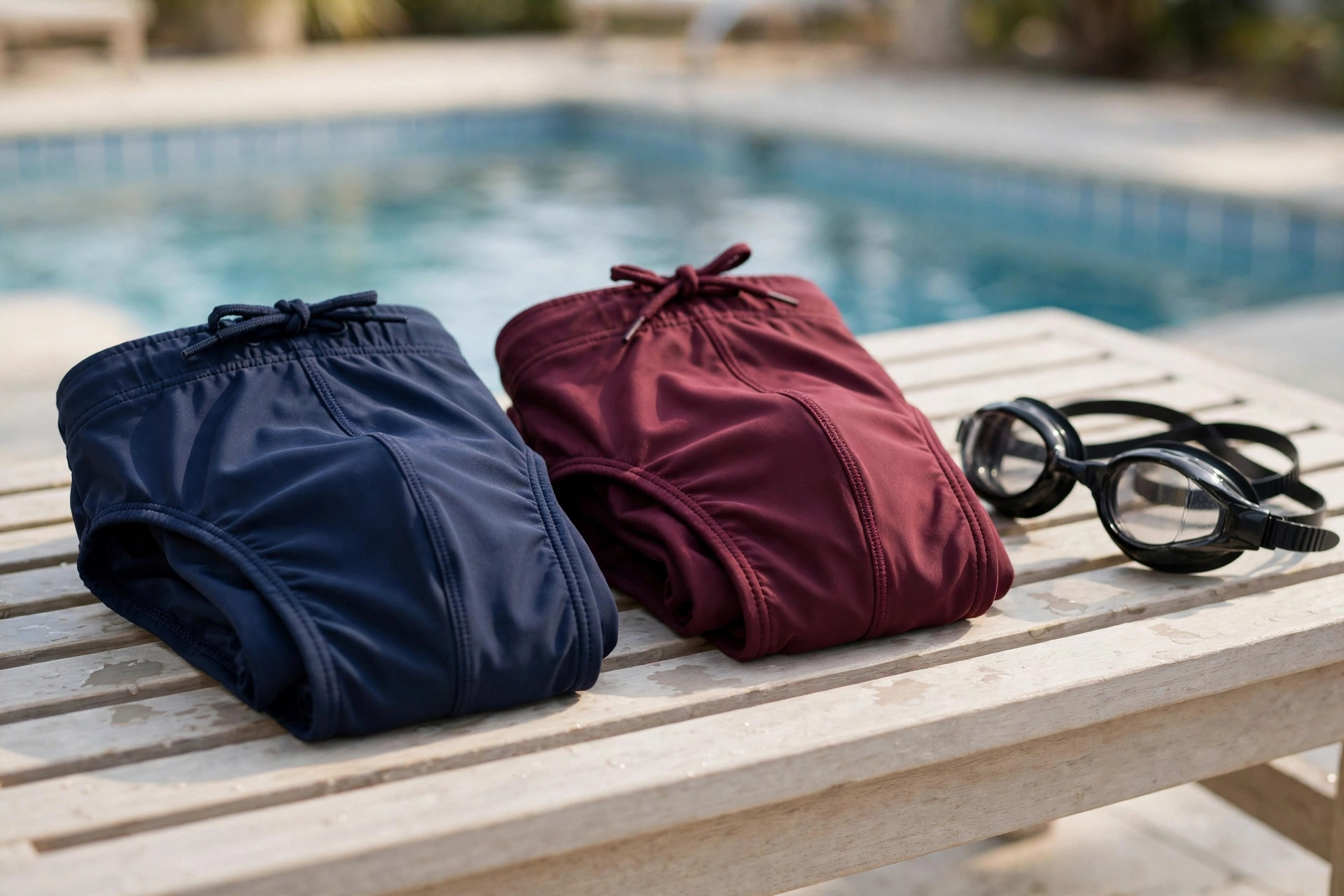
A swim brief fits correctly when it is doing quiet work: the waistband holds at the hips with the drawstring as backup rather than the main support, the front pouch contains without compressing, and the leg openings sit in the crease of the hip without riding or digging.
- Size by waist: measure at the navel and buy that number; vanity trouser sizing will betray you here.
- Side width: wider sides (around three inches) feel more secure and suit training; narrow sides are the racing and sunbathing end of the range.
- Check the seat: it should be smooth when you bend — excess fabric in back means a size too large, and it will drag and sag when wet.
- Wet test: every brief relaxes slightly in water, so a fit that feels merely snug on land is usually right; a fit that feels loose on land will not improve.
Comfort is a legitimate deciding factor: a brief you are constantly adjusting is the wrong brief, whatever the size chart said.
Why Swimmers Choose Briefs (and When Not To)
The case for briefs is hydrodynamic and practical. There is no loose fabric to fill with water, balloon on a push-off, or chafe through a long set, so briefs are the easiest suit to train in and the reference against which jammers and square legs are compared. They also dry in minutes, pack to the size of a fist, and produce the smallest tan line of any men's cut — a genuine consideration for men who spend whole summers outdoors.
The honest counterpoints are coverage and warmth. Briefs offer the least of both, and in cold open water most swimmers move up to a jammer or a wetsuit regardless of preference. They also demand the most precise fit of any cut, which is why first-time buyers should expect to try two sizes. For the full range of alternatives, the men's swimwear guide maps trunks, boardshorts, jammers, and briefs side by side.
Fabrics and Care
Training briefs are overwhelmingly polyester or PBT blends because chlorine destroys ordinary spandex: a nylon-lycra brief swum in daily can lose its shape within a couple of months, while a polyester brief holds fit and color for a season or more of the same use. Fashion briefs reverse the trade — softer hand, brighter prints, shorter pool life.
Care is the same discipline as for any performance suit: rinse in cool water straight after swimming, hand wash occasionally with mild detergent, never bleach or tumble dry, and dry in shade rather than sun. Keep a brief away from rough pool edges and hook-and-loop closures in the wash bag, both of which snag fine swim knits. Rotating two training briefs, each resting a day between swims, noticeably extends the life of both.
Storage matters more than swimmers expect. Keep briefs out of the plastic bag they were thrown into after training - a damp suit sealed in plastic ages and smells in days. Rinse, dry fully in open air, and store in a drawer or mesh bag; treated that way, a good polyester brief will still fit properly long after a cheaper suit has gone baggy.
Shop for Men's Swim Briefs
Common Questions
- Are men's swim briefs only for competitive swimmers?
- No. Competitive swimmers made the cut standard, but briefs are ordinary beachwear in much of the world and a practical choice anywhere: they dry fast, pack small, and create almost no drag. Training, tanning, and travel are all common reasons men choose them.
- How tight should swim briefs be?
- Snug and smooth, never painful. The waistband should hold at the hips with the drawstring as backup, the pouch should contain without compressing, and the seat should stay smooth when you bend. If the suit feels loose in the shop, it will feel looser in the water — size down.
- Do swim briefs come in different rises and side widths?
- Yes. Side widths run from about one inch on racing cuts to three inches or more on training and fashion briefs, and rises from low to a moderate mid-rise. Wider sides and a higher rise feel more secure and covered; narrower cuts are the minimal racing end of the range.
- What fabric lasts longest for swim briefs?
- Polyester and PBT blends, by a wide margin in chlorinated water. Nylon-spandex feels softer and suits occasional swimming and beach use, but regular pool training breaks it down quickly. Match the fabric to where the suit will actually spend its hours.
- What is the difference between swim briefs and a square-leg suit?
- Coverage and leg. A brief ends at the hip crease with no leg at all, while a square-leg suit extends a short, straight panel a few inches down the thigh. Both are fitted and low-drag; the square leg simply covers more of the upper leg.
Swim, Active and Maternity Series
This guide is part of the Apparel Search Swim, Active and Maternity Series: practical guides to swimwear, workout clothing, and clothing for pregnancy and nursing.