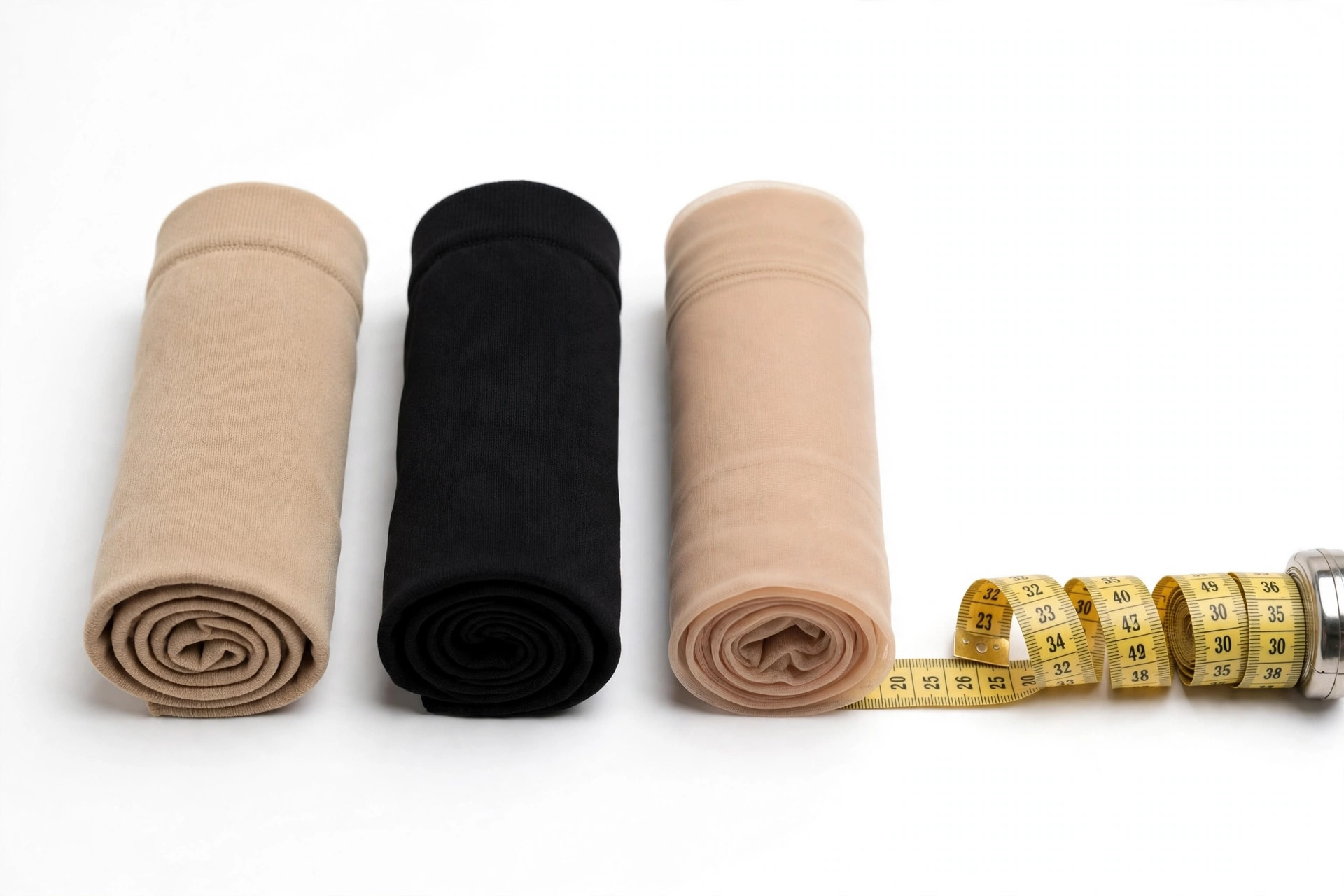
Compression stockings are snug, elastic hosiery that squeeze the leg with graduated pressure — firmest at the ankle, easing upward — to support circulation in the legs. They are sold by grade, measured in millimeters of mercury (mmHg). Light grades are everyday comfort wear for people who stand or sit all day; firmer grades are used on clinical advice for diagnosed circulation conditions. Choosing well starts with understanding the numbers.
The Grades, in Plain Language
- 8–15 mmHg (mild): the gentlest grade, sold for everyday comfort — tired, achy legs after long days, mild end-of-day swelling, and a first taste of compression. Common in travel socks and comfort hosiery.
- 15–20 mmHg (moderate): the busiest over-the-counter grade. Chosen for long shifts on your feet, long flights, pregnancy-related leg heaviness, and mild varicose veins or swelling, where a clinician has not directed a specific firmer grade.
- 20–30 mmHg (firm): the most commonly prescribed medical grade, used for more significant varicose veins, swelling, and after certain procedures — bought on a clinician's recommendation rather than by experimentation.
- 30–40 mmHg (extra firm) and above: strong medical compression for diagnosed conditions, fitted and used under clinical direction. Above this range, custom and clinical fitting takes over entirely.
Two warnings belong with the table. First, the numbers only mean something from reputable makers who state a true graduated range; fashion socks 'with compression' and no mmHg figure are a different, unmeasured product. Second, firmer is not better by default: the right grade is the one matched to your legs and needs, and the upper grades exist to be chosen professionally, not aspirationally.
Graduated Compression, Styles, and Lengths
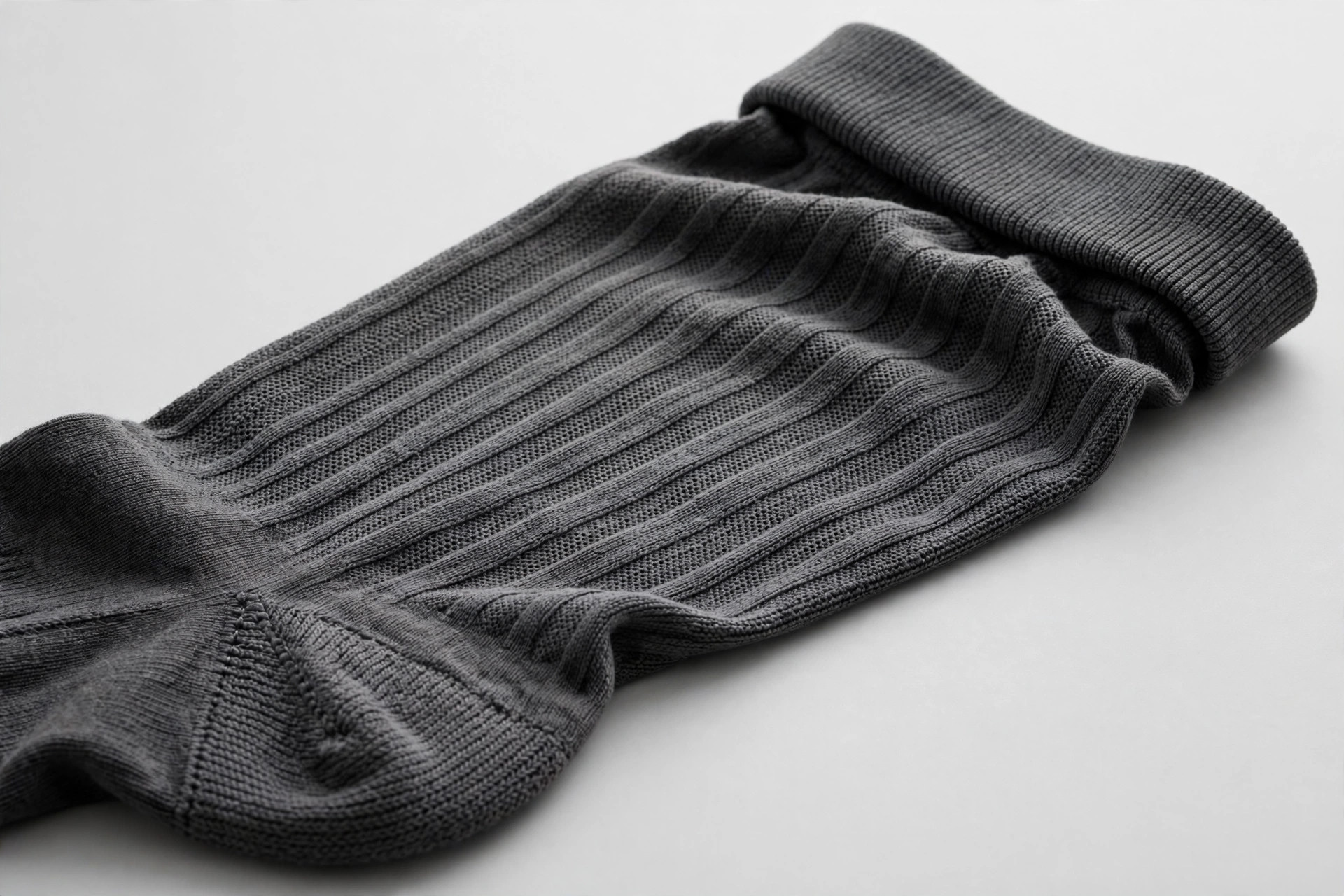
The engineering word is graduated: pressure is highest at the ankle — by design, 100 percent of the stated grade — and decreases up the leg, roughly 70 percent at the calf and less again at the thigh on longer styles. That gradient is what encourages blood and fluid to move upward rather than pool at the ankle. It is also why fit is not a detail: a stocking bunched, doubled over, or rolled down concentrates pressure in a band and works against the gradient it was bought for.
Styles mirror ordinary hosiery. Knee-highs are the default and the easiest to fit and wear, covering the calf where most everyday benefit sits. Thigh-highs, held by silicone bands, and full pantyhose or maternity pantyhose extend coverage upward for wearers whose needs or clinician's advice call for it. Open-toe versions suit hot weather, toe inspection, and wearing with sandals; closed-toe is the standard. Athletic compression socks are a related but distinct branch, covered in the Influence compression socks guide, while the wider world of stockings and hosiery is mapped in the hosiery guide.
Sizing by Measurement — the Only Way That Works
Compression sizing ignores your shoe size and dress size and runs on leg measurements, taken in the morning when legs are least swollen: ankle circumference at its narrowest, calf at its widest, and for thigh-highs, thigh circumference and leg length. Each maker's chart converts those numbers to a size, and the charts differ between brands — measure, then read that brand's table, every time.
- Between sizes: follow the maker's instruction; in a graduated garment, the wrong direction changes the pressure profile, not just the snugness.
- Putting them on: morning, on dry legs. Turn the stocking inside out to the heel, place the foot, then unroll up the leg smoothing as you go — never haul by the top band or bunch and pull. Donning gloves give grip and protect the knit from nails.
- Fitted correctly: the heel sits in the heel pocket, no wrinkles cross the ankle, the knee-high band rests two fingers below the knee crease, and nothing is folded or rolled down.
A pair that is painful, leaves deep ridging, or makes toes tingle or change color is not 'working hard' — it is wrong, and it comes off. Fit is the safety system of a compression garment.
Care and Replacement
Elastic is the product, and care is elastic-keeping. Wash after each day's wear — skin oils and sweat degrade the fibers, and a clean stocking recovers its full squeeze overnight. Hand wash or machine wash gentle in a hosiery bag, in lukewarm water with mild detergent; no bleach, no softener. Dry flat or hanging away from heat — never tumble dry, never on a radiator — because heat is what ages elastic fastest.
Even perfectly kept, compression stockings are consumables: with daily wear, the graduated pressure typically fades over roughly three to six months, at which point the garment looks fine and does noticeably less. Rotating two pairs extends both lives, and replacing on schedule rather than on appearance is the standard advice for anyone relying on a specific grade. Keep a note of the purchase date in the drawer; your legs will not announce the day the pressure quietly retired.
A note on medical use: this guide explains compression grades and buying as clothing information only, and makes no medical claims. Firmer grades (20–30 mmHg and above), and any compression use for a diagnosed circulation condition, diabetes, or leg wounds, should be chosen with a clinician's advice — check with a clinician for medical use before buying.
Shop for Compression Stockings
Common Questions
- What do the mmHg grades on compression stockings mean?
- Millimeters of mercury — the pressure the stocking applies, measured at the ankle where graduated compression is firmest. Common grades are 8–15 mmHg for everyday comfort, 15–20 for moderate support, 20–30 as the most commonly prescribed medical grade, and 30–40 as extra-firm medical compression used under clinical direction.
- Which grade of compression stockings should I buy?
- For everyday comfort, long standing or sitting shifts, and travel, the light grades — 8–15 or 15–20 mmHg — are the usual over-the-counter choice. For diagnosed vein conditions, significant swelling, or post-procedure use, the grade should come from your clinician; 20–30 mmHg and above are medical purchases, not experiments.
- How do I size compression stockings?
- By tape measure, not shoe size. Measure the ankle at its narrowest and the calf at its widest first thing in the morning, plus thigh and leg length for thigh-high styles, then use that specific maker's chart — sizes are not interchangeable between brands, and the measurements decide the pressure profile.
- Why do compression stockings have to be graduated?
- Because the gradient does the work: firmest at the ankle and easing upward, it encourages blood and fluid to move up the leg instead of pooling at the ankle. A stocking worn bunched or rolled down breaks the gradient and can concentrate pressure in a band, which is why smooth, correct fitting matters.
- How long do compression stockings last?
- With daily wear, roughly three to six months before the elastic and its graduated pressure noticeably fade — the stocking will still look fine, which is why replacement runs on the calendar, not appearance. Washing after each wear, air drying away from heat, and rotating two pairs extends the useful life of each.
Swim, Active and Maternity Series
This guide is part of the Apparel Search Swim, Active and Maternity Series: practical guides to swimwear, workout clothing, and clothing for pregnancy and nursing.