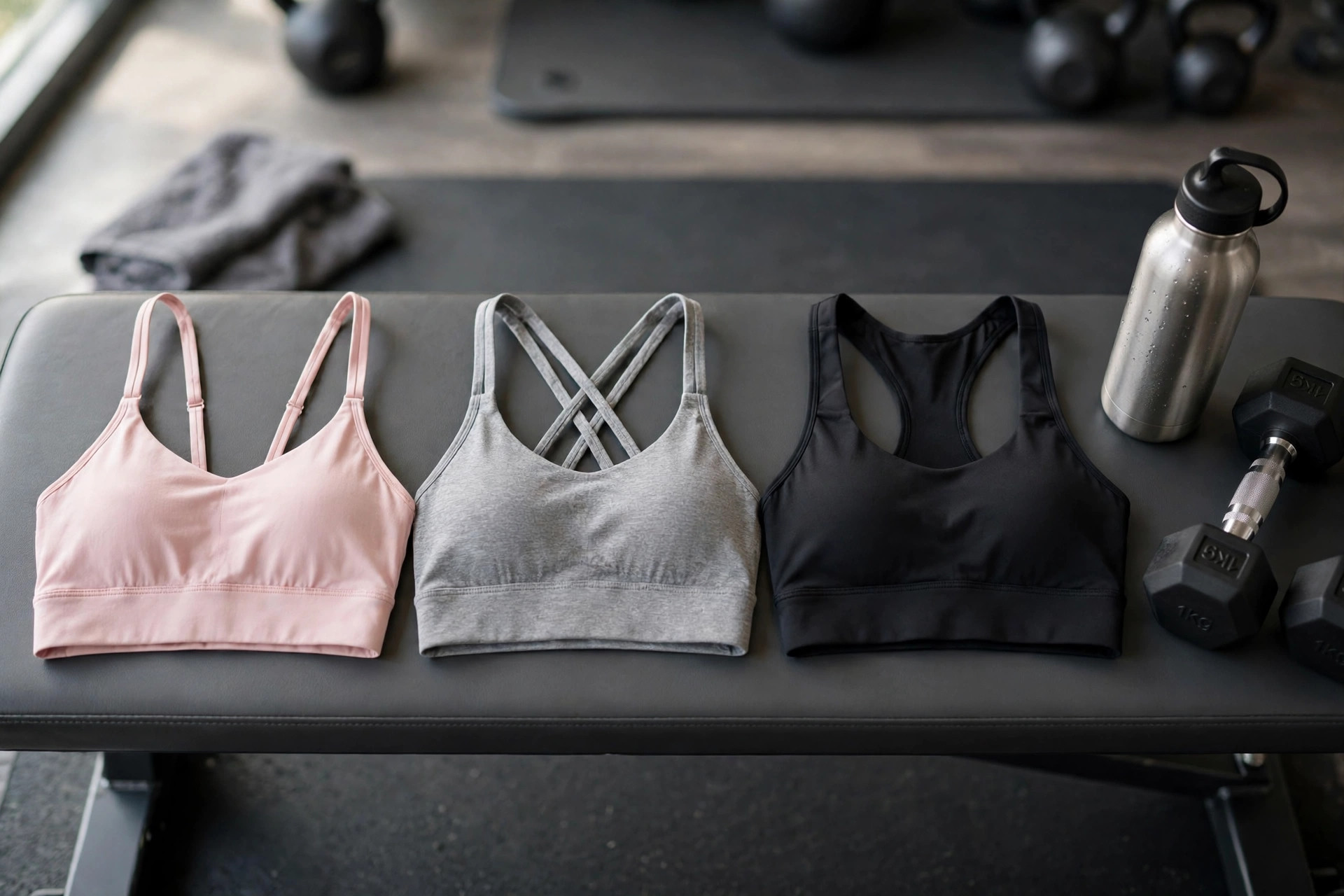
Impact level is the sports-bra rating that matches support to movement: low impact for activities where the feet stay grounded, medium for rhythmic bouncing, high for running and jumping. It is the single most useful sorting idea in the category — more useful than size, color, or brand — because an under-supportive bra makes exercise uncomfortable and an over-supportive one restricts breathing and movement you actually need.
The Three Levels, Defined by Movement
- Low impact: walking, yoga, Pilates, stretching, weight training, cycling on the flat. The breasts move little; the bra's job is light shaping, coverage, and comfort. Typical build: a soft pullover bralette-style bra with light compression, thin or no padding, and easy straps.
- Medium impact: hiking on hills, elliptical training, dance classes, skiing, cycling with effort, gym circuits. Movement is rhythmic with moderate bounce. Typical build: a firmer compression bra or a light encapsulation design, wider straps, a stronger underband, often a racerback.
- High impact: running, jumping, HIIT, aerobics, court and field sports, horseback riding. Bounce is forceful and multi-directional. Typical build: encapsulation or a compression-encapsulation hybrid, molded or seamed cups, wide adjustable straps, a firm wide band, and often a hook closure so the tight fit can still be put on.
The activity names on shop tags are approximations. Judge by what your body actually does in the sport: a gentle jog is medium movement for many wearers; a dance class with jumps is high. When your activity straddles two levels, the higher level is the comfortable choice.
Compression, Encapsulation — and Why High Impact Splits Them
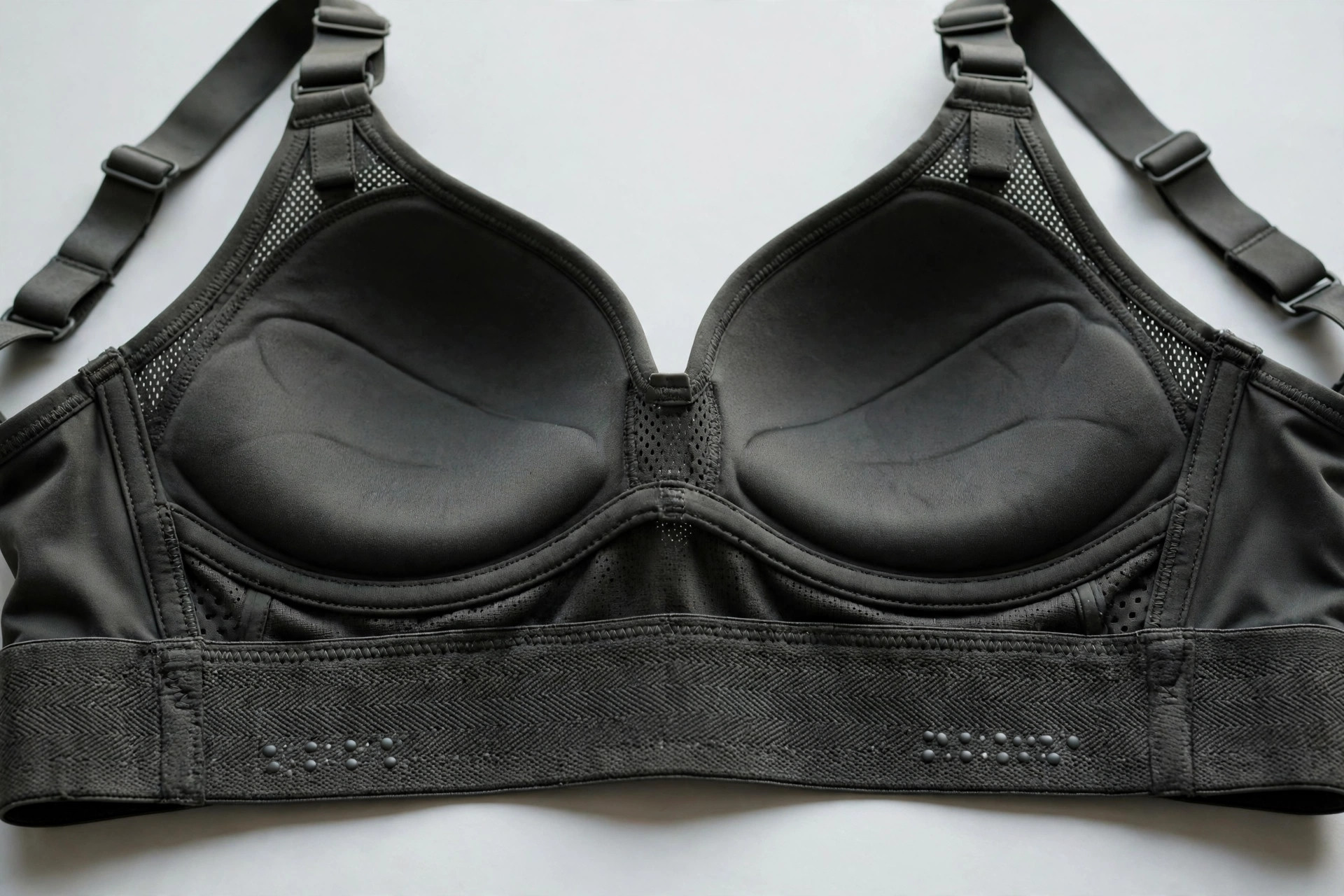
Two engineering strategies control movement. Compression bras press the breasts gently against the chest and limit motion as a unit; they are simple, smooth under clothing, and excellent at low and medium impact, especially for smaller cup sizes. Encapsulation bras surround each breast in its own structured cup — seamed, molded, sometimes wired — controlling motion breast by breast, which scales far better to larger cup sizes and higher impact.
High-impact designs increasingly combine both: individual cups inside a compressive outer layer, so each breast is held and the whole is stabilized. The practical reading is simple — the more impact and the larger the cup, the more structure you want to see: separate cups, a wide firm band doing most of the support work, straps that adjust rather than merely stretch, and a closure that lets a genuinely firm band be fastened without a wrestling match. The women's sports bra guide covers construction in full.
Cup Size Changes the Equation
Impact level is half the answer; cup size is the other half. The same run produces modest movement in an A cup and substantial, uncomfortable movement in a DD — which is why generic S/M/L sizing breaks down at both ends of the range, and why band-and-cup-sized sports bras exist. As a working rule: smaller cups can rely on compression at every level with a firm enough band; mid cups do best in structured medium and high designs; larger cups should shop encapsulation or hybrid bras sized by band and cup for anything above low impact.
Two fit checks cut through all of it. The bounce test: jog in place and do a few jumping jacks in the fitting room — movement should feel controlled, not absent; a bra that stops all motion by crushing is a bra you will not wear. The breath test: you should be able to take a full, deep breath comfortably, since a band that restricts breathing will restrict the workout. Straps should stay put when you reach overhead, and the band — which does most of the work — should sit level and firm on the loosest hook when new.
Rotation, Replacement, and Care
A sports bra is equipment with a service life. The elastics that do the supporting degrade with heat, sweat, and washing, and a hard-used bra typically gives its best support for somewhere around six to twelve months of regular training before the band stretches and the bounce creeps back — the clearest replacement signal there is. Rotating two or three bras extends each one's life, because elastic needs a rest day to recover, exactly like the athlete wearing it.
Wash cool and gentle, fasten hooks so they cannot snag, use a lingerie bag for structured cups, and keep sports bras out of the dryer — heat is the fastest elastic-killer in the laundry room. Air-dry flat or hanging. The same care rules serve the rest of the gym kit, from flare leggings to maternity activewear, whose support tops follow the same low-medium-high logic with adapted fits. For product-level browsing, the Influence sports bras page collects the category's current styles.
Common Questions
- How do I know what impact level I need?
- Match the bra to the movement, not the sport's name. Feet grounded (yoga, walking, weights) is low impact; rhythmic bounce (elliptical, dance, hiking) is medium; running, jumping, and court sports are high. If your workout mixes levels — most do — buy for the highest-impact part of it.
- What is the difference between compression and encapsulation sports bras?
- A compression bra presses the breasts against the chest and controls movement as a unit — simple and effective at low and medium impact. An encapsulation bra holds each breast in its own structured cup, controlling movement individually, which works better for larger cup sizes and high-impact activity. Many high-impact bras combine both.
- Can I wear a low-impact bra for running if it feels tight?
- Tight is not the same as supportive. A soft low-impact bra stretched over a run will chafe, let movement through, and wear out quickly. Running calls for a high-impact design with structure — cups, a firm wide band, adjustable straps — sized by band and cup where possible.
- How should a high-impact sports bra fit?
- Firm band that stays level and does most of the support work, straps that adjust and stay in place overhead, cups that contain without spilling or gaping, and room to breathe deeply. Test it with jumping jacks in the fitting room: movement should feel controlled, never painful or crushed.
- How often should sports bras be replaced?
- When the support goes — typically after six to twelve months of regular hard use. Signs are a band that has stretched to the tightest hook, straps that slip, and bounce that has crept back. Rotating two or three bras and keeping them out of the dryer stretches the life of each considerably.
Swim, Active and Maternity Series
This guide is part of the Apparel Search Swim, Active and Maternity Series: practical guides to swimwear, workout clothing, and clothing for pregnancy and nursing.