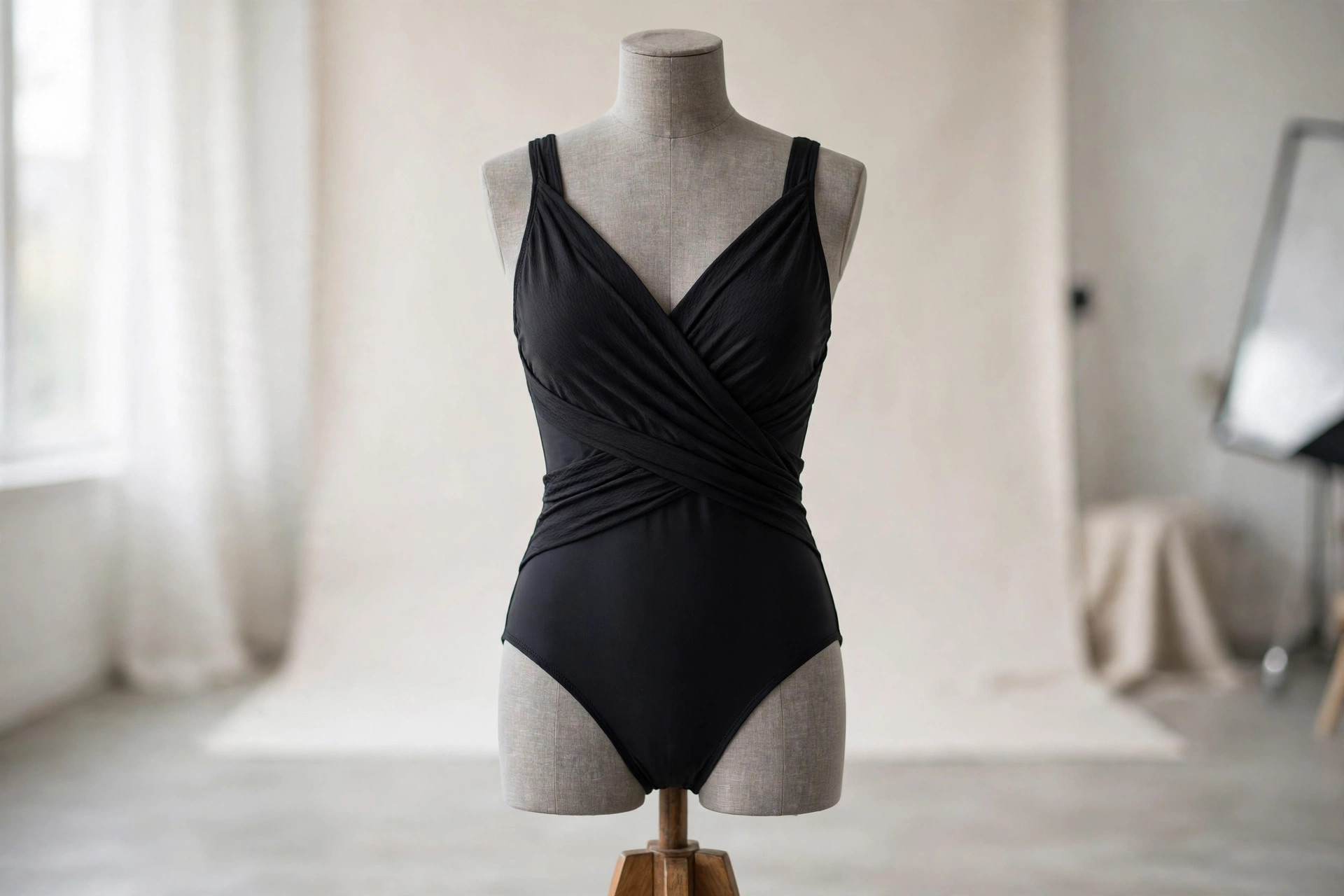
A surplice swimsuit is a one-piece with a wrap-style bodice: two panels cross diagonally over the chest and meet at the waist, creating a V-neckline and a defined midsection. The name comes from the surplice neckline in dressmaking, and the logic is the same as a wrap dress — diagonal lines draw the eye across the body, the crossover shapes the bust, and gathered fabric at the waist does quiet, flattering work.
How the Wrap Bodice Works
The surplice front is two panels rather than one. Each side of the bodice is cut on a diagonal, crossing over the other at the center waist, where it is anchored — stitched into the side seam, the waist seam, or both. The result is a neckline that forms a genuine V without a plunge that needs constant adjusting, because the crossover is fixed by construction, not by a tie the water can loosen.
Most surplice suits are faux-wrap: the crossing is sewn in place over a standard lined bodice underneath, so there is no risk of the front opening in the water. True wraps, which tie at the side, exist in resort swimwear and look lovely on a lounger, but the fixed version is the one to buy for actual swimming. Inside, better suits add the support hardware — soft cups or a shelf lining, under-bust elastic — because a beautiful diagonal over an unsupported bodice convinces no one, least of all its wearer.
Why the Cut Flatters: Lines, Ruching, and the Waist
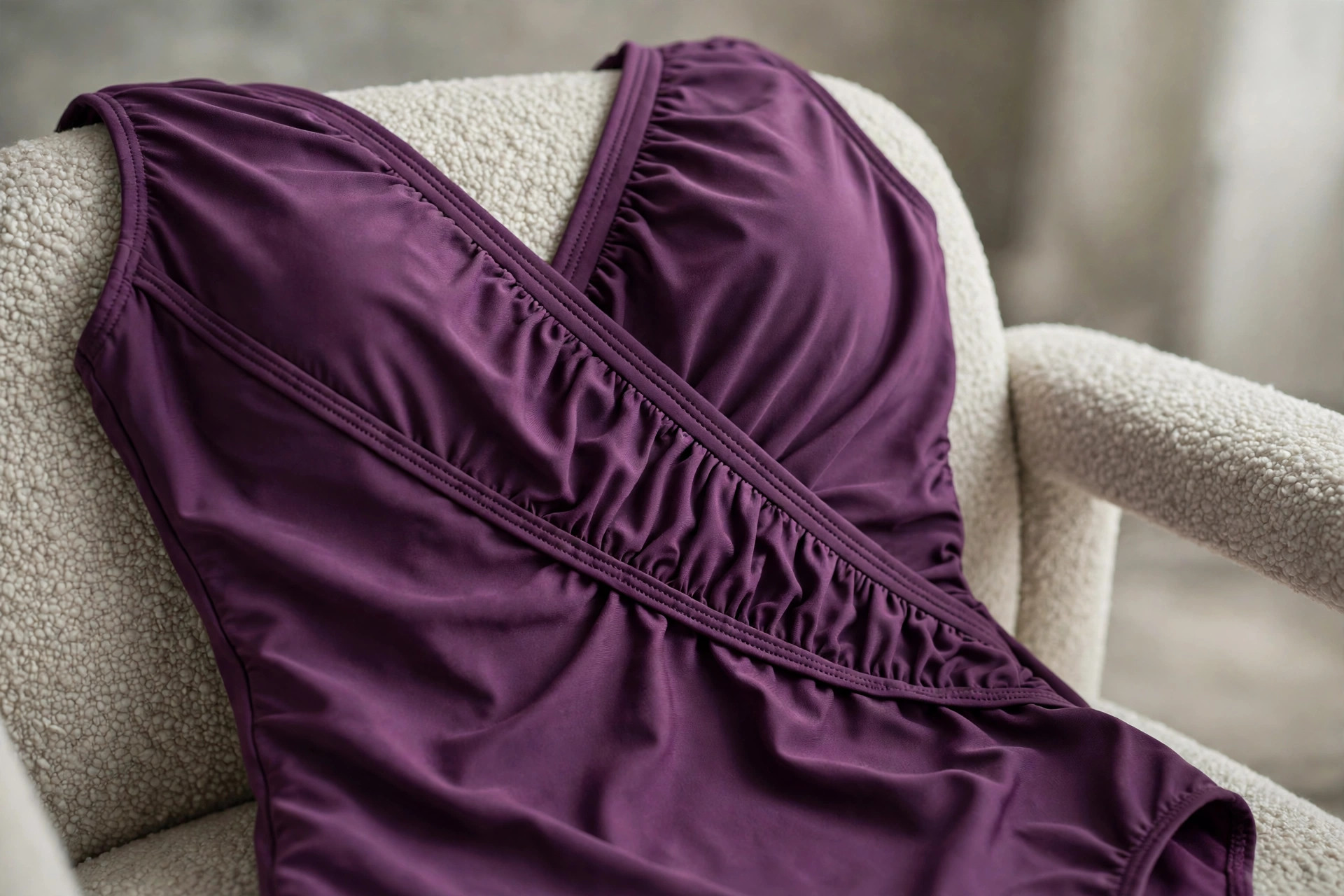
Surplice is a piece of visual engineering. The diagonal seams lead the eye across and down, which lengthens the torso. The V-neck opens the chest and suits a wide range of bust sizes — smaller busts gain shape from the crossover's structure, fuller busts gain a neckline that contains without compressing. And the fabric that must gather where the panels anchor at the waist becomes ruching: soft horizontal folds that skim the midsection instead of outlining it.
That combination is why the surplice is the workhorse of the 'confidence' end of the swim market and appears at nearly every size range and age. It is also a genuinely elegant line — the same reason wrap dresses never leave fashion. If the high, clean athleticism of the high-neck one-piece is one pole of one-piece design, the surplice is the other: soft, diagonal, and dressed. Choosing between them is mostly a matter of whether your swim day is laps or lunch — or, honestly, of owning one of each.
Fit Checks Specific to Surplice
- Crossover security: raise your arms and bend forward in the fitting room; the fixed crossover should not gape. If it does, the bodice is too long or too large.
- Anchor point: the crossover should meet at your natural waist, not drift toward the ribs or the hips — a torso-length issue that sizing up will not fix.
- Ruching placement: gathers should sit across the midsection, evenly on both sides; twisted ruching usually means the suit is rotated or a size off.
- Straps: surplice styles often use wider straps, which spread support kindly; check they do not slip when you shrug — the crossover bodice depends on the straps holding its angle.
Bust support varies enormously between brands under the same pretty photograph. If support is a priority, look for named features — molded cups, underwire swim versions exist in this cut, or a firm shelf band — rather than assuming the wrap alone will do the work.
Styling and Care
The surplice front is a neckline that likes jewelry-adjacent styling: a simple pendant sits exactly in the V, and the cut pairs naturally with a sarong or wide-leg beach trouser for the swim-to-table transition. Solid colors show the diagonal construction best; a print works when the crossover is picked out in a contrasting solid trim, a classic version of the style. Darker panels below the waist with a lighter wrap above reverse the usual shading and emphasize the waist further.
Care has one style-specific note: the crossover and ruching hold their shape best dried flat, since hanging a wet, gathered bodice by its straps can slowly pull the diagonals out of true. Rinse after swimming, hand wash cool, reshape the wrap panels with your fingers while damp, and dry in shade — the same routine as the rest of the women's swimwear drawer, with thirty seconds of attention to the front.
Common Questions
- What is a surplice swimsuit?
- A one-piece swimsuit with a wrap-style bodice: two panels cross diagonally over the chest and anchor at the waist, forming a V-neckline and usually a ruched, waist-defining midsection. Most are faux-wrap — the crossover is sewn in place over a lined bodice — so nothing can come undone in the water.
- Is a surplice swimsuit flattering?
- It is widely considered the most forgiving one-piece cut. The diagonal lines lengthen the torso, the V-neck suits both smaller and fuller busts, and the ruching at the waist skims the midsection. Like any cut, the effect depends on the crossover meeting at your natural waist, so torso fit matters.
- Can you swim in a surplice swimsuit, or is it just for sunbathing?
- You can swim in it. Because the wrap is fixed by stitching rather than tied, a faux-surplice suit stays secure through normal swimming. Very active use — diving, surf — is better served by athletic cuts with racerbacks, but for laps, water aerobics, and family swimming the surplice is fully functional.
- Does a surplice swimsuit have bust support?
- It depends on the maker, not the cut. Better surplice suits include soft cups, a shelf lining, or under-bust elastic inside the wrap bodice; the most decorative resort versions may offer little. If support matters, shop the listed features rather than the photograph.
- What is the difference between surplice and a wrap swimsuit?
- In practice the terms overlap, and many suits are sold under both names. Strictly, surplice describes the diagonal crossover neckline borrowed from dressmaking, while a true wrap suit ties closed like a wrap dress. Most surplice swimsuits are fixed faux-wraps: the look of a wrap, secured like a standard one-piece.
Swim, Active and Maternity Series
This guide is part of the Apparel Search Swim, Active and Maternity Series: practical guides to swimwear, workout clothing, and clothing for pregnancy and nursing.