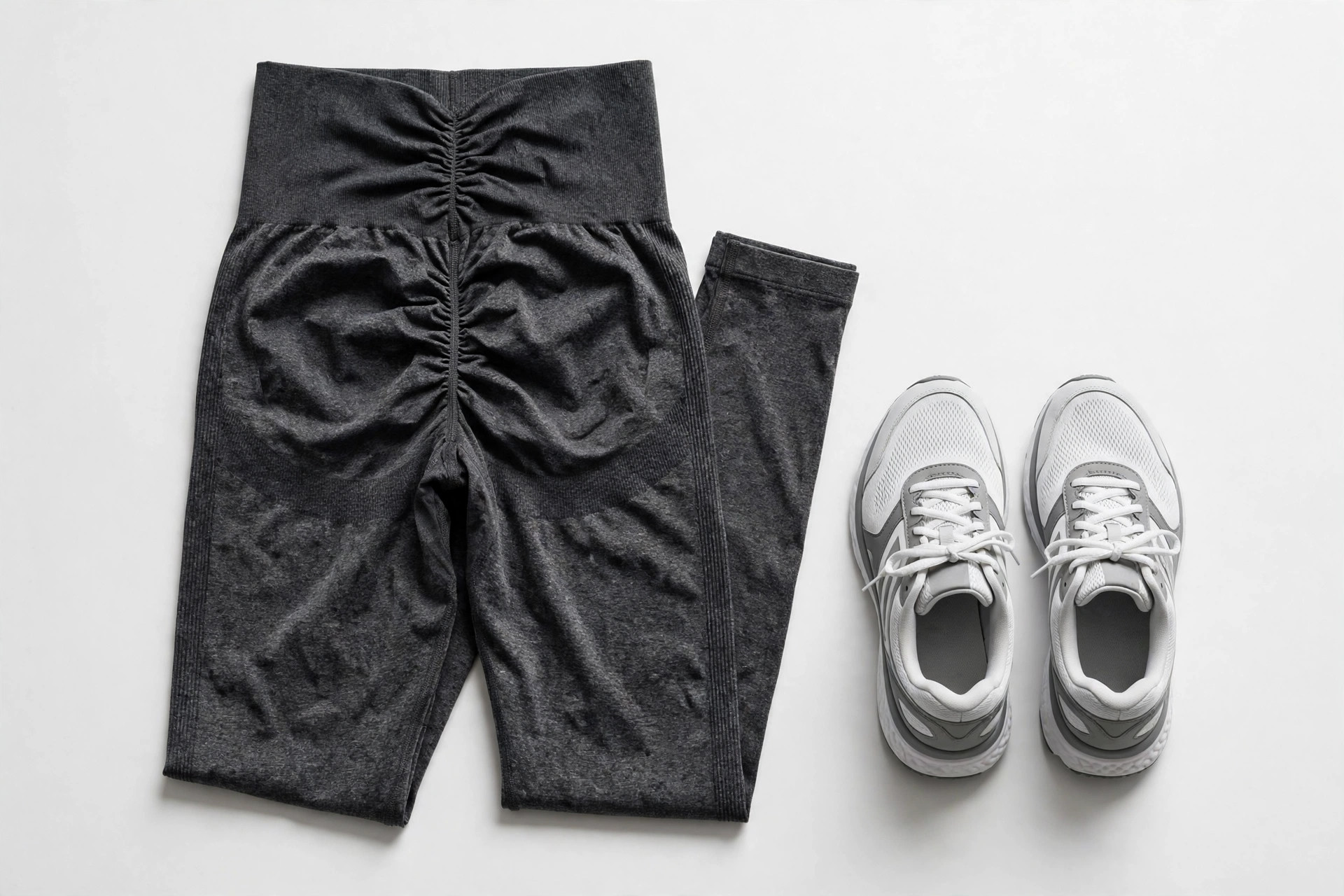
Scrunch leggings are workout leggings with a ruched — gathered and elasticated — seam running down the center back, which draws the fabric in and shapes the seat. Sometimes sold as scrunch-bum or ruched leggings, they grew from gym and social-media culture into a mainstream activewear style, and the good ones pair the signature seam with genuinely capable training fabric.
How the Scrunch Seam Works
The mechanism is simple tailoring. A standard legging's back seam is flat; a scrunch legging inserts a short length of elastic, or gathers the fabric onto a ruched stitch, along the center-back seam at the seat. The gathering pulls the fabric into the body's natural contour, separating and defining rather than compressing flat, and the extra fabric the ruching holds means the legging can stretch without whitening or going sheer at the seat — the stress point where ordinary leggings fail the squat test first.
Variations multiply from there. The scrunch may be short and concentrated or run longer up the back. Some styles add a V-shaped back waistband that dips toward the scrunch to emphasize the line; others keep a straight, high waistband and let the seam do the work. A separate cousin, the ruched-front or drawstring-front legging, gathers at the front waist instead — a styling detail rather than shaping. Shopping photographs compress these differences, so read the product description's words: scrunch, ruched back, or butt-lifting seams all describe the same family.
Fabrics and the Squat Test
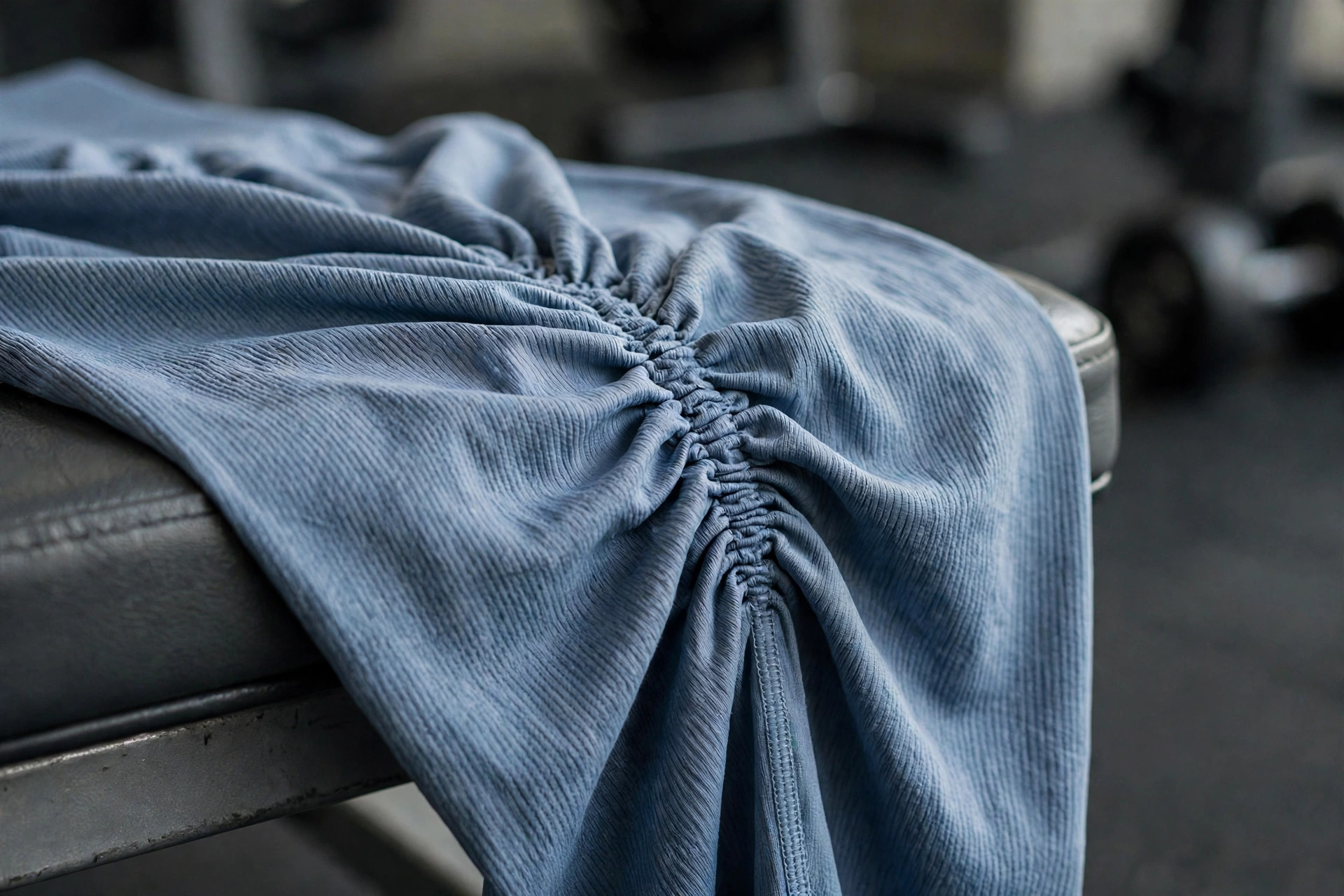
Scrunch leggings live or die by their knit. The capable versions are nylon or polyester with strong spandex content, in a weight that stays opaque stretched — doubly important here, because the style is worn tight and the seat is the focal point. Many scrunch styles use textured knits — subtle honeycomb, rib, or jacquard — which disguise cellulite texture and add grip to the fabric's appearance; smooth matte knits are the sleeker, more versatile option.
Run the standard checks with extra rigor. Squat-test in bright light and a mirror you trust, since the ruching's extra fabric helps only if the base knit is adequate. Check that the gathering lies flat and centered — a scrunch seam that twists to one side in the fitting room will migrate in a workout. And pull the waistband to full stretch and release it a few times: recovery should be instant and complete, not a slow sigh back. For the wider leggings landscape, the women's leggings guide covers fits and fabrics across the category.
Fit: Snug Is the Design, Sizing Down Is Not
Scrunch leggings are designed to fit close — the shaping depends on the fabric sitting exactly where the pattern puts it. That makes correct sizing more important, not less: a size too small overloads the ruched seam (the single most common failure point in the style, where stitching can pop under strain), drags the waistband down at the back, and turns the defining gather into a wedgie with marketing. A size too large leaves the scrunch with nothing to shape, and the gather hangs loose and pointless.
- Waistband: high-rise versions should reach the natural waist and stay there through a squat-jump set without rolling.
- Seam placement: the scrunch should sit centered and vertical at rest, not pre-twisted.
- Length: full-length and 7/8 versions dominate; the ankle crop shows the style best with trainers.
- Movement test: squat, lunge, and bend — the fabric should recover instantly and the seam should feel present, not painful.
Between sizes, take the larger in this style more readily than in a plain legging: the design has generosity built into the gather, and seam longevity is worth the trade.
Beyond the Gym, and Care
Scrunch leggings crossed over from training into everyday athleisure the way flare leggings did from the other direction: worn with oversized tees, hoodies, and shackets, the textured and matte versions in black, charcoal, and deep neutrals read as deliberate styling rather than gym kit. The honest limit is formality — the scrunch is a defined, body-conscious detail, and it dresses up less readily than a plain legging. Judge by setting, as with any legging.
Care protects the seam. Wash inside out, cool, and gentle; turn them inside out specifically so the ruching's elastic and stitching are shielded from the machine and from hook-and-loop and zipper snags in the load. Skip fabric softener on performance knits and dry flat or low — the elastic in the scrunch ages at the same rate as the waistband's, and heat is what ages both. If a scrunch seam does pop, it is a five-minute stitch repair; catch it early before the gather unravels.
Shop for Scrunch Leggings
Common Questions
- What are scrunch leggings?
- Workout leggings with a ruched, gathered seam down the center back that draws the fabric into the seat's contour, shaping and defining it. Also called scrunch-bum or ruched leggings, they pair the signature seam with ordinary legging construction — high waistband, four-way stretch knit — and are worn for training and athleisure alike.
- Do scrunch leggings stay opaque when you squat?
- The good ones do — the ruching actually helps, because the gathered fabric at the seat has extra material to stretch with. But the base knit decides it: a thin or low-spandex fabric will still go sheer. Squat-test any pair in bright light before training in it, whatever the product page promises.
- How should scrunch leggings fit?
- Close and exact, but not sized down. The shaping needs the pattern sitting precisely in place; too small strains the ruched seam and drags the back waistband down, too large leaves the gather loose and ineffective. The seam should sit centered and vertical, and the waistband should stay up through squats and lunges.
- Can scrunch leggings be worn outside the gym?
- Yes — in matte or textured knits and dark neutrals, they style like any other legging under oversized tops, hoodies, and jackets. They are a body-conscious, casual garment, so they sit at the informal end of the legging spectrum and dress up less readily than a plain or flare cut.
- How do you wash scrunch leggings?
- Inside out, cool, and on a gentle cycle, with the ruching protected from zips and hook-and-loop in the same load. Avoid fabric softener on performance knits, and dry flat or on low heat — heat ages the elastic in the scrunch seam and waistband. A popped seam stitch is an easy early repair.
Swim, Active and Maternity Series
This guide is part of the Apparel Search Swim, Active and Maternity Series: practical guides to swimwear, workout clothing, and clothing for pregnancy and nursing.