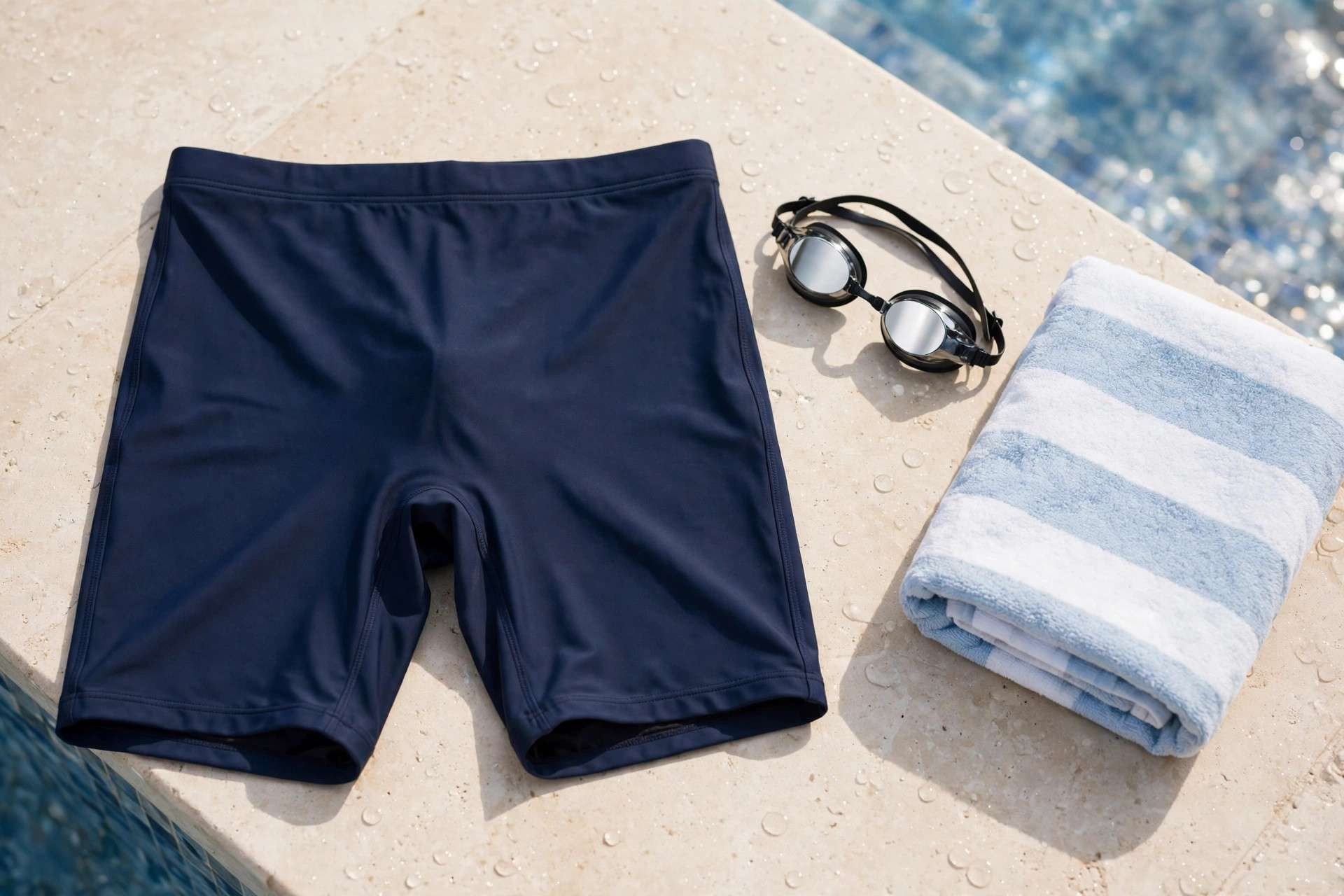
A square-leg swimsuit is a fitted men's swimsuit cut like a short, square pair of briefs: it sits on the hips, covers the upper thigh for a few inches, and ends in a straight, horizontal leg hem. It borrows the close fit and low drag of a racing brief and adds the coverage of a short trunk, which is why lap swimmers, water-polo players, and men who simply prefer a tidier silhouette keep choosing it.
Where the Square Leg Sits Among Men's Cuts
Men's swimwear runs on a spectrum of coverage. At one end is the swim brief, with the least fabric and the least drag. At the other are boardshorts and baggy trunks, which carry the most fabric, hold the most water, and suit the beach better than the lap lane. The square leg sits deliberately in the middle: fitted like a brief through the seat and hips, then extended down the thigh in a straight panel that ends square — hence the name.
Two close relatives are worth separating. A jammer continues the same fitted idea all the way to just above the knee, and is the standard training cut for competitive swimmers. A square-leg suit stops much higher, usually with an inseam of roughly two to four inches, so it feels closer to everyday underwear in coverage while still streamlining far better than a loose trunk. If you have ever found briefs too minimal and trunks too billowy, the square leg is the compromise the category built for you.
Fit: Snug, Flat, and Honest About Size
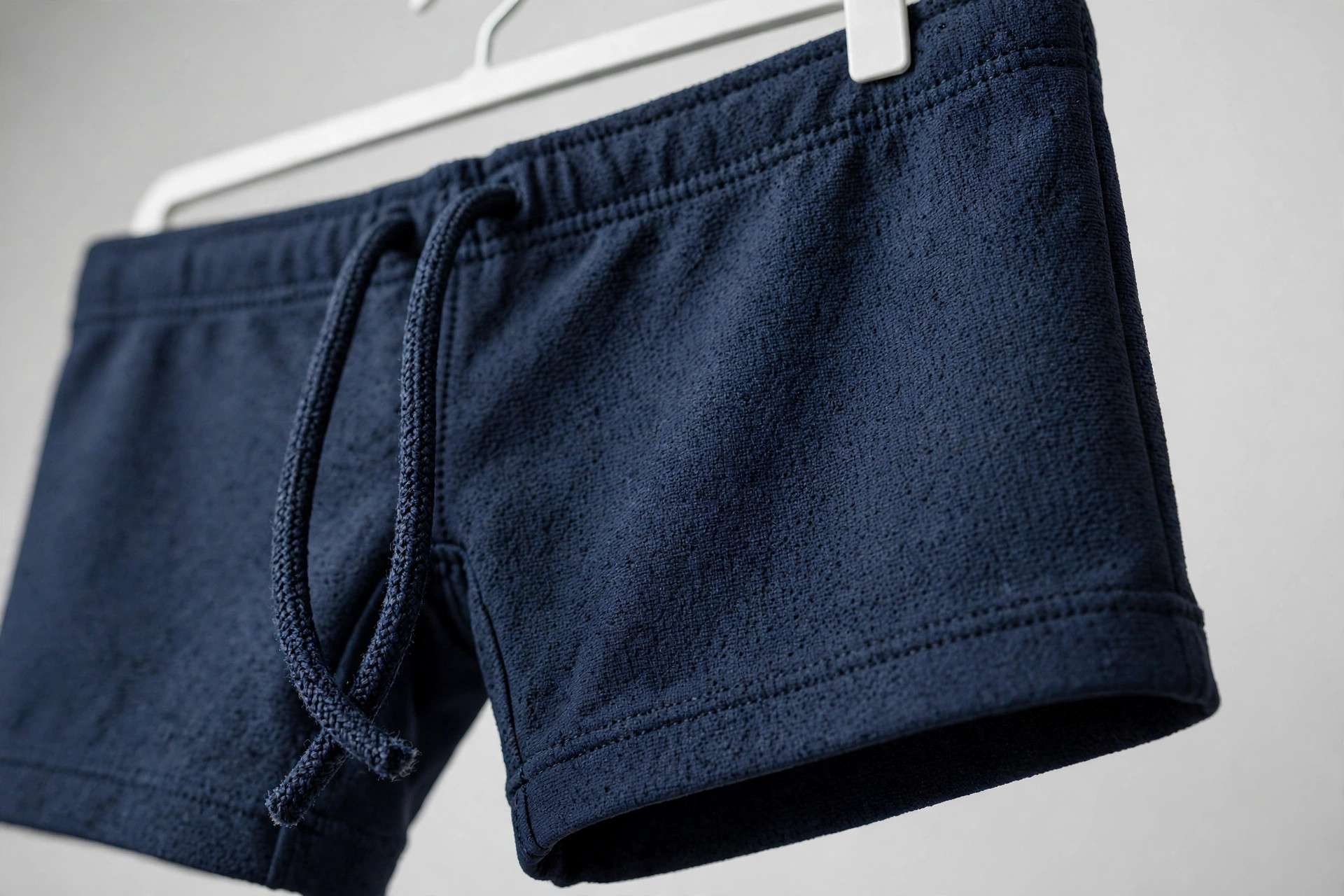
A square-leg suit should fit like a second skin without digging in. The waistband sits at the hips, the drawstring ties inside, and the leg hems lie flat against the thigh — if the hem stands away from the leg or flutters when you walk, the suit is a size too big and will balloon with water at every push-off.
- Waist first: size by your actual waist measurement, not your trouser size; swim sizing runs honest, trousers often do not.
- Leg hem: snug enough to stay put in a tumble turn, loose enough not to leave a deep mark after an hour.
- Rise: most square legs are low-rise; a few training brands offer a mid-rise that covers more of the hip.
- Lining: a front lining panel is standard and worth having for both modesty and shape retention.
Between sizes, lap swimmers usually take the smaller one — every swimsuit relaxes slightly in the water — while beach-first wearers may prefer the larger for all-day comfort.
Fabrics: Chlorine Is the Real Opponent
The fabric decision matters more than the color decision. Standard nylon-spandex blends feel soft and stretch generously, but chlorine breaks spandex down: a suit worn in a pool several times a week can go baggy and translucent within a season. Polyester and PBT blends sacrifice a little softness for far better chlorine resistance, holding their fit and color through hundreds of pool hours, which is why nearly every training square leg is polyester-based.
For open water and the beach, the calculation flips: quick drying and comfort outrank chlorine resistance, and a nylon blend with a UPF rating earns its place. Whichever you choose, look for a fabric weight that stays opaque when wet and stretched — hold the suit up to the light and stretch it; if you can see through it dry, the pool will not improve it. The wider fabric picture is covered in the men's swimwear guide.
Care That Doubles a Suit's Life
Rinse the suit in cool, clean water as soon as you leave the pool — chlorine left sitting in the fibers keeps working long after you have showered. Wash occasionally by hand in cool water with a mild detergent, never bleach, and never wring a fitted suit hard; roll it in a towel to press the water out instead.
Dry it flat or hanging in shade. Dryer heat and direct sun are the two fastest ways to age spandex, and a suit draped over a hot radiator can lose a season of life in a weekend. Rotate two suits if you swim daily: a full day of rest lets the elastic recover, and a rotated pair easily outlasts two suits worn back to back.
One last practical virtue deserves mention: a square-leg suit is the easiest of all men's cuts to travel with. It rinses clean in a hotel sink, dries overnight on a towel rail, takes less room in a bag than a folded T-shirt, and covers enough to be the only suit you pack for a trip that mixes lap pools, hotel pools, and the sea.
Shop for Square-Leg Swimsuits
Common Questions
- What is the difference between a square-leg swimsuit and a jammer?
- Length. A square-leg suit ends high on the thigh, with an inseam of roughly two to four inches, while a jammer extends to just above the knee. Both are fitted and low-drag; the square leg offers less coverage and a freer kick, the jammer more compression and coverage.
- Are square-leg swimsuits good for lap swimming?
- Yes — they are one of the standard training cuts. The fitted shape creates far less drag than loose trunks, the short leg allows a full, unrestricted kick, and the extra coverage over a brief suits swimmers who train in public pools and prefer it.
- How should a square-leg swimsuit fit?
- Snug everywhere, tight nowhere. The waistband stays at the hips without the drawstring doing all the work, the seat is smooth, and the leg hems lie flat against the thigh. If the hem gaps or flutters, go down a size; if it digs in and marks deeply, go up.
- Do square-leg swimsuits last in chlorinated pools?
- The polyester and PBT versions do — they resist chlorine far better than nylon-spandex blends, which soften and sag with regular pool use. Rinsing after every swim and rotating two suits extends the life of either fabric considerably.
- Can you wear a square-leg swimsuit at the beach?
- Certainly. It dries faster than boardshorts, packs to almost nothing, and gives a cleaner tan line than knee-length trunks. Choose a nylon-blend or UPF-rated version for long sun days, since training polyester suits are built for pool hours rather than beach afternoons.
Swim, Active and Maternity Series
This guide is part of the Apparel Search Swim, Active and Maternity Series: practical guides to swimwear, workout clothing, and clothing for pregnancy and nursing.