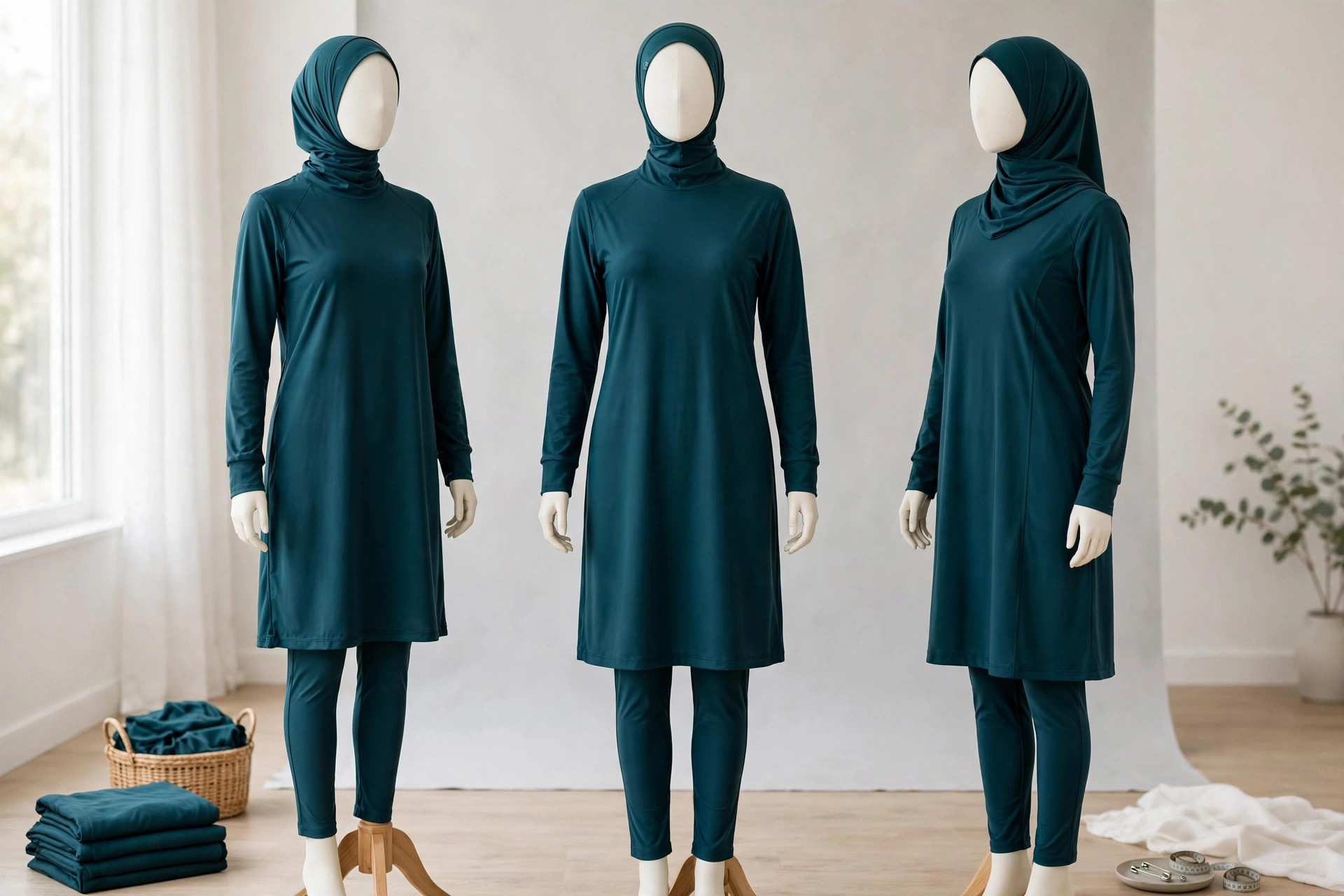
A burkini is a full-coverage swimsuit: a long, loose-fitting tunic top, full-length swim leggings, and a close-fitting swim cap or hijab-style head covering, all made from proper swimsuit fabric. The name blends "burqa" and "bikini," and the garment was designed in Australia in the mid-2000s so that women who dress modestly — many of them Muslim women, and others with their own reasons — could swim, surf, and take part in water life on equal terms.
What a Burkini Set Includes
A standard set has three pieces. The tunic reaches mid-thigh or the knee, with long sleeves; it is cut loose through the body so the fabric does not cling when wet, which is a functional requirement of modest dress, not just a style choice. The leggings are full-length and worn beneath the tunic. The head covering is a swim-specific cap, often with a panel that covers the neck and fastens or tucks into the tunic's neckline so it stays in place in the water.
Thoughtful sets add engineering that casual imitations skip: a fastening or tie between tunic and leggings so the top cannot float up while swimming, an internal support or the room to wear a swimsuit underneath, flat seams that do not chafe through a long session, and zips placed so the tunic goes on easily over the cap. Two-piece and three-piece versions exist, and some sets separate the cap so the wearer can pair the suit with her own preferred covering.
Engineered to Swim In, Not Just to Cover
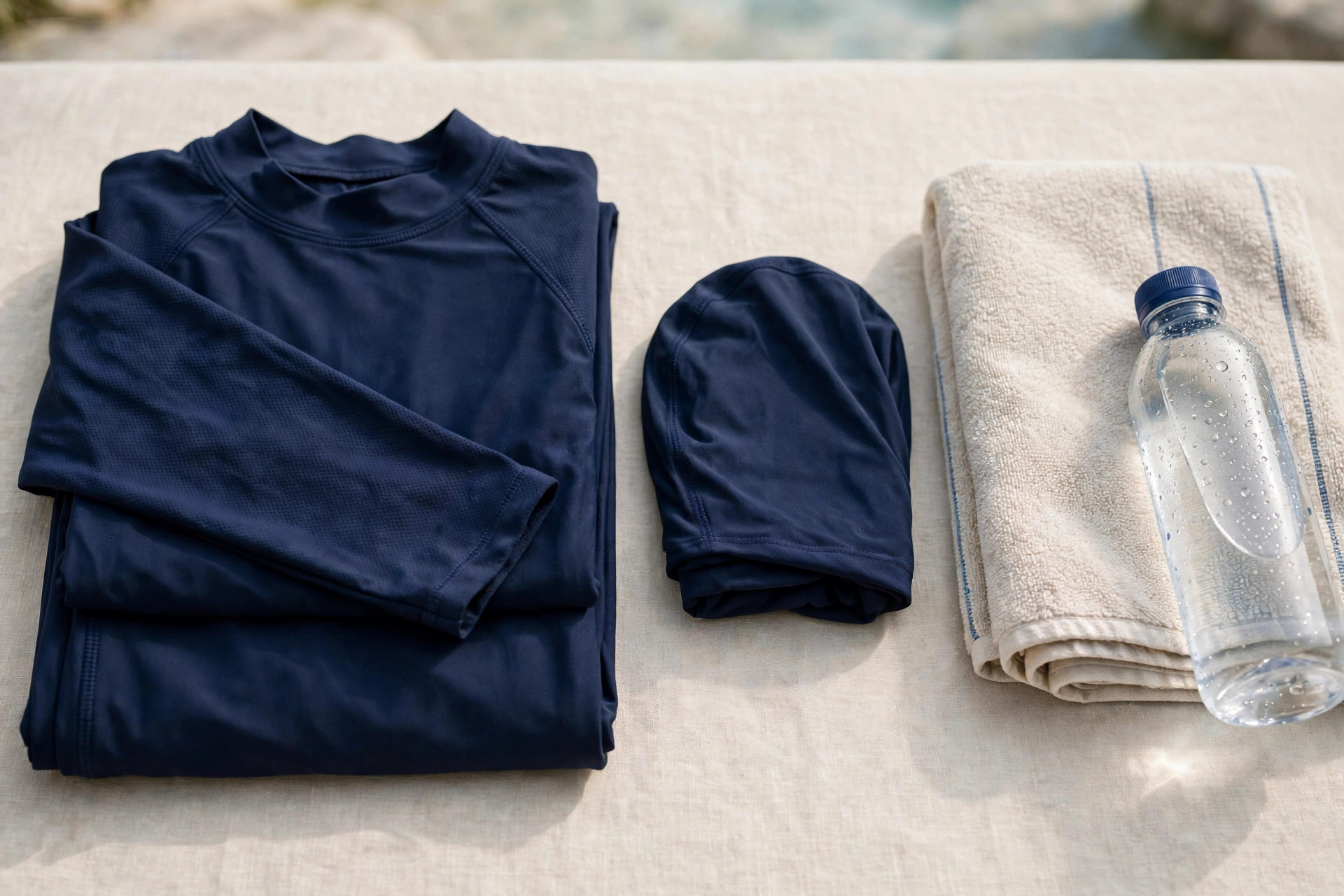
The central design problem is drag and cling. Ordinary loose clothing is genuinely unsuitable for swimming — it soaks, weighs, wraps, and clings — which is why the burkini is made from the same lightweight, quick-drying, chlorine-tolerant knits as other performance swimwear, and why its looseness is patterned rather than accidental: ease where movement needs it, a smooth fit at the shoulders, sleeves, and legs where water flows.
A well-made burkini is comfortable for real swimming, surf lifesaving training, hydrotherapy, and swimming lessons — contexts where it has been adopted by everyone from beach lifeguard programs to hospital therapy pools. When shopping, treat it like the technical garment it is: check that the fabric is a named swim knit (polyester or nylon with elastane), that the tunic is secured against floating, and that the cap is swim-specific rather than a fashion scarf, which will slip and absorb water.
Who Chooses Modest Swimwear
Religious observance is the best-known reason, and for many Muslim women the burkini is simply the garment that makes public swimming possible at all. But the wearers are broader than any single group: women who prefer more coverage for personal or cultural reasons, people seeking serious sun protection across the whole body, swimmers returning to the water after surgery or with skin conditions, and beginners who feel more confident covered while they learn.
Apparel Search treats modest swimwear the way it treats every other category on this site: as clothing that solves a real problem for real people, deserving the same quality of design and the same practical buying advice. Coverage levels also vary — some wearers pair a swim skort or a long-sleeve rash guard and leggings for a lighter version of the same approach, and the cover-up swimwear guide maps the lighter end of the coverage spectrum.
Fit and Care
Fit follows the garment's purpose: the tunic should be genuinely loose through the body — if it fits like a regular swimsuit on land, it will cling in the water, defeating the design — while the leggings fit like ordinary swim leggings, close and smooth. Sleeves should reach the wrist without pulling the shoulder down, and the cap should feel secure when you turn your head sharply, the motion that tests it in surf and play.
Care is standard swimwear care with one addition: because a set has more fabric, it holds more water. Rinse the whole set after swimming, wash cool and gently, and dry it fully — hanging in moving air, turned once — before storing, since three layers folded damp will mildew faster than a single suit. Chlorine fades the deep colors modest swimwear often uses; polyester-blend sets hold their color longest for regular pool swimmers.
Shop for Burkinis
Common Questions
- What does a burkini consist of?
- Three pieces in proper swimsuit fabric: a long, loose tunic with long sleeves, full-length swim leggings worn underneath, and a close-fitting swim cap or hijab-style head covering that secures into the neckline. Better sets add a tie or fastening so the tunic cannot float up in the water.
- Can you swim properly in a burkini?
- Yes. A genuine burkini is engineered for the water — lightweight quick-dry swim knit, patterned ease instead of clinging bulk, secured hems, and a swim-specific cap. It is used for lap swimming, surf lifesaving training, lessons, and hydrotherapy. Loose ordinary clothing, by contrast, is not safe or comfortable to swim in.
- Who wears a burkini?
- Most visibly, Muslim women whose dress observance calls for full coverage, alongside many other wearers: people who prefer coverage for cultural or personal reasons, those wanting full-body sun protection, swimmers with skin conditions or post-surgical needs, and anyone more confident covered while learning.
- How should a burkini fit?
- Loose in the tunic — that looseness is the point, since a close tunic would cling when wet — and close in the leggings, which fit like swim leggings. Sleeves should reach the wrist comfortably and the cap should stay secure when you turn your head quickly.
- Is a burkini the same as swimming in regular clothes?
- No, and the difference matters. Regular clothes absorb water, become heavy, wrap around the body, and cling. A burkini uses the same engineered knits as other performance swimwear, dries quickly, and is cut and fastened specifically so full coverage stays safe and in place while swimming.
Swim, Active and Maternity Series
This guide is part of the Apparel Search Swim, Active and Maternity Series: practical guides to swimwear, workout clothing, and clothing for pregnancy and nursing.