Pattern Making & Fitting · Finishing
Seam Finishes & Pressing
Fit gets a garment onto the body; finishing decides how long it stays beautiful. The seam finishes that protect raw edges, and the pressing tools and habits that give sewn work its crisp, professional edge.
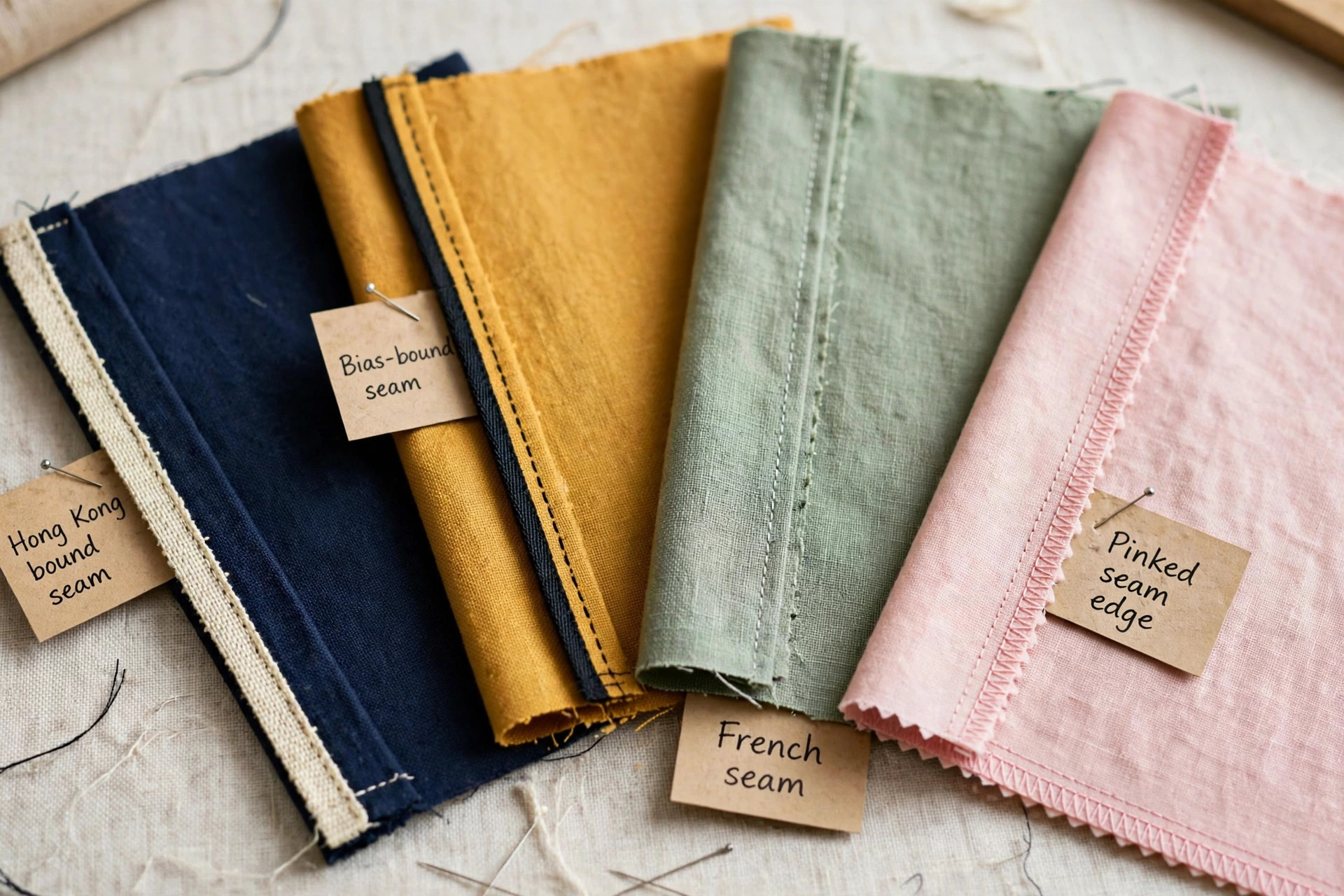
Turn a well-made garment inside out and you can read its quality at a glance: every raw edge is enclosed, bound or sealed, and every seam lies flat and sharp. Turn a poor one inside out and the edges are already fraying into the seams that hold the garment together. Seam finishing is not decoration — an unfinished edge sheds fibers with every wear and wash until the seam allowance, and then the seam itself, gives way. This closing guide of the Pattern Making, Draping & Fitting cluster covers the finishes worth knowing and the pressing discipline that completes them. (For the stitches and seam types these finishes are built on, see the stitch and seams guide.)
The Finishes, From Workhorse to Couture
Pinked and Zigzagged Edges
The quickest finishes: the allowance edge is cut with pinking shears, whose sawtooth edge limits fraying on firmly woven fabrics, or oversewn with a zigzag or overlock (serged) stitch that wraps the edge in thread. Fast and flat, and entirely adequate inside lined or hard-wearing garments — but the edge is protected, not enclosed, and determined frayers will still shed.
Best for: everyday garments, lined clothing, stable wovens where speed matters.
French Seam
The raw edges are enclosed inside the seam itself: sew with wrong sides together and a narrow allowance, trim close, fold right sides together and sew again, trapping the raw edges in the fold. Nothing can fray because nothing is exposed. The double stitching adds slight bulk and the seam must be planned wider from the start.
Best for: sheers, chiffon, organza and fine fabrics where edges would show through and binding would be visible.
Flat-Felled Seam
The jeans seam: one allowance is trimmed, the other folded over it and topstitched down, enclosing the raw edges in a flat, extremely strong band with two visible rows of stitching. It lies flatter than it looks and survives years of abrasion and laundering.
Best for: denim, shirting, workwear, sportswear and any seam that takes stress — a natural partner to the fabrics in the Denim Fabric Guide.
Bound and Hong Kong Finishes
Each seam allowance edge is wrapped in a strip of bias-cut fabric. In a standard bound finish the binding may be a contrasting or self fabric; in the Hong Kong finish the binding is a whisper-light material — silk organza or lining fabric — stitched to the edge, folded over it and secured invisibly, enclosing the edge with almost no added bulk and a jewel-like appearance. It is slower than every finish above and outlasts most of them.
Best for: unlined jackets, coats and tailored garments — the couture standard where the inside is seen.
Clean-Finished and Lined Seams
The simplest couture answer is to make the inside disappear: allowances are turned under and edge-stitched (clean finishing), or the garment is lined or faced so the seams live between layers and no finish is needed at all. A full lining is the most elegant finish of all, at the cost of an entire second garment's worth of cutting and sewing.
Best for: tailored and formal garments; clean finishing for waistbands, facings and unlined summer pieces.
Choosing among them is a matter of matching the finish to the fabric's fraying habit, the garment's visibility inside, and the stress on the seam — heavy frayers need enclosure, sheers need invisibility, stress seams need the felled seam's strength, and heirloom work earns the Hong Kong treatment.
Pressing: The Other Half of Sewing
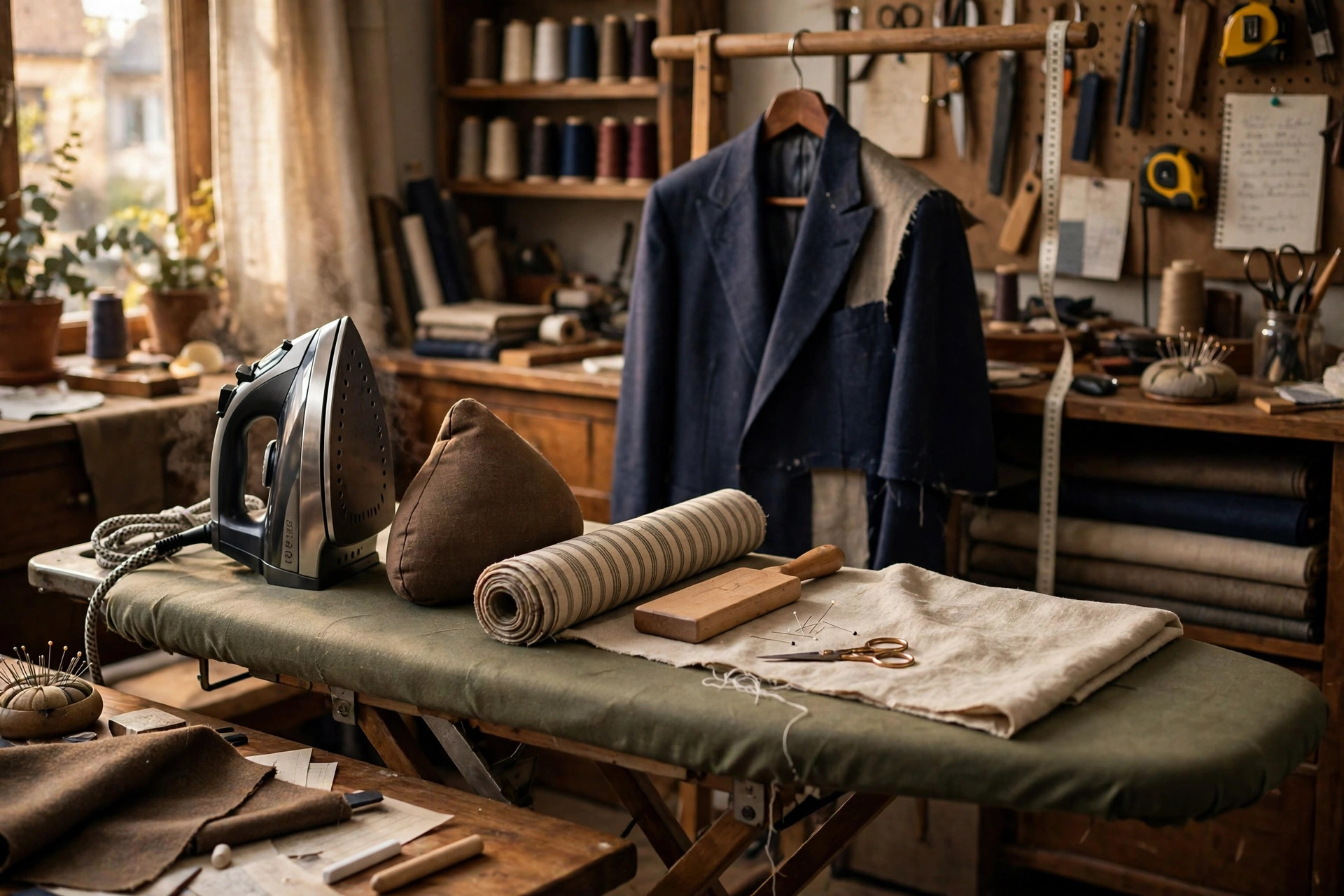
Ask a tailor what separates professional work from home sewing and the answer is rarely the machine — it is the iron. Pressing is done during construction, seam by seam: each seam is pressed flat as sewn to meld the stitches into the cloth, then pressed open or to one side as designed, and only then crossed by the next seam. Pressing is a lift-and-set motion, never the sliding of ironing, which stretches and shines the cloth. Darts are pressed toward center front or back (or downward on the skirt), curved seams are pressed over a tailor's ham so they keep their shape instead of being flattened, sleeves and tubes go over a sleeve roll, and crisp edges are set with a wooden clapper, whose weight and wood absorb steam and lock the fold. A pressing cloth stands between iron and fabric whenever shine or scorching threatens. Tailors finish with the garment's final press — in industry, the underpressing and top pressing stages — and owners keep the result alive with the care habits in the Garment Care Guide.
Five Pressing Rules That Change Everything
Press every seam before another seam crosses it. Press on the wrong side first; use the right side only with a cloth. Let each pressed section cool and dry in position before moving it — the shape sets as it cools, not while it is hot. Test temperature and steam on a scrap of the actual fabric, every time. And press with the garment's shape — over the ham, along the roll — never flatten a curve that the pattern worked to create.
More in Pattern Making, Draping & Fitting
Common Questions
What is a Hong Kong seam finish?
A Hong Kong finish binds each seam allowance edge separately with a strip of lightweight bias-cut fabric — traditionally silk organza or a lining fabric. The bias strip is stitched to the edge, wrapped over the raw edge and secured by stitching in the ditch or by hand. It encloses the raw edge completely without adding bulk, which is why it is the classic couture finish for unlined jackets and coats: beautiful, durable and flat enough not to print through to the right side.
What is the difference between pressing and ironing?
Ironing slides the iron back and forth across the fabric — the right motion for smoothing a finished garment, and the wrong one during construction, because sliding stretches seams, distorts bias edges and can press in shine. Pressing lowers the iron onto a small area, holds it with steam and pressure, then lifts and moves to the next area. Construction sewing is pressed, seam by seam, as the garment is built; that is what sets seams flat, shapes darts and makes the finished work look crisp.
When should I use a French seam?
A French seam encloses the raw edges inside the seam itself: the seam is sewn first with wrong sides together and a narrow allowance, trimmed, then folded with right sides together and sewn again so the raw edges are trapped in the fold. It is the finish of choice for sheer and lightweight fabrics — chiffon, organza, fine cotton — where raw edges would show through and fray, and where the extra bulk of binding would be visible. It is too bulky for heavy fabrics and awkward on sharp curves.
Do I really need to press every seam as I sew?
Yes — pressing as you sew is the single habit that most separates professional-looking results from homemade ones. Each seam is pressed flat as sewn (to meld the stitches into the fabric), then pressed open or to one side as the pattern directs, before the next seam crosses it. A seam that is crossed by another seam before being pressed can never be pressed properly afterward, and unpressed seams stay puffy and rounded no matter how the finished garment is ironed.
Back to Pattern Making, Draping & Fitting
The Pattern Making, Draping & Fitting hub maps the whole craft — drafting, draping, darts, fitting, muslins and finishes — with links to every guide in this cluster.