Sunglass Store on Amazon
Fashion eyewear for the whole family, plus the accessories that protect it
When the sun is out, a strong pair of sunglasses does two jobs at once: it protects the eyes and finishes the outfit. Amazon's sunglass store treats eyewear as fashion, gathering women's sunglasses as its headline department alongside men's sunglasses, boys' and girls' sunglasses, prescription eyewear, and the practical accessories — sunglass cases, chains and lanyards — that keep a good pair from ending up scratched at the bottom of a bag.
Researching trendy eyewear online works best with a little vocabulary. Frame shape, lens material, UV protection rating and polarization decide both look and performance, and product pages state all four for shoppers who know to look. This guide tours the store's departments, explains the frame families and lens options in plain terms, and covers the fit measurements that make ordering eyewear without a fitting room a confident purchase.
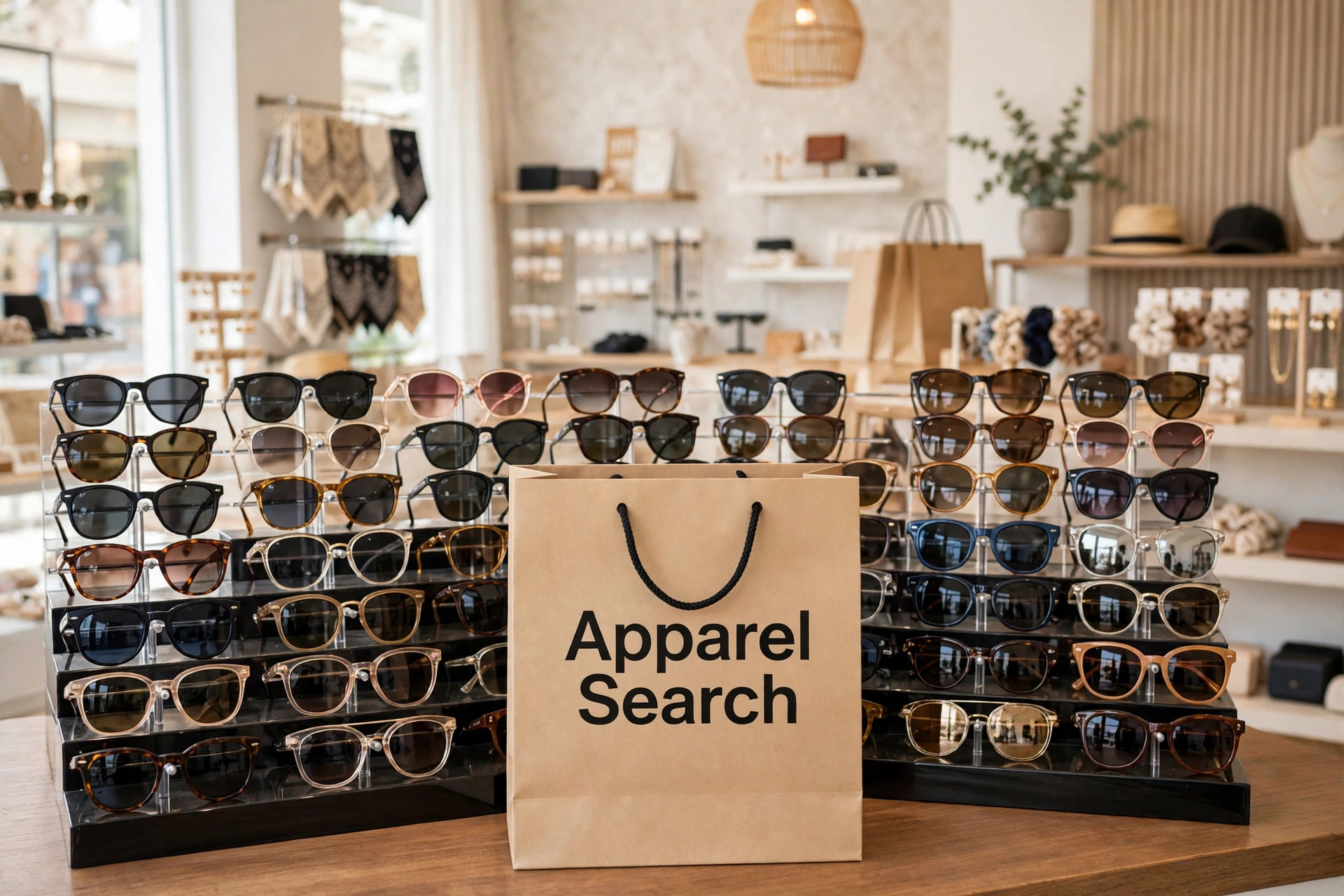
Sun is out and the outfit is nearly done — the Apparel Search Amazon clothing guide leads from the sunglass store to the jewelry, shoe and handbag departments that complete the look.
Women's, Men's and Kids' Departments
The women's department is the store's largest, spanning oversized glamour frames, cat-eye and round retro shapes, aviators, sport styles and embellished fashion designs across many brands and prices. The men's department covers the same classic shapes in restrained colors and materials, plus wraparound sport frames. Shopping by face shape is the usual shortcut: angular frames balance round faces, while softer, rounded frames balance angular faces.
Boys' and girls' sunglasses prioritize durable, flexible frames and shatter-resistant lenses sized for smaller faces, often in bright colors children will actually wear. Prescription eyewear sits in its own area of the store for shoppers who need corrective lenses in sunglass frames. Across all departments, the UV protection statement is the specification to verify first — fashion tint alone is not protection.
Frames, Lenses and What the Terms Mean
Frame materials divide into acetate and other plastics, which allow bold colors and shapes, and metals, which give slimmer profiles and adjustable nose pads. Lens options include standard tinted, gradient tints that are darker at the top, mirrored finishes, and polarized lenses that cut reflected glare from water, roads and snow. Product pages state whether lenses are polarized — a meaningful upgrade for drivers and anyone spending long hours near water.
UV protection is rated separately from darkness: look for a stated UV400 or full UVA and UVB protection claim, since a dark lens without it can be worse than none by letting the pupil open wider. Lens categories and visible-light ratings appear on many listings. For fashion wear, most shoppers balance three things: a shape that suits the face, genuine UV protection, and a lens tint dark enough for bright days without being unsafe at dusk.
Fit, Cases and Chains
Eyewear listings give measurements in millimeters — lens width, bridge width and temple length — often printed inside the temple of glasses you already own. Comparing those three numbers with a comfortable current pair is the most reliable fit method online. Total frame width predicts how oversized a style will look, and reviewers frequently report whether a frame runs large or small on an average face.
The accessories department exists because sunglasses are easy to lose and easier to scratch: hard cases for bags and travel, soft pouches for pockets, and chains and lanyards that keep glasses at hand and double as a style detail. Buying the case with the glasses is the store's simplest good habit — a protected pair lasts seasons, while an unprotected pair rarely survives one summer intact.
Common Questions
Does the sunglass store sell eyewear for the whole family?
Yes — women's sunglasses headline the store, with men's sunglasses, boys' and girls' sunglasses and prescription eyewear in their own departments, plus cases, chains and lanyards.
What UV protection should sunglasses have?
Look for a stated UV400 rating or full UVA and UVB protection. Lens darkness alone does not indicate protection, so verify the UV claim on the product page before buying.
How do I get the right fit when ordering online?
Compare the listed lens width, bridge width and temple length in millimeters with a pair you already own and find comfortable — those three numbers are usually printed inside that pair's temple arm.
More to Explore
- Amazon Fashion Stores
- Women's Sunglasses Guide
- Women's Eyewear Guide
- Sunglass Stores
- Jewelry Guide
- Jewelry Stores
- sunglasses
- fashion eyewear
- women's sunglasses store
- jewelry store
- women's shoe store
- handbag store
- Women's Fashion on Amazon
- Women's Clothing Stores
- Women's Clothes Guide
- Women's Fashion Brands
- Women's Fashion Shopper
- Men's Eyewear
- Men's Vintage Eyewear
- Children's Eyewear
- Children's Sunglasses