Children's Boys Polo Shirts Guide
Boys' polo shirts are the collared knit that lives between the T-shirt and the dress shirt: a soft collar, a short button placket and a tidy finish that schools, clubs and family occasions all accept. They trace back to the polo shirt's sporting origins - the iconic shirt of tennis - and combine elegance and casual comfort into a wardrobe staple. Both halves of that inheritance are real: the polo dresses up without effort and washes without ceremony.
Shop Children's Boys Polo Shirts Now
Shop Children's Boys Polo Shirts on Amazon Shop Children's Boys Polo Shirts on eBayThe Amazon and eBay links on this page are affiliate links. If you make a purchase through them, Apparel Search may earn a commission.
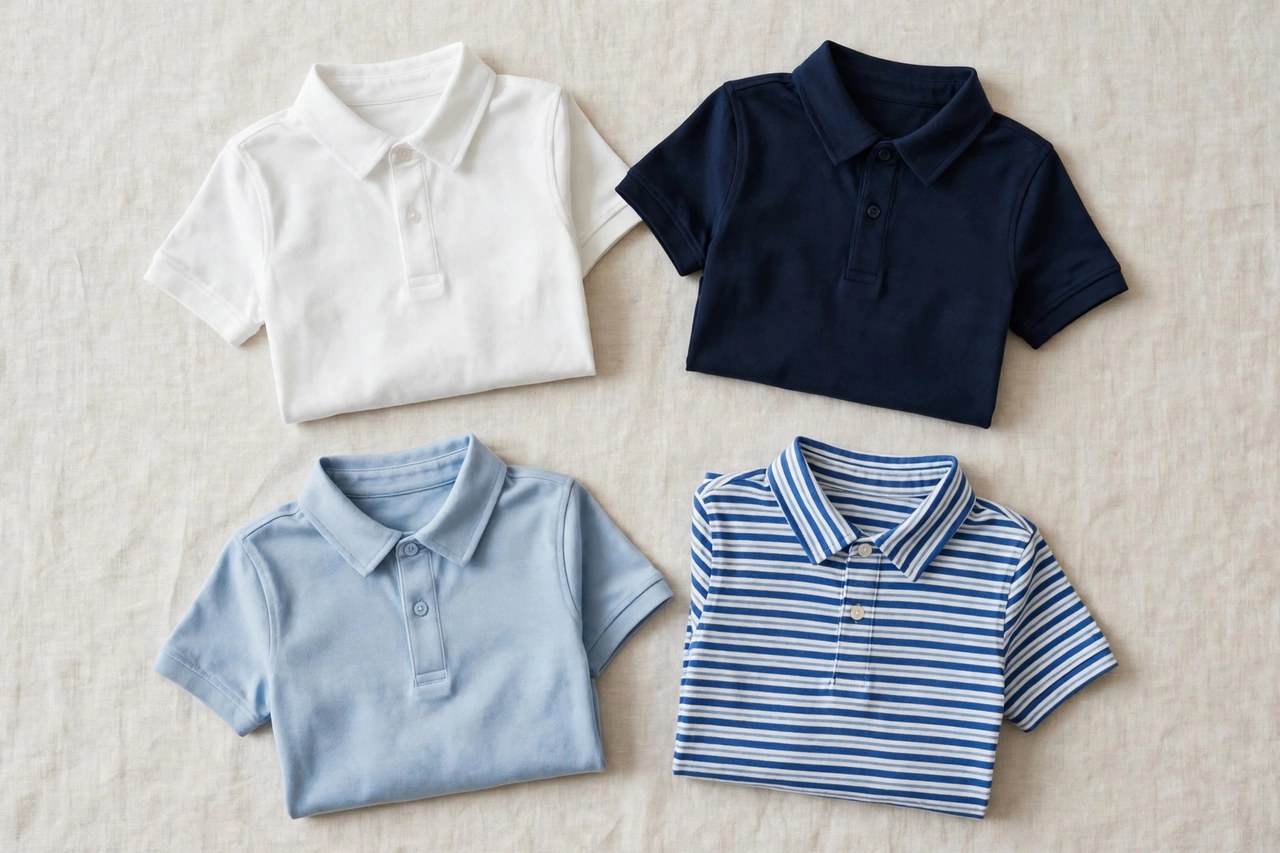
Boys' polo shirts are the collared knit that lives between the T-shirt and the dress shirt: a soft collar, a short button placket and a tidy finish that schools, clubs and family occasions all accept. They trace back to the polo shirt's sporting origins - the iconic shirt of tennis - and combine elegance and casual comfort into a wardrobe staple. Both halves of that inheritance are real: the polo dresses up without effort and washes without ceremony. This guide walks through the choices that matter - style, fit, fabric and finish - with the practical detail a product listing rarely gives, and closes with the care habits that keep the garment in service.
Styles and Construction
Piqué cotton is the classic fabric, its textured knit breathing well and holding the collar's shape; jersey polos are smoother and softer, reading as dressed-up tees; interlock is the smooth, substantial middle; and performance synthetics with moisture management own the sport and hot-climate school slots. The collar is the quality tell - a ribbed collar with proper construction lies flat wash after wash, while a flimsy one curls and bacon-necks within a term. A two or three button placket, a hem even all round or with a slight tennis tail, and side vents complete the classic pattern.
For children's tops, finishing decides comfort: flat or taped neck seams that do not scratch, shoulder seams that sit on the shoulder rather than sliding down the arm, and prints or appliques that stay smooth against the skin. Hold the garment up and check that side seams hang straight - a twisted seam means the pieces were cut off grain and the top will keep twisting in wear. Reinforced elbows and double-stitched hems earn their keep on school clothes.
Fit and Sizing
Uniform programs adopt the polo because it standardizes beautifully: one shirt, in the school's colors, that every boy can wear well. Fit it like a shirt, not a tee - shoulders at the shoulder, body skimming, hem tuckable and staying tucked. The long sleeve version has its own guide in this letter for the cold terms and smarter slots; the short sleeve here owns summer, sport and the everyday smart rotation.
Fit children's tops by shoulder and length first: the shoulder seam belongs at the shoulder, sleeves should reach the wrist with the arm relaxed, and the hem should cover the waistband of the bottoms it will be worn with, sitting and reaching alike. Leave growing room in the body rather than the neck - a collar that gaps or chokes is wrong at any price. If a top will be layered over another, try it over that layer before deciding.
Wearing and Care
Polos reward the small cares: button the placket and fold rather than hang, wash inside out, and press the collar back to flat when it first hints at curling - early attention keeps a polo presentable for the full school year, while a neglected collar announces itself in every photograph. Bought in school colors plus one in a favorite, the polo is the hardest-working smart garment a boy owns per dollar spent.
Wash children's tops inside out in cool or warm water, fasten buttons and zips first, and treat playground and food stains the same day - children's stains set fast because they are rarely rinsed when they happen. Tumble dry low or line dry to protect prints and elastic, and fold knits rather than hanging them so shoulders keep their shape. A named hook or cubby label inside the collar saves more school tops than any fabric technology.
Common Questions
Why do schools choose polo shirts as uniforms?
Because the polo standardizes without discomfort: the collar and placket give the required smartness, the knit gives a full day of movement and playground tolerance, and the garment washes, dries and returns to service faster than a woven shirt. It also spans sizes and builds forgivingly. For families, the polo's multipack economics and durability make the uniform drawer the cheapest smart clothing a boy owns.
What is the difference between piqué and jersey polo shirts?
Piqué is the classic polo knit - textured, breathable and structured enough to hold a collar's shape and a garment's line. Jersey is smooth like a T-shirt: softer, lighter and more casual, with a collar that needs better construction to lie as flat. Piqué for the classic and uniform slots, jersey for the relaxed and layered ones; both are correct polos, wearing slightly different registers.
How should a boy's polo shirt fit?
Shoulders at the shoulder, sleeves ending mid-bicep, the body skimming rather than clinging, and the hem long enough to tuck and remain tucked when sitting and reaching. The collar should close comfortably at the top button even if it is rarely buttoned. A polo bought a size large hangs its collar open and reads as borrowed - this is a garment where the right size is the style.
More in Children's Clothes Guide B
The B letter hub and the guides closest to this one:
Looking for Children's Clothing Stores?
This guide helps you choose children's boys polo shirts. To browse where to buy, visit our children's clothing store directory, where you can find retailers that carry them.