The System
Jewelry as a System, Not a Collection of Pieces
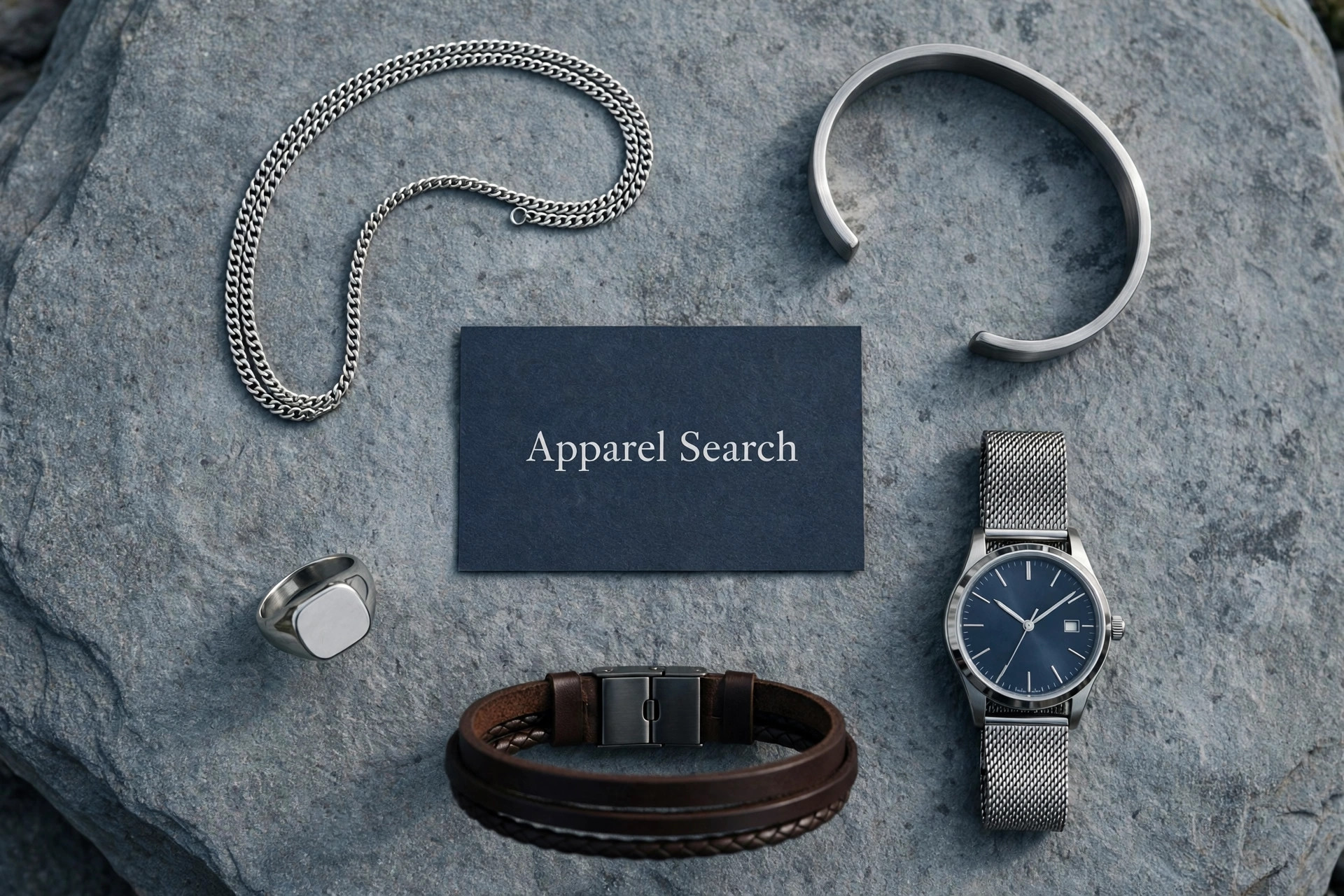
Men’s jewelry works best as one small system. A watch, one chain, one bracelet and one ring, chosen in compatible metals and worn in consistent places, read as deliberate. The same pieces bought at random, in clashing finishes and worn all at once, read as clutter. The difference is rarely the budget — it is whether the pieces were chosen to work together.
This hub covers the whole system: the four main categories, the metals that dominate men’s pieces and how they compare, how much is enough, and the settings that change the answer — the office, where restraint wins, and the evening, where a little more is welcome. The spoke guides then take each category in depth: men’s necklaces, men’s bracelets and men’s rings, with the watch covered by the men’s watches guide.
“One metal family, a few pieces, worn consistently — that is the whole formula.”
Search Apparel Search
The Categories
The Four Categories, and What Each One Does
Necklaces sit closest to the face and carry the most visual weight, so they set the tone: a single chain at a sensible length is the usual starting point, and pendants and layers come later. Bracelets share the wrist with the watch and are the easiest category to experiment with, since a bracelet can be added or removed in seconds. Rings are the most permanent-feeling pieces: a wedding band, signet or plain band is worn daily and seen constantly, so fit and comfort matter more here than anywhere else. Watches are jewelry that also tells the time — the one piece nobody questions — and the best watches overview covers choosing one. Around those four sit the smaller categories: cufflinks, tie bars, and lapel pins such as the ones in the men’s brooches and lapel pins guide.
The categories also divide by commitment. Bracelets and chains go on and off freely and can change with an outfit. Rings and watches tend to become fixtures — which is why the system approach starts there: pick the fixtures first, in a metal you like, and let the flexible pieces follow.
The Metals
Silver, Steel and Gold: Choosing a Metal Family
Most men’s jewelry is made from three metal families, and staying inside one of them is what makes separate pieces look like a set. Mixed metals look intentional only when the same mix repeats across pieces; a lone gold ring among silver everything-else just looks borrowed.
| Metal | Look | Durability and care | Best for |
|---|---|---|---|
| Sterling silver | Bright white metal that softens to a gentle patina with wear | Tarnishes over time and needs occasional polishing; scratches more easily than steel; solid and repairable | Chains, signets and bracelets with a classic, slightly lived-in character |
| Stainless steel | Cooler, greyer white metal with a harder, more industrial edge | Highly resistant to tarnish, water and everyday knocks; very low maintenance; difficult to resize | Everyday bracelets, chains and bands for men who want to put a piece on and forget it |
| Gold | Warm yellow, or cooler white gold; the most formal and traditional of the three | Higher karat gold is softer and marks more easily; lower karat alloys are harder; needs gentle cleaning, no harsh chemicals | Wedding bands, signets and heirloom-style pieces worn for decades |
Tone is the other half of the choice: silver and steel are cool-toned and sit naturally with navy, grey and black, while yellow gold is warm-toned and flatters earth colours. The fuller comparison is in gold vs silver jewelry, and the care routine in how to clean jewelry at home keeps any of them looking right.
How Much Is Enough
How Much Is Enough — Office Versus Evening
The useful rule is a count, not a vibe. For most men, three visible pieces plus a wedding band is the comfortable ceiling: a watch, a chain and a bracelet, say, or a watch, a ring and a lapel pin. Below that ceiling almost nothing reads as “too much”; above it, each extra piece needs the others to be quieter. Weight matters as much as count — three slim pieces read calmer than two chunky ones.
At the office, the test is whether the jewelry survives a handshake and a meeting without becoming the topic. A watch, a wedding band and one slim chain under a shirt pass everywhere; add a discreet bracelet in conservative workplaces and leave layered chains and statement rings for elsewhere — the men’s formalwear guide treats cufflinks and a watch as the standard formal allowance. In the evening the ceiling rises: pendants come out, bracelets stack, and a second ring is unremarkable. The constant is coherence — evening dressing adds pieces, it does not change the metal family halfway through.
The Starter Kit: Five Pieces That Cover Almost Everything
- A watch you genuinely like, sized to your wrist — the anchor piece everything else follows.
- One chain, 20–22 inches, in your chosen metal, slim enough to sit under a collar.
- One bracelet in the same metal family — a cuff, a chain bracelet or a simple leather strap.
- One ring beyond a wedding band, if you wear one: a signet or plain band for daily wear.
- One formal extra for dressed-up days: cufflinks, a tie bar or a lapel pin.
Questions
Common Questions
How much jewelry should a man wear at once?
For most settings, three visible pieces plus a wedding band is a comfortable ceiling — a watch, a chain and a bracelet, for example. Below that, proportion matters more than count: three slim pieces read calmer than two chunky ones. Conservative offices call for less, evenings and weekends allow more, but the metal family should stay consistent either way.
What is the best metal for a first piece of men’s jewelry?
Stainless steel is the lowest-maintenance starting point — it resists tarnish and water and needs almost no care. Sterling silver is the classic choice and develops a soft patina, at the cost of occasional polishing. Gold suits pieces bought for the long term, such as wedding bands and signets. The best first metal is the one that matches the watch and any ring you already wear daily.
Can men wear jewelry with a suit?
Yes — a suit is where men’s jewelry is most traditional. A watch, a wedding band, cufflinks on a French-cuff shirt and a tie bar are the standard formal allowance, and a slim chain worn under the shirt is invisible in any case. Keep finishes matched to the suit’s other metal — belt buckle, cufflinks and watch case in the same tone reads deliberate.