Men's 2000s Fashion Guide
The internet decade — frosted tips and trucker hats at one end, premium denim and the first sneaker drops at the other, and a great slimming waiting at the finish.
Shop Men's 2000s-Style Clothing Now
Shop Men's 2000s-Style Clothing on Amazon Shop Men's 2000s-Style Clothing on eBayThe Amazon and eBay links on this page are affiliate links. If you make a purchase through them, Apparel Search may earn a commission.
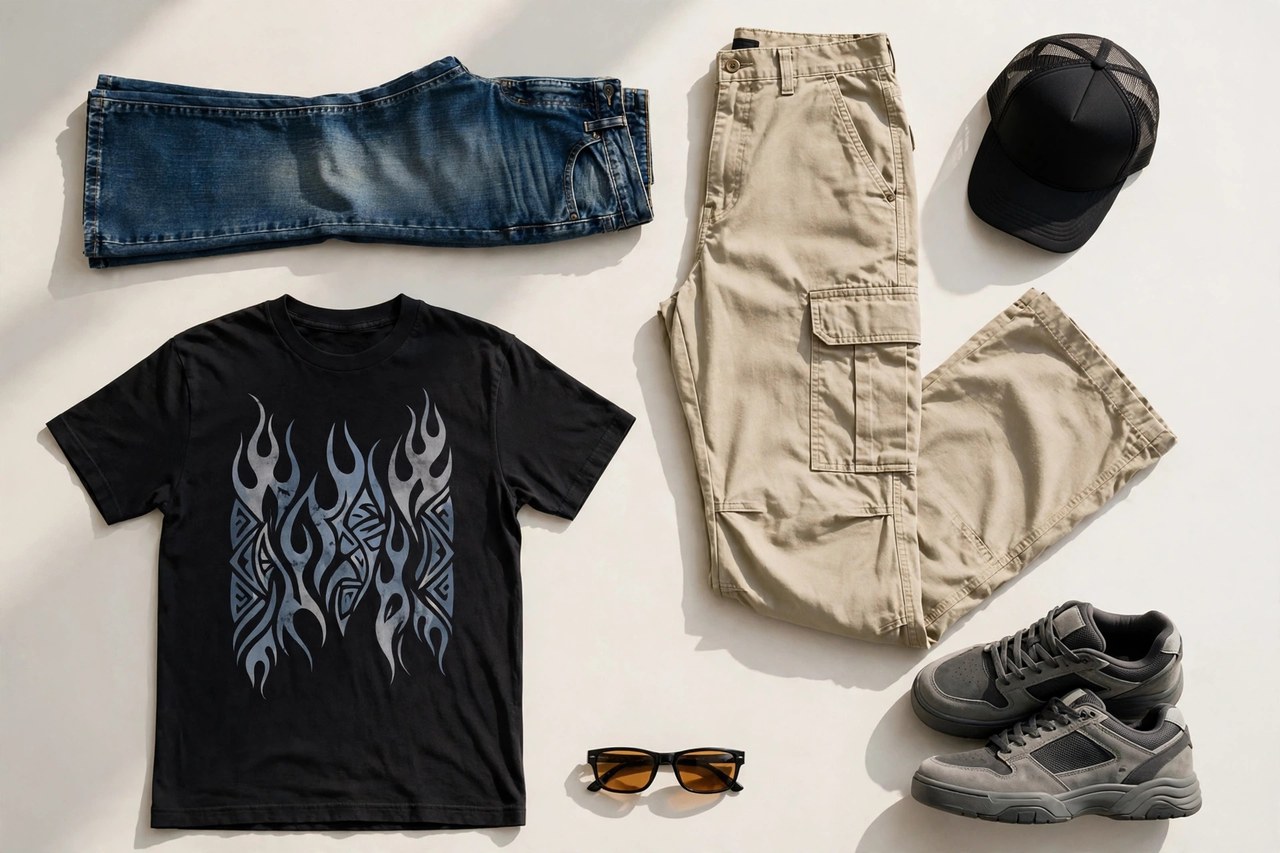
The 2000s were menswear’s first internet decade, and it showed: trends now arrived through music videos, celebrity photography and early social media rather than the runway, and they arrived all at once. The decade opened in the baggy aftershock of the ’90s, decorated itself with the frosted, tinted excess nicknamed Y2K style, discovered that jeans could cost as much as a suit, and then — in its final third — reversed direction entirely into the skinniest silhouettes in menswear history. No decade since has changed its mind so completely, so publicly, in ten years.
It was also the decade menswear became a hobby. Forums, blogs and the first online stores taught ordinary men the vocabulary of denim weights, sneaker releases and tailoring, and the knowledge never went away — the 2000s customer is the direct ancestor of today’s menswear enthusiast.
Y2K Excess: Cargo, Frosting and Tinted Glass
Early-2000s casual dress ran on volume and shine: cargo trousers with a pocket for every gadget, baggy shorts, bowling and camp shirts, chunky skate shoes, and tinted sunglasses worn indoors without irony. Hair kept the theme — frosted tips and spiked gel were close to uniform for young men. Mid-decade, graphic confidence peaked with rhinestone-and-tattoo-print brands such as Ed Hardy and the trucker hats of Von Dutch, logos once again worn as the loudest part of the outfit. It was not a subtle era, and its survivors remember it fondly precisely because it was not trying to be tasteful.
Designer Denim and the Metrosexual Moment
The decade’s genuine revolution was trousers. Premium denim — brands such as Seven for All Mankind, True Religion and Rock & Republic — turned jeans into a luxury category, sold on washes, stitching and fit: overwhelmingly bootcut, low-rise and worn long over the shoe. Around the jeans grew the era’s famous grooming culture, nicknamed metrosexual: moisturizer, hair product, fitted shirts and a deliberate interest in appearance became unremarkable for ordinary men, permanently retiring the idea that caring about clothes was unusual. Pop-punk and then emo pulled the silhouette the other way for the young: studded belts, band t-shirts, hoodies and the first skinny jeans since the ’60s.
Streetwear Rises, and the Great Slimming
Underneath the mainstream, streetwear industrialized: limited sneaker releases, queueing drops, collaboration culture and logo hoodies turned labels born in skate and hip-hop into the decade’s most influential fashion businesses, while sneaker collecting became a mainstream hobby with its own resale market. Then, late in the decade, high fashion executed its turn: Hedi Slimane’s razor-slim silhouette at Dior Homme — skinny suits, skinny jeans, skinny ties — filtered down through the high street until, by 2009, the baggy wardrobe of 2000 looked like a period costume. The 2010s would inherit the slim fit wholesale; the 2000s had invented both it and everything it reacted against.
Wearing the 2000s Today
Y2K style has already had its revival, and its wearable core is the relaxed one: cargo trousers, chunky trainers, a camp shirt, denim worn easy. The premium-denim lesson also survives — fit and wash matter more than price — though the bootcut-over-the-shoe puddle has dated harder than almost anything else here. Vintage and resale hunting is superb for this decade because so much was produced and so much survives unworn; check sneaker midsoles for crumbling polyurethane, the decade’s one true material weakness, before paying collector prices.
Common Questions
What did men wear in the 2000s?
Early on: baggy cargo pants, bowling shirts, chunky skate shoes and tinted sunglasses. Mid-decade: bootcut designer jeans, fitted shirts and graphic brands. Late decade: a sharp turn to skinny jeans, slim suits and narrow ties.
What was the designer denim boom?
The mid-2000s rise of premium jeans - brands like Seven for All Mankind, True Religion and Rock & Republic - which turned denim into a luxury purchase judged on wash, stitching and fit, usually bootcut and low-rise.
When did streetwear and sneaker culture go mainstream?
During the 2000s: limited sneaker releases and drop culture, collectible collaborations and logo-driven hoodies moved from skate and hip-hop niches into the center of menswear, building the resale market that still thrives today.
Men's Fashion by Decade
Six decades of menswear, one page each — follow the series from the grey flannel 1950s to the streetwear 2000s.
- Men's 1950s Fashion
- Men's 1960s Fashion
- Men's 1970s Fashion
- Men's 1980s Fashion
- Men's 1990s Fashion
- Men's 2000s Fashion
More to Explore
Looking for Men's Clothing Stores?
This guide is part of the Men's Fashion by Decade series in the Clothes Guide. To browse where to buy, visit our men's clothing store directory for vintage and vintage-style menswear.