Men's Overalls Guide
Overalls - bib-and-brace overalls, also called dungarees, or a pair of overalls by analogy with a pair of trousers - are trousers with a bib front and shoulder straps, usually worn as protective clothing when working. And no, they are not only for farmers: bib overalls have long been associated with rural men and boys in the Southern and Midwestern United States, especially farmers and railroad workers, but the garment's working range runs from workshops and gardens to building sites and boatyards. This guide covers the garment whole: why the bib exists, how the fit differs from jeans, and how denim overalls are bought and kept.
Shop Men's Overalls Now
Shop Men's Overalls on Amazon Shop Men's Overalls on eBayThe Amazon and eBay links on this page are affiliate links. If you make a purchase through them, Apparel Search may earn a commission.
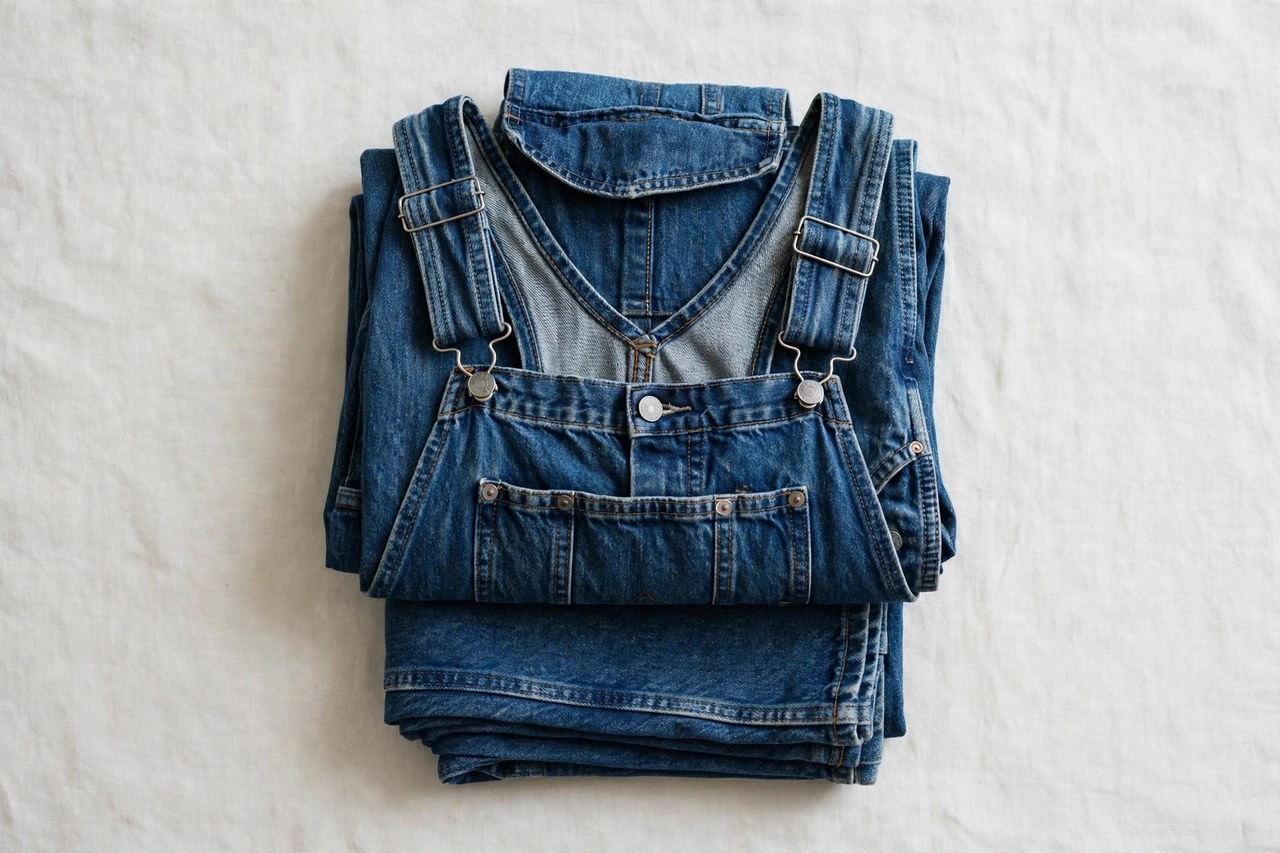
Overalls - bib-and-brace overalls, also called dungarees, or a pair of overalls by analogy with a pair of trousers - are trousers with a bib front and shoulder straps, usually worn as protective clothing when working. And no, they are not only for farmers: bib overalls have long been associated with rural men and boys in the Southern and Midwestern United States, especially farmers and railroad workers, but the garment's working range runs from workshops and gardens to building sites and boatyards. This guide covers the garment whole: why the bib exists, how the fit differs from jeans, and how denim overalls are bought and kept. This guide walks through the choices that matter - style, fit, fabric and finish - with the practical detail a product listing rarely gives you, and closes with the care habits that keep the garment in service.
Why the Bib Exists
The bib is the design's argument. It covers the chest and belly that trousers leave exposed, carries tools and notebooks in its divided pockets at the height hands actually reach, and - held up by straps over the shoulders - removes the belt and the waistband pressure entirely, which is why generations of farmers, railroad workers, painters and mechanics chose it for bending, lifting work. Classic construction is denim with riveted pockets, similar to those on jeans: heavy cotton twill, metal strap hardware and adjusters, a hammer loop and rule pocket on the leg, and triple-stitched main seams. Variations follow trades: painter's whites in lighter cotton drill, insulated and lined overalls for winter work, canvas and duck-cloth versions for abrasion, waterproof bib trousers for fishing and deck work, and shorts versions - shortalls - for summer. Fashion revivals borrow the silhouette in lighter denims and colors, but the hardware and pocketing of a true work overall remain the tell of the real garment.
For any leg garment the rise is the first specification, because it decides sitting comfort before fabric gets a vote: measure from front waistband through to back and compare it with a pair that already works. Then audit the stress points - bar-tacked belt loops and pocket corners, double-stitched inseams, hems finished evenly - and the pocketing, which should be deep, smooth and strong enough to carry what the garment's pockets invite you to carry.
Straps, Torso, Then Leg
Fit overalls by strap and torso before leg. The straps should carry the garment with the bib sitting flat against the chest - not digging at the shoulders, not gaping away - and adjusted so the waistband of the trouser section rests where you want it without a belt doing structural work. Torso length is the size nobody prints large: a bib cut short pulls at the straps when you bend, one cut long bags at the waist, so bend, reach overhead and sit before judging. The leg fits like work trousers - room through thigh and seat for kneeling and climbing, inseam long enough to break over a boot - and the whole garment is sized generously by design, because it was drawn to go over the clothes beneath it. Buy your measured size and adjust the straps; sizing down turns protective clothing into a wrestling match.
Measure where the waistband will actually sit, plus inseam to your preferred break, and thigh and seat for closer cuts. Then sit, squat and climb a step in the fitting room - a leg garment that only works standing still does not work. Waistbands relax roughly half an inch in wear and inseams shrink most in early washes, so buy the fit you want after those changes rather than the fit in the mirror.
The Workwear Laundry
Denim overalls live the workwear laundry: wash when the job says so, inside out and cool to slow the indigo fade, with straps fastened or buckled so their hardware does not batter the drum or the garment. Expect the fade - overalls record their work in their whiskers and worn patches, and most wearers count the record as character. Dry low or on the line; heavy denim holds water and takes its time either way. Inspect the hardware each season: strap adjusters, buttons at the waist, rivets at pocket corners, and the crotch seam, which takes the climbing strain. A rivet reset and a patched knee are this garment's normal mid-life maintenance, and a sound pair of bib overalls, maintained that way, is measured in decades rather than seasons.
Wash leg garments inside out and cool; heat is the agent that fades dye, tires elastic and shortens inseams. Dry low or on the line, hang or fold promptly, and crease deliberately or not at all. Walk the stress points each season - hem edges, pocket corners, seat and inner thigh - and mend the small fray while it is still small: leg garments fail gradually, then suddenly, and the two-minute October repair prevents the November replacement.
Common Questions
What are overalls, and why the bib?
Overalls - bib-and-brace overalls, dungarees - are a type of garment usually used as protective clothing when working: trousers joined to a bib front held up by shoulder straps, usually made of denim and often with riveted pockets, similar to those on jeans. The bib protects the chest and belly, carries tools in its divided pockets, and lets the straps, not a belt, carry the garment - which is why farmers and railroad workers adopted them for bending, lifting work, though they are by no means only for farmers.
How should men's overalls fit?
Straps first: they should carry the garment with the bib flat against the chest, adjusted so the trouser waist sits correctly without a belt. Then torso length - bend, reach and sit, because a short bib pulls at the straps and a long one bags at the waist. The leg fits like work trousers, roomy through thigh and seat with an inseam that breaks over a boot. Overalls are cut generously to go over other clothes, so buy your measured size and adjust the straps rather than sizing down.
How do you wash denim overalls?
Inside out, cool, with the straps fastened so their metal hardware does not batter the wash, and dry low or on the line - heavy denim dries slowly however you do it. Cool washing slows the indigo fade, though some fading is this garment's nature: overalls record their work in worn patches and whiskers. Inspect adjusters, waist buttons, pocket rivets and the crotch seam each season, and repair small failures early, as workwear asks.
More in Men's Clothes Guide O
Not Only for Farmers
No, they are not only for farmers. An overall, over all, overalls, bib-and-brace overalls, dungarees or party bibs are a type of garment which is usually used as protective clothing when working; some people call an overall a “pair of overalls” by analogy with “pair of trousers”. Overalls are usually made of denim and often have riveted pockets, similar to those on jeans. Bib overalls have long been associated with rural men and boys in the Southern United States and the Midwestern United States, especially farmers and railroad workers. See also the overalls definition and the Learn About Overalls page.
Looking for Men's Clothing Stores?
This guide explains men's overalls. To browse where to buy, visit our men's clothing store directory, where you can find retailers that carry them.