Men's Polyester Pants Guide
Polyester pants are trousers woven from polyester fiber - the synthetic that made the wrinkle-free, wash-and-wear trouser possible and spent years apologizing for its early, shiny incarnations. Modern polyester pants are a different garment: matte microfiber weaves, wool-blend suiting where polyester supplies durability, and travel trousers that emerge from a suitcase ready to wear. This guide, filed in the polyester section of this letter beside our polyester ties guide, judges the fiber on its current merits - where a polyester trouser honestly beats natural cloth, where it still loses, and how the blends change the answer.
Shop Men's Polyester Pants Now
Shop Men's Polyester Pants on Amazon Shop Men's Polyester Pants on eBayThe Amazon and eBay links on this page are affiliate links. If you make a purchase through them, Apparel Search may earn a commission.
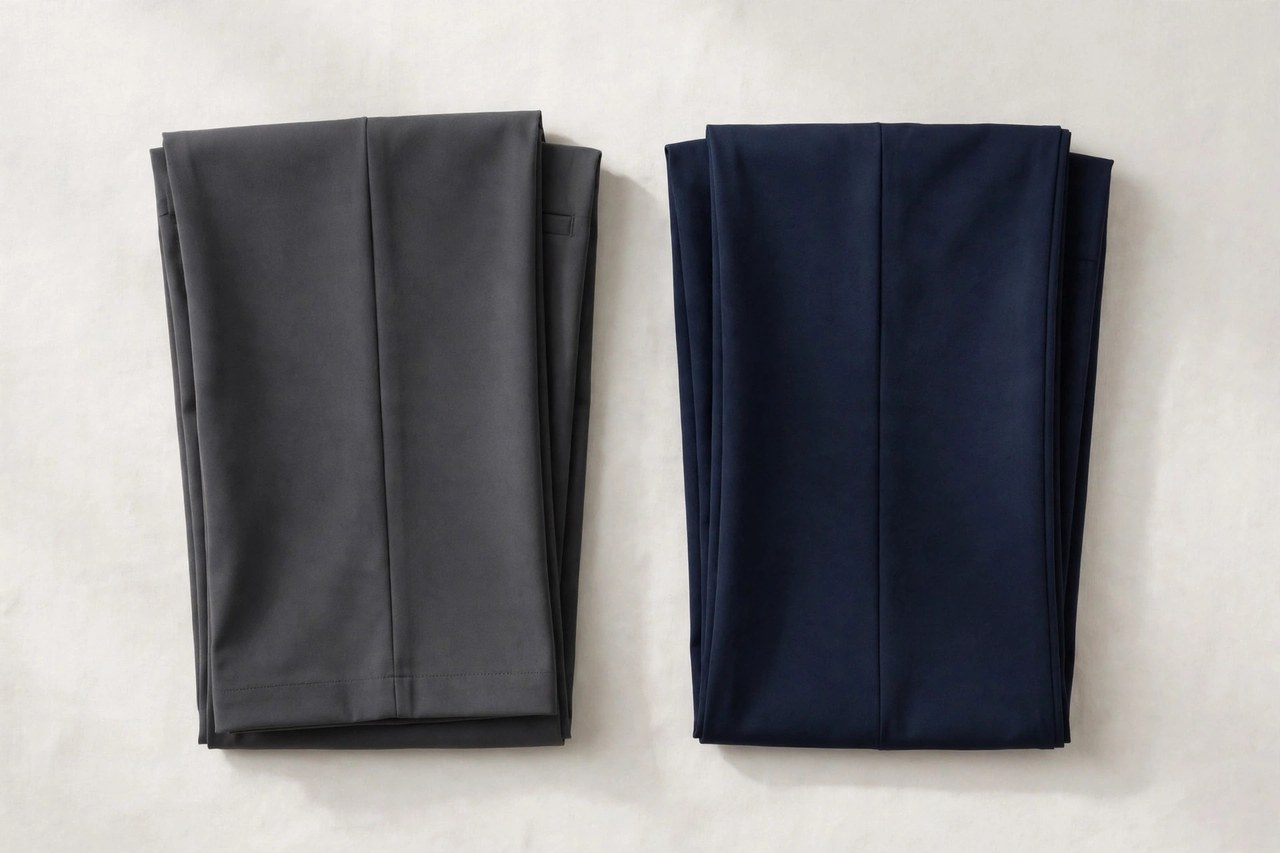
Polyester pants are trousers woven from polyester fiber - the synthetic that made the wrinkle-free, wash-and-wear trouser possible and spent years apologizing for its early, shiny incarnations. Modern polyester pants are a different garment: matte microfiber weaves, wool-blend suiting where polyester supplies durability, and travel trousers that emerge from a suitcase ready to wear. This guide, filed in the polyester section of this letter beside our polyester ties guide, judges the fiber on its current merits - where a polyester trouser honestly beats natural cloth, where it still loses, and how the blends change the answer. This guide covers the styles worth knowing, the fit points that decide comfort, the fabrics and construction that separate a good buy from a regret, and the simple care that makes the garment last.
Judge the Blend, Not the Fiber's Past
Sort polyester trousers by blend, because the fiber rarely works alone. Pure polyester and high-polyester microfiber make the travel and easy-care end: crease-resistant, quick-drying, colorfast, and light - the trousers that fly overnight and present at nine. Polyester-wool blends are the workhorse suiting: wool supplies hand, drape and breathability, polyester supplies abrasion resistance and shape retention, and a blend in the range of half wool reads as wool to everyone but the label. Polyester-cotton makes the casual and uniform end - chinos and work trousers that wash weekly without fading or shrinking their life away. The fiber's known taxes apply throughout: polyester breathes less than natural fibers, can hold odor more readily, and a cheap weave still shines at seat and thigh under friction. Matte finishes, textured weaves and blends are the three engineering answers, and a good pair uses at least two of them.
For any leg garment the rise is the first specification, because it decides sitting comfort before fabric gets a vote: measure from front waistband through to back and compare it with a pair that already works. Then audit the stress points - bar-tacked belt loops and pocket corners, double-stitched inseams, hems finished evenly - and the pocketing, which should be deep, smooth and strong enough to carry what the garment's pockets invite you to carry.
The Size Never Relaxes
Fit polyester pants with their behavior in mind. The fiber has no natural give and does not ease with wear the way cotton or wool relaxes, so the size on day one is the size on day one hundred - buy the fit you measure, with the fitting-room tests doing the talking: sit, squat, climb, and check for pull lines at the front and seat that will never relax away. The crease is polyester's party trick - heat-set, it survives sitting, packing and washing - so judge the leg by how that crease hangs: straight and centered on a well-cut pair, wandering on an off-grain one. Waistbands on travel styles often add hidden elastic or a comfort panel, which is a legitimate solution to long seated days, provided the front still presents clean. Hem to a slight break; polyester's light weight means a pooled hem looks sloppier than the same break in wool.
Measure where the waistband will actually sit, plus inseam to your preferred break, and thigh and seat for closer cuts. Then sit, squat and climb a step in the fitting room - a leg garment that only works standing still does not work. Waistbands relax roughly half an inch in wear and inseams shrink most in early washes, so buy the fit you want after those changes rather than the fit in the mirror.
The Wash-and-Wear Promise, Kept
Care is the category's founding promise, and it is real. Most polyester pants machine wash warm or cool and tumble low or line dry in hours, need no ironing beyond what a bathroom's shower steam provides, and hold color through years of cycles that would fade cotton pale. Two disciplines protect the finish: wash inside out to slow the friction shine that is the fiber's cosmetic weakness, and keep heat moderate, because a hot iron can glaze or melt the surface - use a press cloth and a synthetic setting when you do press. Odor management is the third: wash promptly rather than letting a worn pair sit, since polyester holds smells more than wool does. In exchange for those small attentions, a good polyester or blend trouser delivers the lowest cost-per-wear arithmetic in the whole pants family.
Wash leg garments inside out and cool; heat is the agent that fades dye, tires elastic and shortens inseams. Dry low or on the line, hang or fold promptly, and crease deliberately or not at all. Walk the stress points each season - hem edges, pocket corners, seat and inner thigh - and mend the small fray while it is still small: leg garments fail gradually, then suddenly, and the two-minute October repair prevents the November replacement.
Common Questions
Are polyester pants any good, or just cheap?
Both exist, and the weave tells you which you are holding. Cheap, shiny, pure-polyester trousers earned the fiber its reputation. Modern versions - matte microfiber weaves, textured surfaces and above all polyester-wool blends - are legitimately excellent trousers: durable, crease-keeping, easy to wash and consistent in fit, chosen for travel and uniform programs precisely because they outlast alternatives. Judge the cloth in hand: if it shines, rustles or feels slick, pass; if it reads as quiet suiting, it will perform.
Do polyester pants breathe?
Less than natural-fiber trousers, and honesty matters here. Polyester absorbs almost no moisture, so heat and sweat sit closer to the skin than in wool or cotton. Modern engineering narrows the gap - open weaves, mesh-lined waistbands, moisture-moving finishes and blends with wool or cotton - and for office, travel and temperate wear a good pair is comfortable. For hot, humid, all-day wear, natural fibers and blends weighted toward them remain the cooler choice, and this guide's advice is to match the pair to the climate you actually live in.
Why do polyester pants keep a crease so well?
Because polyester is thermoplastic: its fibers can be heat-set into a shape and then hold that shape through wear and washing. A crease pressed in at manufacture is effectively memorized by the cloth, which is why polyester and high-blend trousers come out of a suitcase or a wash cycle still looking pressed. The same property is why a hot iron is dangerous to them - heat can set a wrong crease just as permanently, or glaze the surface, so press cool with a cloth between iron and fabric.
More in Men's Clothes Guide P
One of the Popular Selections
Trousers are an item of clothing worn from the waist to the ankles, covering both legs separately, and they can be made in a wide assortment of fabrications — polyester is one of the popular selections among men. Polyester itself is a category of polymers, the fiber family whose fabrics are used extensively in apparel. See also the pants guide, the 1970s men’s fashion guide, the nylon pants guide, the polyester fiber page and the polyester ties guide in this section.
More to Explore on Apparel Search
Men’s Clothes Guide by Letter: Men's Clothes Guide M
Looking for Men's Clothing Stores?
This guide explains men's polyester pants. To browse where to buy, visit our men's clothing store directory, where you can find retailers that carry them.