Men's Printed Lab Coats Guide
Printed lab coats are laboratory and clinical coats carrying a print - a pattern, a pediatric print for children's settings, a printed logo or department design - on the white coat's professional frame. The category lives at a deliberate tension: the lab coat signals cleanliness and authority, and the print softens it for the settings where authority frightens the patient, above all pediatrics and family practice. This guide covers where prints belong on a coat, which print methods survive institutional laundry, and the line between a coat that reassures and one that undermines. The wider medical wardrobe sits in this letter's printed medical uniforms and scrubs guides.
Shop Men's Printed Lab Coats Now
Shop Men's Printed Lab Coats on Amazon Shop Men's Printed Lab Coats on eBayThe Amazon and eBay links on this page are affiliate links. If you make a purchase through them, Apparel Search may earn a commission.
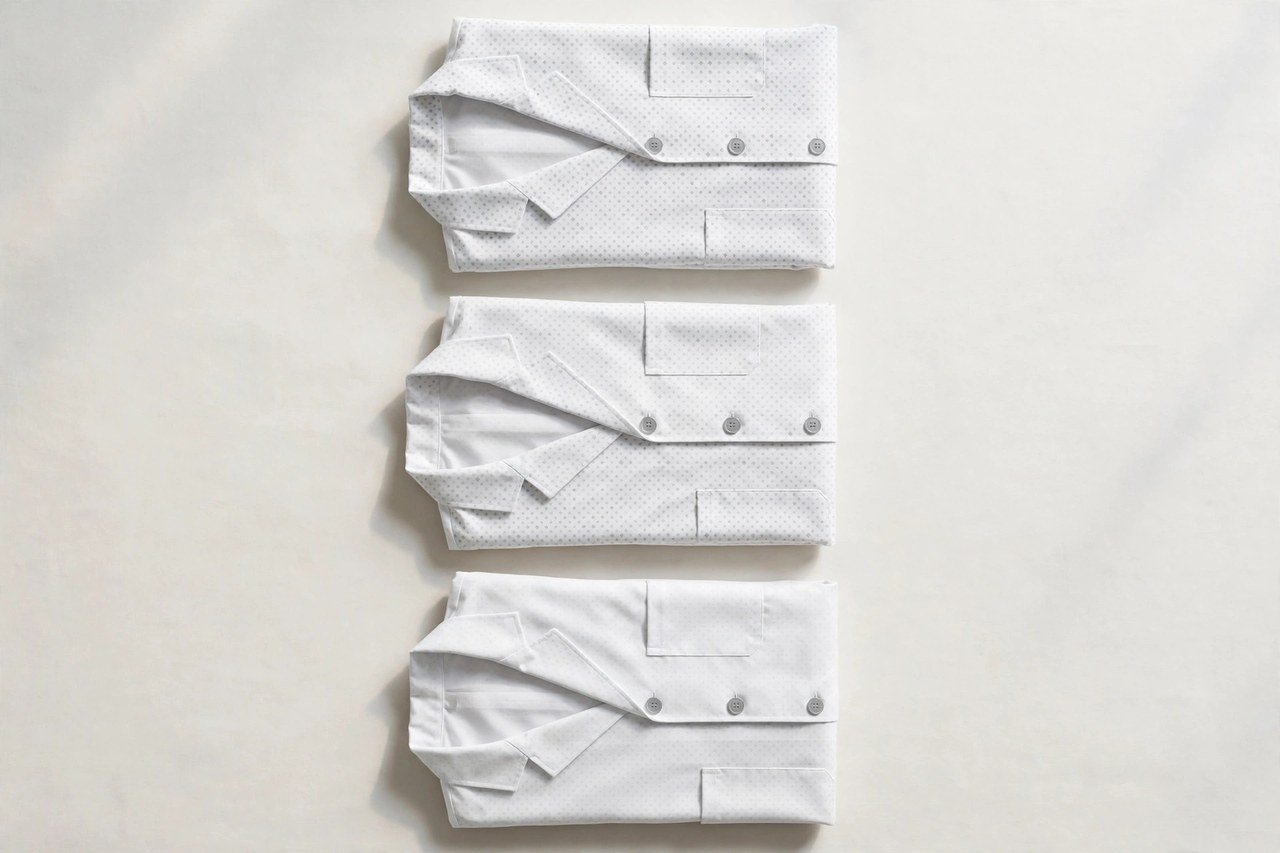
Printed lab coats are laboratory and clinical coats carrying a print - a pattern, a pediatric print for children's settings, a printed logo or department design - on the white coat's professional frame. The category lives at a deliberate tension: the lab coat signals cleanliness and authority, and the print softens it for the settings where authority frightens the patient, above all pediatrics and family practice. This guide covers where prints belong on a coat, which print methods survive institutional laundry, and the line between a coat that reassures and one that undermines. The wider medical wardrobe sits in this letter's printed medical uniforms and scrubs guides. This guide walks through the choices that matter - style, fit, fabric and finish - with the practical detail a product listing rarely gives you, and closes with the care habits that keep the garment in service.
Four Levels of Print
Anatomy first: a lab coat is a knee-length, button or snap-front coat in white cotton-poly twill, with patch pockets, a chest pocket, side vents for trouser-pocket access and often a back belt or pleat. The print can enter at four levels. A printed lining or trim shows only in motion - the conservative professional's version. A printed yoke, cuff or pocket panel frames the white with pattern. Allover prints surrender the white entirely and belong honestly to pediatrics, veterinary and themed clinical settings where the audience is children or animals. Printed identification - embroidered or printed names, departments and logos - is the fourth level and the most regulated, since many institutions standardize it. Print method is a laundry question: prints must be dye-based or high-grade screen work rated for hot institutional washing, because a coat whose pattern fades at cycle twenty looks dirtier than a plain coat ever does - in clinical dress, faded reads as unclean whether it is fair or not.
Workwear is judged at the stress points, because the job finds them first: bar-tacked pocket corners and belt loops, double or triple-stitched main seams, reinforced knees, elbows and seats, and hardware - zippers, snaps, rivets - rated for daily cycling rather than occasional wear. Fabric weight is a specification, not a brag: heavier cloth resists abrasion and holds shape, lighter cloth breathes and dries, and the right answer is the one matched to the actual shift, climate and laundry the garment will live in.
Professional Dress First
Fit a printed lab coat as professional dress, because that is how it is read. It should button fully over the clothing beneath - in many settings, over a shirt and tie or scrubs - without strain, with the shoulders at your shoulders and sleeves ending at the wrist so cuffs stay clear of benches and patients. Length runs to the knee in the classic cut; shorter consultation coats end mid-thigh and belong to that named style. The print changes none of this, and that is the point: an ill-fitting printed coat reads as a costume, while a correctly fitted one reads as a clinician who chose a friendlier coat. Pockets must work under the print - three patch pockets that actually carry, side access vents that align with your trouser pockets, and a chest pocket that holds a pen without the print's pattern disguising a pen stain into a design feature.
Fit workwear in the postures of the job: reach overhead, bend, kneel, climb, sit through a charting session or a cab ride. Seams should never be the thing that stops a movement, waistbands should stay where they were put without a belt doing structural work, and lengths should clear the floor and the machinery. Work garments are sized generously by design - buy your measured size and let the cut do its job, rather than sizing down into a uniform that fights every task.
White and Print at Full Strength
Lab coats launder institutionally or like rigorous home workwear: hot washes where the fabric label allows, stains treated before heat sets them, and whites kept white, since the coat's authority is half its color. Printed versions add one audit - check the print's fastness on the first cycles and retire or reassign the coat when the pattern visibly fades, because a washed-out print fails the coat's whole purpose and its wearer's credibility simultaneously. Inspect buttons and snaps, pocket corners and the back pleat monthly; mend early. A rotation of two or three coats makes daily freshness possible. Kept to standard, the printed coat does the rarest thing in clinical dress: it lowers a child's heart rate in the corridor and still passes a department head's inspection - but only while both the white and the print are at full strength.
Work garments earn a laundry system, not a laundry day: wash by the employer's or the label's hygiene rules, treat stains before heat can set them, and inspect as you fold - a pocket corner letting go, a hem fraying, a button hanging by a thread are all two-minute repairs now and garment failures next month. Keep the rotation honest: a spare set washed and ready is what makes daily laundering possible without wearing any single set to death.
Common Questions
Why would a clinician wear a printed lab coat?
To soften authority where authority frightens. In pediatrics, family practice and veterinary work, a coat with a friendly print - at the trim, a panel or allover - signals approachability to children and anxious patients while keeping the coat's professional frame of cut, pockets and length. The print is calibrated friendliness, which is why its placement is graded: trim prints for conservative settings, allover prints where the audience is children. Outside those settings, the plain white coat remains the default for good reason.
Do printed lab coats survive hospital laundry?
The right ones do - it is a specification to check, not an assumption. Prints must be dye-based or rated screen work that holds color through hot, frequent institutional cycles, on the same cotton-poly twill as a plain coat. A print that fades early is worse than none, because in clinical dress fading reads as uncleanliness. Check the maker's wash rating, audit the print over the first cycles, and retire the coat when the pattern dulls - its credibility is its function.
What should a printed lab coat's fit be?
Exactly a plain coat's fit: buttoning fully over the clothes beneath without strain, shoulders at your own, wrist-length sleeves, and length to the knee in the classic cut. The print must never excuse a costume fit, because the coat is read as professional dress first. Pockets should genuinely work - patch pockets that carry, side vents aligned to your trousers, a usable chest pocket - and the whole effect, print included, should survive a supervisor's inspection as readily as a child's corridor.
More in Men's Clothes Guide P
The White Coat
A white coat or laboratory coat (often abbreviated to lab coat) is a knee-length coat worn as the professional garment of the laboratory and the clinic. The printed versions in this guide are that coat with a considered pattern added — the frame, the pockets and the length unchanged. See also the lab coats and medical clothing guides, and the doctor clothing page.
More to Explore on Apparel Search
Looking for Men's Clothing Stores?
This guide explains men's printed lab coats. To browse where to buy, visit our men's clothing store directory, where you can find retailers that carry them.