How to Tie & Wear
Five Ways to Wear a Scarf, from Loosest to Neatest
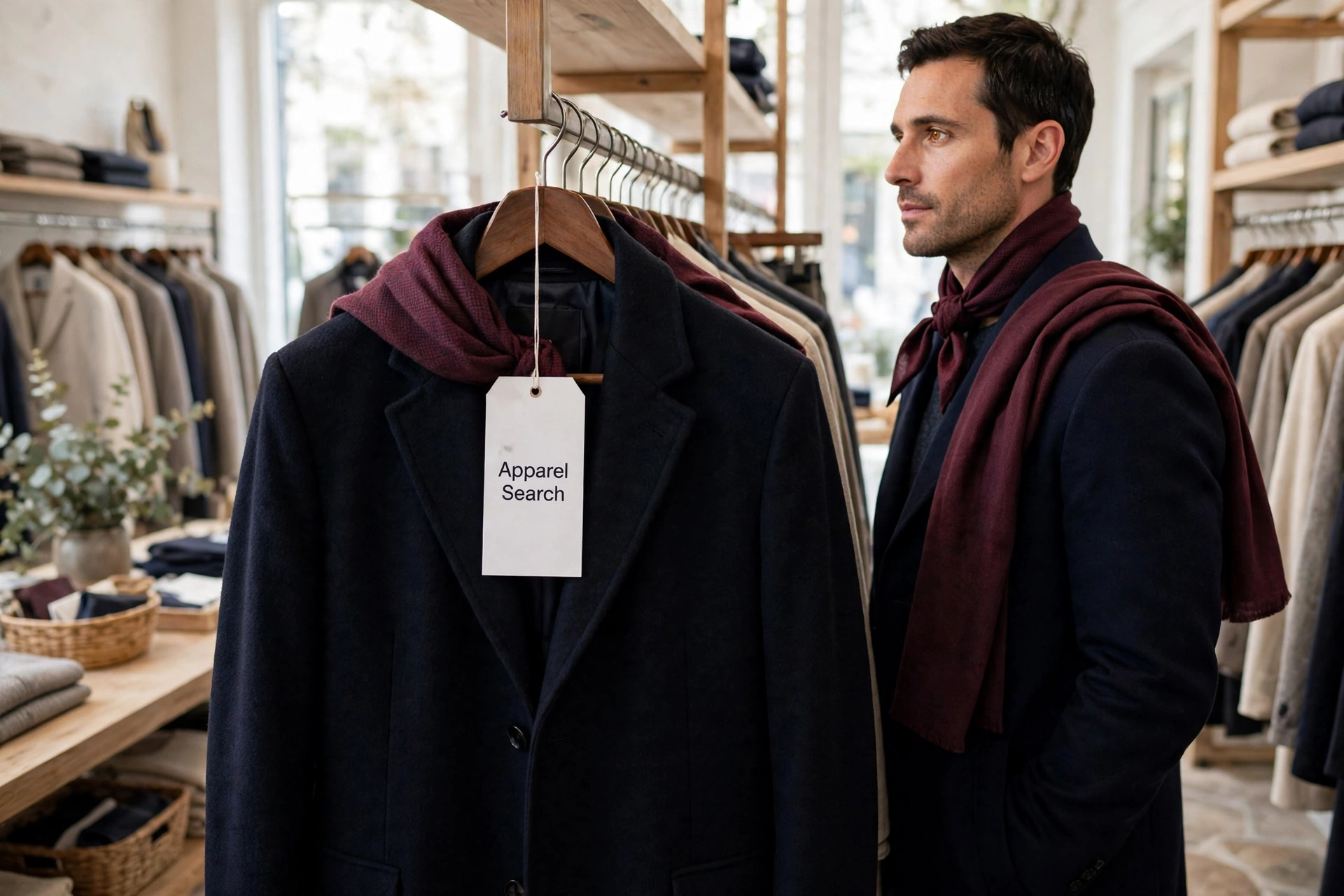
There are dozens of named scarf knots, but five ways of wearing a scarf cover real life: the drape for mild days and smart coats, the once-around for ordinary winter wear, the Parisian knot for the neatest finish, the loose loop for long scarves, and the ascot-style tuck for dressier occasions. Each is set out below step by step, with the coats and occasions it suits.
Two things decide which to choose before any knot is tied: the scarf itself — a short or thick scarf physically cannot manage every style — and whether the scarf is being worn for warmth, for finish, or for both. Choose the fibre and weight first with the men’s scarves guide; this page is about what to do with it once it is round your neck.
Knot by Knot
The Five Knots, Step by Step
The Drape — no knot at all
- Place the scarf behind your neck with both ends hanging evenly down the front.
- Tuck the ends inside the coat, or leave them over it, and button or zip the coat over them if you want them held flat.
Best with an open overcoat or blazer in mild weather; it is a finishing layer, not insulation. Silk and fine cashmere scarves are made for this.
The Once-Around — the everyday wrap
- Drape the scarf with one end noticeably longer than the other.
- Wrap the long end once fully around your neck and bring it back to the front.
- Adjust so both ends hang at roughly the same length, and loosen the loop slightly for comfort.
The default for commuting and casual coats: warm, quick, and forgiving of any scarf long enough to circle the neck.
The Parisian Knot — the neat finish
- Fold the scarf in half lengthways so the ends meet and a loop forms at the fold.
- Place the fold behind your neck, then pass both loose ends through the loop.
- Pull the ends through until the knot sits snugly at the throat, and straighten the loop flat.
The most polished of the wrapped styles, sitting flat under a coat collar and never unravelling. It needs a scarf of at least medium length and works best in wool or cashmere of medium weight.
The Loose Loop — for long scarves
- Drape the scarf evenly and wrap both ends once around the neck in opposite directions.
- Let the ends hang long at the front, or tuck one end into the loop for an asymmetric finish.
Suited to long, lighter scarves and relaxed outfits; keep the loop deliberately loose so it reads as styling rather than bundling.
The Ascot Style — the dressy tuck
- Drape a short, light scarf — silk is ideal — behind the neck with ends at the front.
- Cross one end over the other and bring it up through the gap at the throat, as with the first stage of tying a shoe.
- Flatten the top end over the knot and tuck both ends inside an open shirt collar or a V-neck.
A warm-weather, dressed-up alternative borrowed from the cravat: it fills an open collar without a tie and adds pattern at the neck.
By Coat Type
Matching the Knot to the Coat
Tailored overcoats take the Parisian knot or the drape: both sit flat, respect the coat’s lines, and can be worn with the coat open or closed. A trench coat pairs naturally with the once-around in a midweight scarf, the loop sitting above the trench’s collar. Parkas, puffers and casual jackets take the once-around or the loose loop in a knitted wool scarf, worn outside the jacket where the bulk reads as part of the outfit. With a blazer or sports coat and no outer coat, the drape and the ascot style are the two that work — anything wrapped reads as though a coat is missing.
One practical check: if the knot forces the coat collar up or bunches under the chin, the scarf is too thick for that coat, whatever the knot. Drop a weight rather than forcing the wrap.
By Formality
Formality: Dressed Up, Everyday, Relaxed
For formal dress — a dark overcoat, a suit, an evening event — the drape in silk or fine cashmere, worn inside the collar, is the traditional finish, with the Parisian knot as the warmer alternative. Business and smart-casual wear sits comfortably with the Parisian knot or a tidy once-around in a plain or subtly checked wool scarf. Relaxed outfits take the rest: the loose loop, an untidy once-around, brighter colours and visible knits. The ascot style stands slightly apart — dressed up but deliberately old-school, best kept for occasions where a tie would be too much and an open collar too little.
Whichever knot you choose, finish it: straighten the loop, even the ends unless the style calls for asymmetry, and check that the scarf sits inside the coat’s silhouette rather than escaping from it. Thirty seconds of adjustment is the difference between a knot that looks chosen and one that looks accidental.
Questions
Common Questions
What is the most formal way for a man to wear a scarf?
The drape, worn inside an open coat collar, in a silk or fine cashmere scarf. It adds a finished layer at the neck without bulk and has been the traditional pairing with a dark overcoat and suit for a century. For the same look with more warmth, the Parisian knot worn neatly is the accepted alternative.
Why does my Parisian knot keep slipping loose?
Usually because the scarf is too short or too slippery. The knot needs enough length for the folded loop and both ends to hold under tension, and it grips best in wool or cashmere; a short silk scarf will slide. Switch to the once-around, which locks a shorter scarf in place, or choose a longer scarf for the Parisian.
Can you wear a scarf without a coat?
Yes, in two styles. The drape over a blazer or sports coat works as a light finishing layer, and the ascot-style tuck fills an open shirt collar in warmer weather. Wrapped knots without a coat tend to look unfinished, as though the coat has been forgotten — keep the scarf light and the style open.
More to Explore
Search Apparel Search