Women's Camo Jackets Guide
Field jackets, softshells and rain jackets explained — features, layering and fit for work, woods and wet weather.
Shop Women's Camo Jackets Now
Shop Women's Camo Jackets on Amazon Shop Women's Camo Jackets on eBayThe Amazon and eBay links on this page are affiliate links. If you make a purchase through them, Apparel Search may earn a commission.
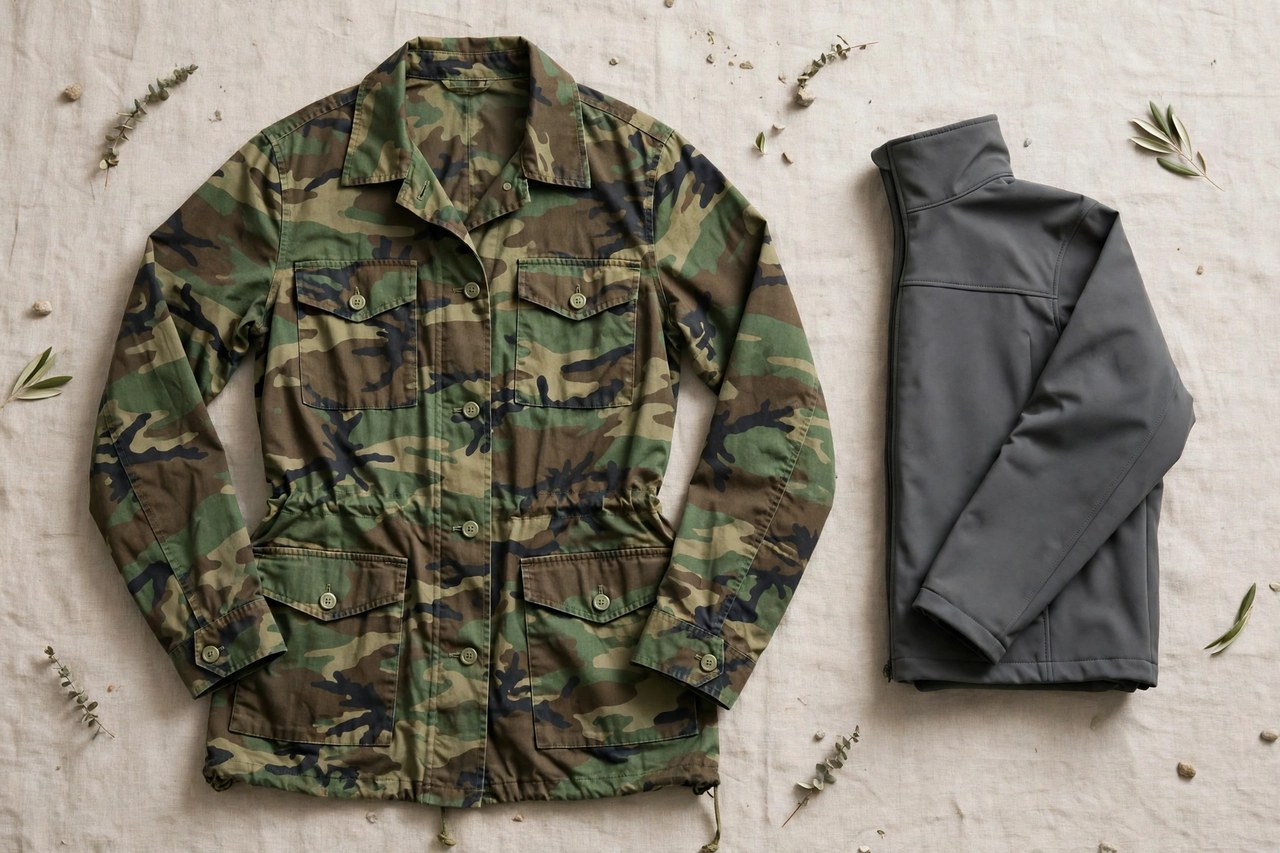
A camo jacket is outerwear first and a pattern second. It has to block wind, shed weather, carry the small gear you reach for constantly, and move with you when you climb, kneel, lift or sit still for hours. Women's camo jackets are cut for that work, with waists and shoulders shaped for a female frame, hems that do not ride up when you bend, and sleeve lengths matched to women's arms. The category covers everything from unlined field jackets for mild days to insulated parkas for late-season cold, and the differences between types matter more than small differences between brands. This guide walks through the main jacket families, the features worth paying for, and how to size a jacket so it layers properly over the clothing you actually wear outdoors.
Jacket Types: Field, Softshell and Rain
The classic field jacket is a sturdy, pocket-heavy workhorse descended from military designs: a button-and-zip front, four bellows pockets, and a waist drawcord or belted shape. Modern women's versions keep the storage and lose the bulk, making them ideal for farm, range and shoulder-season field use. Softshell jackets use a woven stretch face bonded to a light fleece or grid lining; they breathe well, move quietly and shrug off light moisture, which makes them the favorite for active hunting, hiking and outdoor work in cool, dry weather. Rain jackets are built around a waterproof membrane or coating, sealed seams and a hood, trading some breathability for real storm protection. Insulated jackets add synthetic fill or down for stationary cold, such as long sits in a stand, while three-in-one systems zip an inner fleece into a weatherproof shell so one purchase covers three seasons.
Features Worth Looking For
Pockets decide how a jacket works day to day. Chest pockets that clear a pack's sternum strap, handwarmer pockets set high enough to use with a belt or harness, and at least one secure inside pocket for a phone and license are the practical baseline. Underarm zips or mesh-backed vents dump heat fast on climbs, and two-way front zippers let the jacket sit comfortably over a belt. A quiet outer fabric matters for close-range field use, so brushed and matte finishes are common on hunting jackets, while work and utility styles may favor tougher, smoother shells. Adjustable cuffs seal out wind and keep sleeves clear of hands, a drawcord hem stops drafts, and a hood should turn with your head rather than blocking side vision. Reinforced elbows and shoulders extend the life of jackets that see pack straps, tool belts and rough ground.
Fabrics, Insulation and Durability
Shell fabrics divide into cotton-rich canvas and twill, prized for toughness and quiet handling but slow to dry, and synthetics such as polyester and nylon, which are lighter, faster drying and usually more weather resistant. Ripstop weaves stop small tears from spreading after a snag on wire or thorn. Durable water-repellent finishes make light rain bead and roll off, though they need occasional refreshing after repeated washing. Insulation is usually synthetic for field jackets because it keeps warming when damp and tolerates rough storage; down appears in lighter, drier-cold styles and packs smaller. Lining choices affect comfort: mesh linings slide easily over layers, taffeta sleeves pull on smoothly over fleece, and brushed tricot at the chin and collar prevents chafing during long wear. Check bar-tacked stress points at pocket corners and heavy-duty zippers, which are the parts that fail first on cheap jackets.
Fit and Layering
Size a camo jacket over the thickest mid-layer you plan to wear under it. The shoulders should allow a full reach forward and overhead without the hem lifting clear of your waistband, and sleeves should cover your wrists when your arms extend, because cuffs creep up in use. Women's cuts typically taper gently at the waist and flare slightly at the hem to clear hips; if you prefer a straighter utility fit, some brands offer unisex field styles, but check sleeve length, which often runs long. Layering works in threes: a moisture-wicking base, an insulating mid-layer such as fleece or a light puffy, and the jacket as the weather shell. Leave enough ease that the layers do not compress, since trapped air does the insulating. If you carry a pack, try the jacket with the hip belt fastened; pockets and hems should stay reachable and the jacket should not bunch under the belt.
Care and Storage
Wash camo jackets according to the shell type. Cotton and canvas jackets take a normal cold wash, while waterproof and softshell jackets do better with a technical or mild detergent, since fabric softeners and heavy detergents clog membranes and strip water-repellent finishes. Close all zippers and fasteners before washing to protect teeth and coatings, and tumble dry on low where the label allows, because gentle heat reactivates the water-repellent treatment on many shells. Re-proof a jacket when water stops beading and starts soaking the face fabric. Store jackets hung in a cool, dry place rather than compressed in a stuff sack, which can crease coatings and flatten insulation over a season. Mend small tears promptly with a patch or seam sealant, brush dried mud off before washing, and your jacket will stay quiet, weatherproof and ready for the next trip out.
Related Women's Camo Guides
Photos

More to Explore on Apparel Search
Looking for Women's Clothing Stores?
This guide helps you choose women's camo jackets with the right features, insulation and fit for field, work and wet weather. To browse where to buy, visit our women's clothing store directory, where you can find retailers that carry them.