Women's Camo Bras Guide
Sports bras and everyday styles in camo — support levels, sizing, and fabrics for active days outdoors and in.
Shop Women's Camo Bras Now
Shop Women's Camo Bras on Amazon Shop Women's Camo Bras on eBayThe Amazon and eBay links on this page are affiliate links. If you make a purchase through them, Apparel Search may earn a commission.
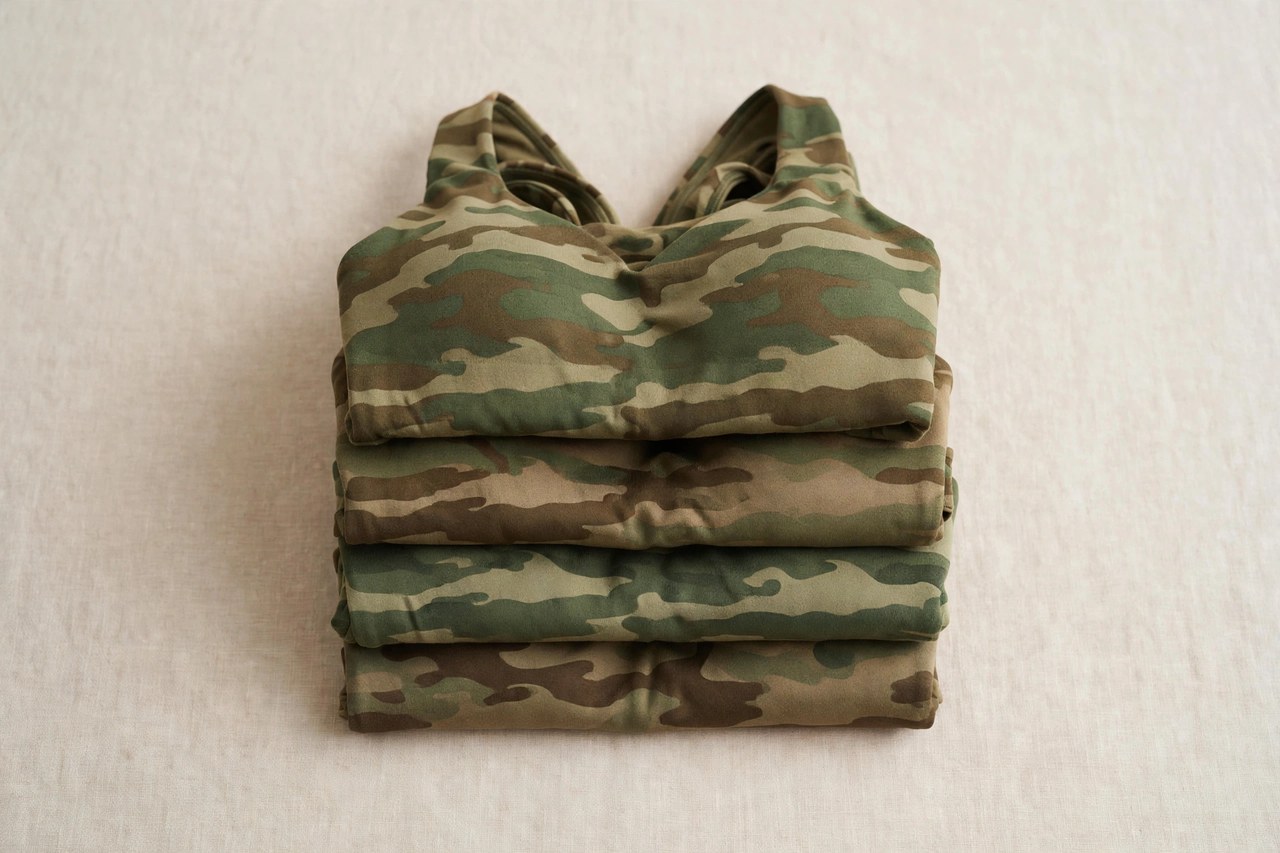
A camo bra is, first and foremost, a bra: the print is incidental, and support, fit, and fabric decide whether you reach for it every week or leave it in the drawer. In camo, the category splits into two families. Sports bras dominate, because camo's natural home is active and outdoor wear — hiking, training, hunting trips, yard work, and long days on your feet. Everyday and lounge styles form the second family: soft bralettes, unlined comfort bras, and lightly lined everyday bras sold as part of camo sleepwear and underwear sets. Both families use the same fit rules as any other bra, and a well-fitting camo sports bra follows exactly the same support science as a plain one. This guide explains support levels, how to match them to your activities, how to check fit properly, and which fabrics hold up to sweat, washing, and regular wear without losing their shape.
Sports Bras: Compression, Encapsulation, and Support Levels
Sports bras control movement in two ways. Compression styles press the bust gently and evenly toward the chest and suit smaller cup sizes and lower-impact activity. Encapsulation styles support each breast separately in its own cup, often with underwire or structured seaming, and suit larger cup sizes and anyone who finds compression uncomfortable. Combination bras do both and offer the firmest control. Makers grade support as low, medium, or high impact, and the honest way to choose is by activity: low support suits walking, yoga, and everyday wear under field clothing; medium support handles hiking, cycling, and gym training; high support is for running and court sports. For outdoor use, look for wide straps that do not dig under a pack, a firm underband that carries most of the support, and smooth seams that will not chafe over miles. Racerback designs free the shoulder blades for drawing a bow or swinging a pack on, while convertible straps add options.
Everyday, Lounge, and Matching Set Styles
Not every camo bra is built for sport. Bralettes in soft stretch lace or brushed knit trade structure for comfort and suit relaxing, sleeping, and light days at home; they are often sold with matching camo underwear or sleep shorts as a set. Everyday t-shirt styles with molded cups give a smooth line under clothing and appear in camo mostly in juniors' and novelty ranges, but the fit rules are identical to any everyday bra: cups should enclose without spilling or gaping, and the band should sit level all the way around. Lounge and sleep bras use wide bands and no hardware, which makes them a practical choice under base layers on camping and hunting trips where changing is infrequent and comfort over long hours matters most. When buying sets, check each piece's sizing separately — a top and bottom bundled in one size rarely fit both halves of the body equally well, and separates usually serve better.
Getting the Fit Right
Most fit problems are band problems. The band provides the majority of support, so it should feel firm and level, fasten comfortably on the loosest hook when new, and stay put when you raise your arms. Measure snugly under the bust for band size and across the fullest point for cup size, then treat the result as a starting point, because sports bra sizing often runs in small, medium, and large bands with cup-specific versions for fuller busts. Cups should fully contain the tissue with no spilling at the top or sides and no empty wrinkling. Straps should stay in place without digging; if you are tightening straps to create lift, the band is too loose. For high-impact use, test in the fitting room with a few jumps and arm swings — movement should feel controlled, not eliminated entirely, and breathing should stay easy. Replace sports bras when the band stretches out or elasticity fades, typically after a year or so of regular training wear.
Fabrics, Features, and Care
Performance camo bras use nylon or polyester blended with spandex for stretch and recovery, with moisture-wicking finishes that pull sweat away from the skin. Mesh panels at the back or between cups add ventilation on hot days, and brushed linings soften the inside for long wear. Removable pads offer shaping and coverage and should be taken out before washing so they do not fold or crease. Flat seams, bonded edges, and tag-free finishes reduce chafing under pack straps and base layers. Everyday styles lean on cotton-modal blends and stretch lace for softness rather than sweat management. Care is simple but important: wash in cold water, ideally in a mesh bag, fasten hooks so they do not snag, and always line-dry. Dryer heat is the main enemy of elastic, and a bra that has lost its stretch has lost its support no matter how good it still looks. Store bras flat or folded in a drawer rather than hanging by the straps, and rotate between several so each rests between wears.
Related Women's Camo Guides
Photos

More to Explore on Apparel Search
- Bra Glossary
- Bra Guide
- Camo Boots Guide
- Camo Coats Guide
- Camo Fashion Guide
- Camo Hats Guide
- Camo Jackets Guide
- Camo Pants Guide
- Camo Robes Guide
- Camo Shorts Guide
- Camo Skirts Guide
- Camo Sleepwear Guide
- Camo Uniforms Guide
- Camo Vest Guide
- Hunting Clothing for Women on eBay
- Lingerie Stores
- What is a brassiere?
- Women's Clothes
Looking for Women's Clothing Stores?
This guide helps you choose women's camo bras by support level and style. To browse where to buy, visit our women's clothing store directory, where you can find retailers that carry them.