Women's Camo Vests Guide
The layer that carries everything — hunting, utility, and fleece vests with pockets that earn their place and warmth without bulk.
Shop Women's Camo Vests Now
Shop Women's Camo Vests on Amazon Shop Women's Camo Vests on eBayThe Amazon and eBay links on this page are affiliate links. If you make a purchase through them, Apparel Search may earn a commission.
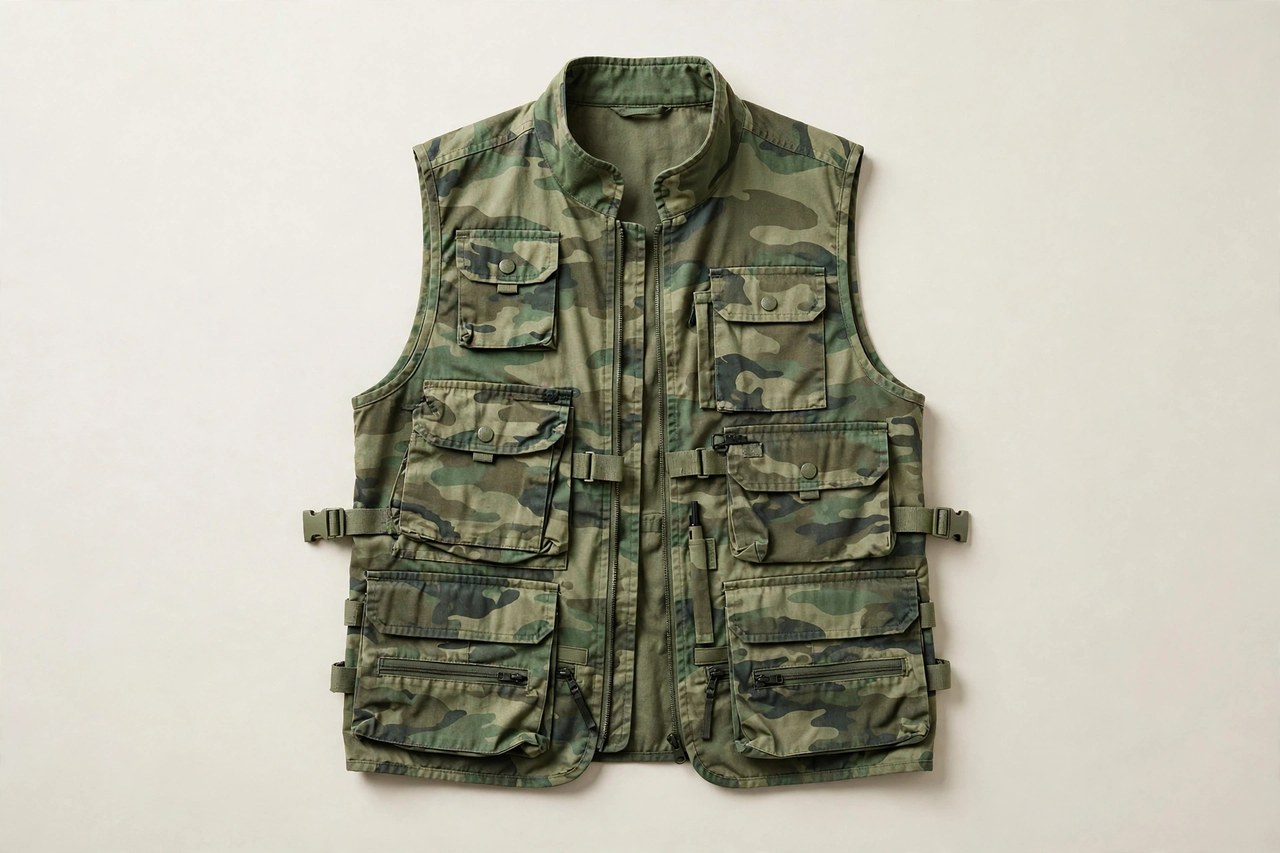
A camo vest is the most functional layer in an outdoor wardrobe. It keeps your core warm and your arms completely free, and at its best it carries the small gear, tools, and supplies that would otherwise fill your hands or weigh down a jacket. Hunters, anglers, photographers, dog trainers, gardeners, and anyone who works outdoors have all adopted the vest for the same reason: pockets, placed well, within easy reach. The camouflage finish suits that outdoor life, but this guide is about the garment itself, how a vest is built, what its pockets can realistically hold, how it should fit over the layers beneath it, and which fabrics stand up to brush, weather, and repeated washing. A vest is a long-term purchase compared with most clothing, and the difference between a good one and a frustrating one shows up on the first long day out, not in the shop. Choose with that day in mind.
Types: Hunting, Utility, and Fleece Vests
Hunting vests are built around carrying and access. Expect large front pockets, often with shell loops or secure flaps, a roomy rear game pocket on upland styles, padded or reinforced shoulders on some designs, and blaze or solid panels on certain versions where visibility rules or personal preference call for them; always check local hunting regulations for any required visible color. Utility and fishing-style vests maximize pocket count, sometimes a dozen or more, with a mix of zippered, flap, and open pockets for tools, tackle, and small equipment. Fleece vests are simpler and softer, usually with two or three zip pockets, made to add core warmth on cool days and to layer under a jacket in cold weather. Quilted and insulated vests use synthetic fill or down-style padding for genuine warmth in a light package. Safari and travel vests borrow the utility layout in lighter fabrics. Start by naming your main activity honestly, because a pocket layout designed for one job rarely suits another.
Pockets and Features That Earn Their Place
Count useful pockets, not total pockets. A good vest puts two large, easy-entry hand or cargo pockets at the front, at least one secure zippered pocket for keys, phone, or license, and chest pockets you can reach without looking down. Flaps keep rain and brush out and stop contents spilling when you bend; zips are faster and more secure for valuables. Check pocket depth with your own hand and with the bulkiest item you plan to carry, and check whether loaded pockets swing, sag, or press uncomfortably against your ribs. Useful extra features include a two-way front zip that can open from the bottom when you sit, a collar that stands up against wind without rubbing your chin, armholes cut high and close enough to keep warmth in without restricting your reach, and a hem that covers your waistband when you bend. Reinforced stitching at pocket corners and zip ends matters, because pockets fail at their corners first. If a feature cannot explain what job it does, it is decoration, and on a vest decoration usually gets in the way.
Fit and Layering
Fit a vest over what you will actually wear beneath it, not over a thin T-shirt in the shop. Over a flannel shirt or light fleece, the vest should close comfortably with room to move, breathe deeply, and raise both arms without the armholes binding or the hem riding up. Over a heavy sweater or as a top layer in cold weather, you may need a size up from your usual, and many wearers keep two vests for exactly this reason: a closer fleece for layering under a coat and a roomier utility vest for wearing over shirts. Length should cover the waistband and ideally the top of the hips, so bending does not open a cold gap at your back. Women's cuts with shaping at the waist sit closer and flap less in wind than straight unisex cuts, which is a genuine functional advantage outdoors, not just a neater look. Test the front closure fully loaded if you can; a vest that fits empty and strains when its pockets are full was fitted for the wrong job. Cinches or adjustable side tabs help fine-tune the fit as layers change through the season.
Fabrics, Durability, and Care
Cotton canvas and cotton-blend twill make the toughest utility and hunting vests, shrugging off brush and abrasion and improving with age, at the cost of weight and slow drying when wet. Ripstop nylon and polyester shells are lighter, dry fast, and suit travel and changeable weather, though they can feel noisier in movement, a real consideration for hunting. Fleece vests in polyester fleece are warm for their weight, dry quickly, and layer smoothly, but they pick up burrs and pet hair and offer little wind resistance unless they include a windproof panel or membrane. Quilted insulated vests depend on their shell and fill: synthetic fill keeps working when damp and washes more easily, which suits most working wearers. For care, empty every pocket before washing, close all zips and flaps so they do not snag, wash in cool water, and line dry or tumble low according to the label. Reproof water-resistant shells when rain stops beading on the surface. Store vests hung or loosely folded with pockets empty, and repair a torn pocket corner promptly before a small hole becomes a lost tool in the field.
Related Women's Camo Guides
Photos

More to Explore on Apparel Search
- Camo Apparel Guide
- Camo Boots Guide
- Camo Bras Guide
- Camo Clothing Guide
- Camo Fashion Guide
- Camo Pants Guide
- Camo Robes Guide
- Camo Shorts Guide
- Camo Skirts Guide
- Camo Sleepwear Guide
- Camo Underwear Guide
- Camo Uniforms Guide
- Clothes
- Clothing Retail Stores
- Fashion
- Hunting Apparel
- Hunting Clothing for Women on eBay
- Women's Clothes
- Women's Clothing Stores
- Women's Clothing Wholesalers
- Women's Fashion
- Women's Vests
Looking for Women's Clothing Stores?
This guide helps you choose women's camo vests by type, pockets and fit. To browse where to buy, visit our women's clothing store directory, where you can find retailers that carry them.