Women's Camo Coats Guide
From unlined field coats to expedition parkas — insulation, weather protection, length, and the fit that lets you layer and move.
Shop Women's Camo Coats Now
Shop Women's Camo Coats on Amazon Shop Women's Camo Coats on eBayThe Amazon and eBay links on this page are affiliate links. If you make a purchase through them, Apparel Search may earn a commission.
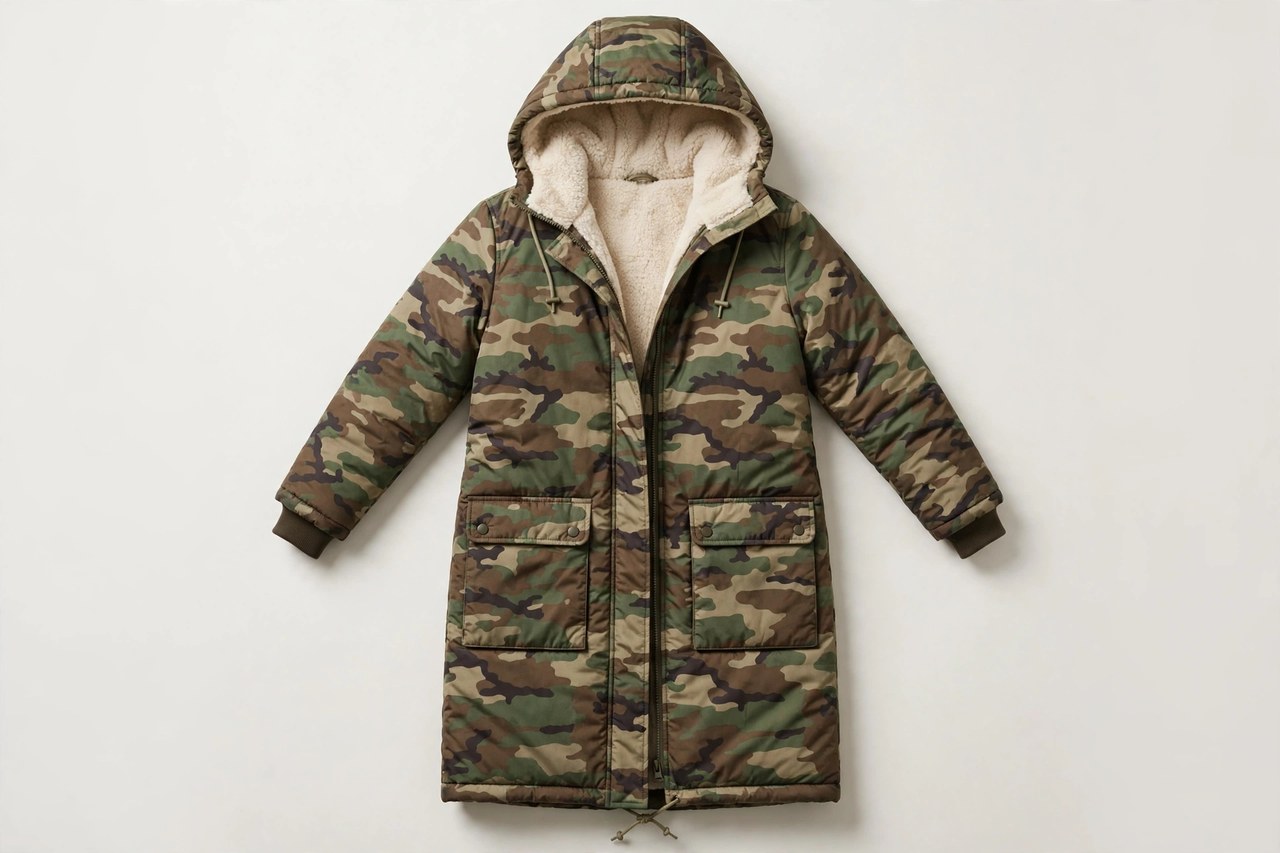
A camo coat is the outermost decision in a cold-weather wardrobe, and it has to solve several problems at once: block wind, shed or withstand rain and snow, hold warmth during both activity and stillness, and leave enough room underneath for the layers that do much of the insulating. Women's camo coats divide into two broad families. Field coats and hunting parkas are built for the outdoors, with quiet fabrics, generous pockets, and hoods shaped to work with caps and hearing protection. Fashion and everyday coats borrow the look in cleaner cuts for town wear. Both families use the same building blocks — shell fabric, insulation, lining, length, and closures — and understanding those blocks makes coat shopping straightforward. This guide works through coat styles, insulation types, weather protection ratings, and the fit checks that matter when you are buying a garment expected to last for many winters.
Coat Styles: Parka, Field Coat, and Everyday Cuts
The parka is the warmest traditional style: hip- to knee-length or longer, insulated throughout, usually hooded, and cut generously for layering. Hunting parkas often form part of a system, zipping together with a removable liner jacket so one purchase covers autumn through deep winter. The field coat is lighter and more structured, descended from military and shooting coats, with bellows pockets for cartridges and supplies, a collar rather than a full hood, and enough length to cover a jacket beneath; it suits active days when a parka would be too warm. Shorter insulated jackets in coat-weight fabrics bridge the gap for driving and town use, while long everyday camo coats in wool-blend or padded styles prioritize appearance and warmth for commuting and social wear. Storm flaps, adjustable cuffs, and two-way zippers appear across serious styles because they solve real problems.
Insulation: Down, Synthetic, and How Warm Is Warm Enough
Down insulation offers the best warmth for its weight and packs small, but it loses insulating power when wet and needs careful drying, so it suits cold, dry conditions and wearers who will maintain it. Synthetic insulation costs less, keeps working when damp, and dries faster, which makes it the practical choice for wet climates, waterfowl and field use, and anyone whose coat will get muddy and need washing. Makers describe warmth with fill power for down and gram weights for synthetic fills, but the honest test is the coat's intended job: a lightly insulated coat is right for active hunting and shoulder seasons, a midweight parka covers most winter days with layers beneath, and expedition-weight coats are for stationary sits in severe cold. Remember that insulation only traps the heat your body makes. On a still, freezing stand, heavy insulation earns its bulk; on a walking hunt, that same coat overheats you within a mile, and a layering system with a removable liner is the smarter buy.
Weather Protection: Shells, Membranes, and Seams
A coat's shell decides how it handles weather. Water-resistant coatings shed light rain and snow and are enough for cold, mostly dry days, but they wet through in sustained rain. True waterproof coats use a membrane or coated fabric with taped or sealed seams, and their protection is often described with a water column rating; higher ratings withstand heavier, longer rain. Hunting coats add a requirement most rainwear ignores: quietness. Brushed and soft-touch shells stay silent when brush scrapes across them or when you raise your arms, while crisp nylon shells, however waterproof, announce every movement. Breathability matters too, because a fully sealed coat worn during effort traps sweat that later chills you; vents, two-way zippers, and pit openings help manage it. A good outdoor hood turns with your head, adjusts around a cap, and does not block peripheral vision.
Length, Fit, and Practical Details
Length is a warmth and coverage decision. Hip-length coats suit driving and active wear, thigh- and knee-length parkas protect the tops of the legs during sits and standing work, and full-length coats belong to the coldest, least active jobs. Fit the coat over your thickest intended layer combination, then move: raise your arms as if shouldering gear, sit down, and climb a step. The coat should not pull across the back, ride up excessively, or strain its zipper when you sit. Women's cuts that shape the waist lightly over layers look better and, more importantly, stop cold air pumping up from a loose hem. Check the details that get used daily: pockets large enough for gloved hands and placed where a pack waist belt or harness will not block them, an interior pocket for a phone kept warm against battery drain, sturdy zippers you can work with cold fingers, and cuffs that seal over gloves. A coat that passes these tests disappears into the day, which is exactly what outerwear should do.
Care and Storage for a Long Coat Life
Coats last longest when they are cleaned according to their fill and shell, not by habit. Down coats need washing with down-specific detergent and thorough low-heat tumble drying, often with dryer balls, until the clusters fully loft again; storing down damp or compressed ruins it. Synthetic insulation is more forgiving of home washing but still prefers gentle cycles and complete drying. Waterproof shells regain their shedding ability when cleaned and, when needed, re-treated with a spray or wash-in water repellent, because dirt alone makes coatings wet out. Store coats clean, fully dry, and hanging uncompressed on wide hangers; never leave insulated coats squashed in stuff sacks between seasons. Repair torn shells and failing seam tape early, and a well-bought camo coat should give you a decade of winters.
Related Women's Camo Guides
Photos

More to Explore on Apparel Search
- Camo Boots Guide
- Camo Bras Guide
- Camo Fashion Guide
- Camo Hats Guide
- Camo Pants Guide
- Camo Robes Guide
- Camo Shirts Guide
- Camo Shorts Guide
- Camo Skirts Guide
- Camo Sleepwear Guide
- Camo Underwear Guide
- Camo Uniforms Guide
- Camouflage Fashion Blog
- Clothes
- Clothing Retail Stores
- difference between a coat and jacket
- Fashion
- Hunting Clothing
- Hunting Clothing for Women on eBay
- Hunting Clothing Stores
- Women's Clothes
- Women's Clothing Stores
- Women's Clothing Wholesalers
Looking for Women's Clothing Stores?
This guide helps you choose women's camo coats by insulation and weather protection. To browse where to buy, visit our women's clothing store directory, where you can find retailers that carry them.