Women's Camo Sleepwear Guide
Soft sets, relaxed fits, and easy-care fabrics — camo pajamas made for real sleep, lazy mornings, and comfortable lounging.
Shop Women's Camo Sleepwear Now
Shop Women's Camo Sleepwear on Amazon Shop Women's Camo Sleepwear on eBayThe Amazon and eBay links on this page are affiliate links. If you make a purchase through them, Apparel Search may earn a commission.
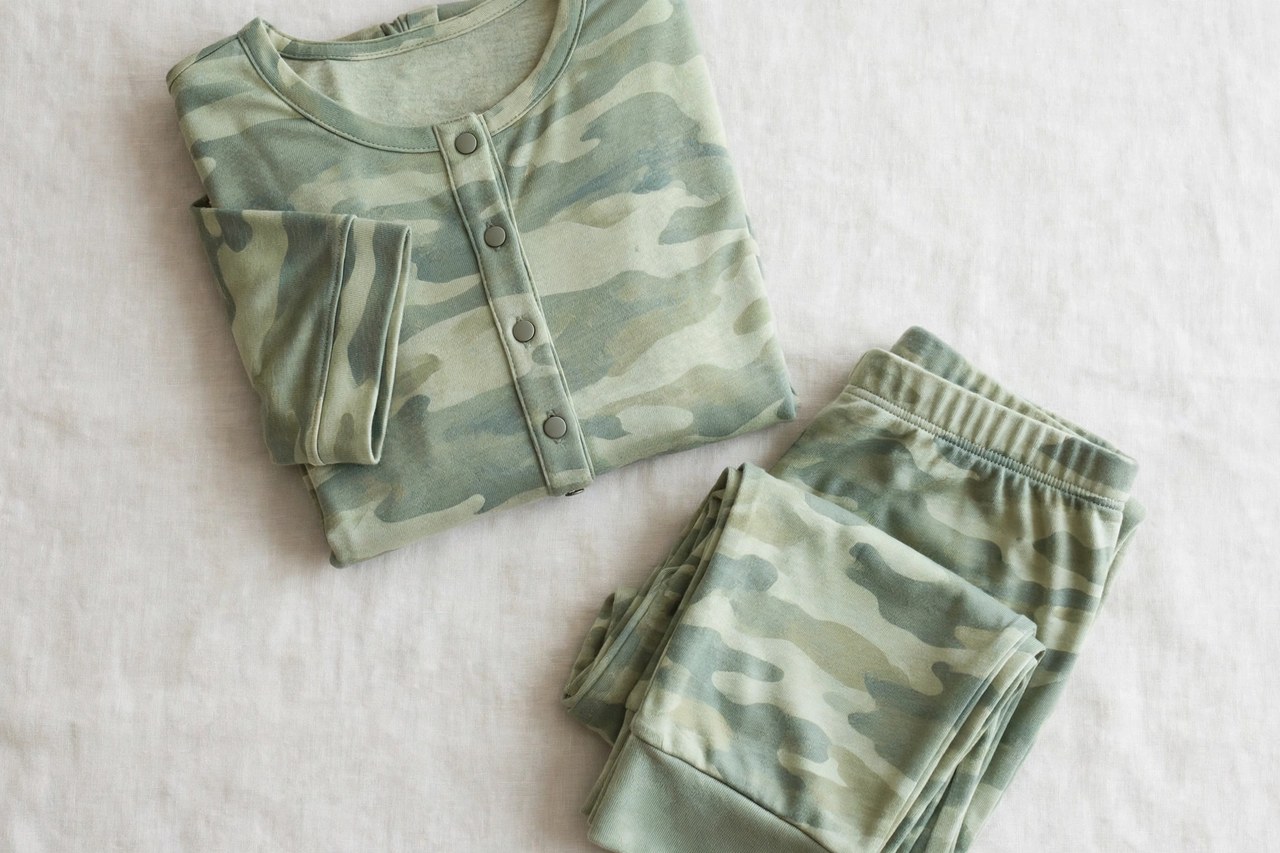
Camo sleepwear is simply pajamas and nightwear in a camouflage print, chosen because the wearer likes the look and because a darker, patterned fabric is forgiving about wrinkles, fading, and the occasional coffee splash on a slow morning. Comfort is the entire job of sleepwear, so this guide focuses on the garment, not the print: how the set is cut, whether the fabric breathes through the night, whether the waistband stays put without squeezing, and how the pieces hold up to weekly washing. A good camo pajama set should feel unremarkable at three in the morning, which is the highest compliment sleepwear can earn. Whether you prefer a classic button-front set, a T-shirt and shorts, or a cozy flannel for winter, the fit and fabric checks below will help you buy a set you reach for nightly instead of one that ends up at the back of the drawer.
Sets, Nightshirts, and Separates
The classic pajama set pairs a button-front or pullover top with full-length pants, usually with a drawstring or elastic waist and sometimes a chest pocket. It is the most polished option and doubles comfortably as loungewear when guests or family are around. Short sets swap the pants for sleep shorts and suit warm sleepers and summer nights. Tank and capri sets sit in between, offering coverage without full-length warmth. Nightshirts and sleep tees are a single loose garment, easy to put on and free of any waistband at all, which many sleepers prefer. Separates let you mix a camo bottom with a solid top, replace one worn piece without replacing the whole set, and choose different sizes for top and bottom, a real advantage if your proportions differ between the two. Robe-and-pajama combinations add a layer for cool houses and early mornings. Choose by how you actually sleep and spend your evenings, not by which set photographs cutest folded in a drawer.
Fabrics and Comfort Through the Night
Cotton jersey is the most popular sleepwear fabric for good reason: it breathes, feels soft against skin, stretches a little as you move, and washes without special handling. Cotton flannel is the winter choice, brushed for warmth and ideal in cold bedrooms, though it can feel too warm by spring. Modal and bamboo-derived viscose jerseys feel smoother and cooler than cotton and drape more fluidly, a good pick for warm sleepers, but they cost more and prefer gentler washing. Cotton-polyester blends resist wrinkles and dry faster, trading a little breathability for easy care. Satin-look polyester sets feel slippery and look dressy, yet they breathe poorly and can feel clammy in warm rooms. Check the inside details that decide comfort at night: flat or well-finished seams that will not ridge under your back, a tagless neckline or a tag placed where it cannot scratch, buttons that lie flat, and cuffs that stay soft rather than tight. If you run warm, favor short sleeves, lighter fabric weights, and natural fibers.
Fit: Relaxed Without Being Sloppy
Sleepwear should be deliberately relaxed, but relaxed is not the same as oversized. The top should let you raise both arms and roll onto your side without pulling across the shoulders or back. The bottoms should stay up with the drawstring loosely tied or even untied; if the elastic alone cannot hold them, they will twist as you turn in bed. Full-length pants should end near the ankle without pooling, since excess fabric bunches underfoot on nighttime trips and wears out at the hem. Shorts should have enough rise that they do not ride down when you sit up in bed, and enough leg room that the hem does not bind the thigh. Many women size up one size in sleepwear compared with day clothes, which is sensible, but sizing up twice usually creates twisting, dragging hems, and a set that feels sloppy rather than restful. When buying online, compare the garment measurements, especially pant inseam and top length, rather than relying on the letter size alone.
Care and Getting More From Each Set
Pajamas are washed more often than almost anything else you own, so easy care is a buying feature, not an afterthought. Wash camo sleepwear inside out in cool or warm water to protect the print, and wash it separately from rough items like jeans and towels with hook closures that can snag soft jersey. Tumble dry low for cotton and blends, and consider line drying modal and viscose pieces to preserve their smooth surface. Skip heavy fabric softener on moisture-friendly performance sleep fabrics, since residue can reduce how the fabric feels against skin. Rotate at least two sets so each gets a rest day between wears, which extends elastic life in waistbands and cuffs. Replace a set when the waistband no longer recovers, the seat or inner thigh fabric has thinned, or seams start to open; sleepwear that has reached that stage will not become comfortable again. Stored clean and fully dry, folded in a drawer away from direct light, a good camo set should give you reliable comfort for several seasons of regular use.
Related Women's Camo Guides
Photos

More to Explore on Apparel Search
- Camo Apparel Guide
- Camo Boots Guide
- Camo Bras Guide
- Camo Clothing Guide
- Camo Coats Guide
- Camo Fashion Guide
- Camo Hats Guide
- Camo Jackets Guide
- Camo Shorts Guide
- Camo Skirts Guide
- Camo Uniforms Guide
- Camo Vest Guide
- Clothes
- Hunting Clothing for Women on eBay
- sleepwear
- Women's Clothes
- Women's Sleepwear
Looking for Women's Clothing Stores?
This guide helps you choose women's camo pajamas and sleepwear by set, fabric and fit. To browse where to buy, visit our women's clothing store directory, where you can find retailers that carry them.