Women's Camo Shorts Guide
Cargo, board and casual shorts for summer and the field — inseams, pockets, fabrics and fit explained.
Shop Women's Camo Shorts Now
Shop Women's Camo Shorts on Amazon Shop Women's Camo Shorts on eBayThe Amazon and eBay links on this page are affiliate links. If you make a purchase through them, Apparel Search may earn a commission.
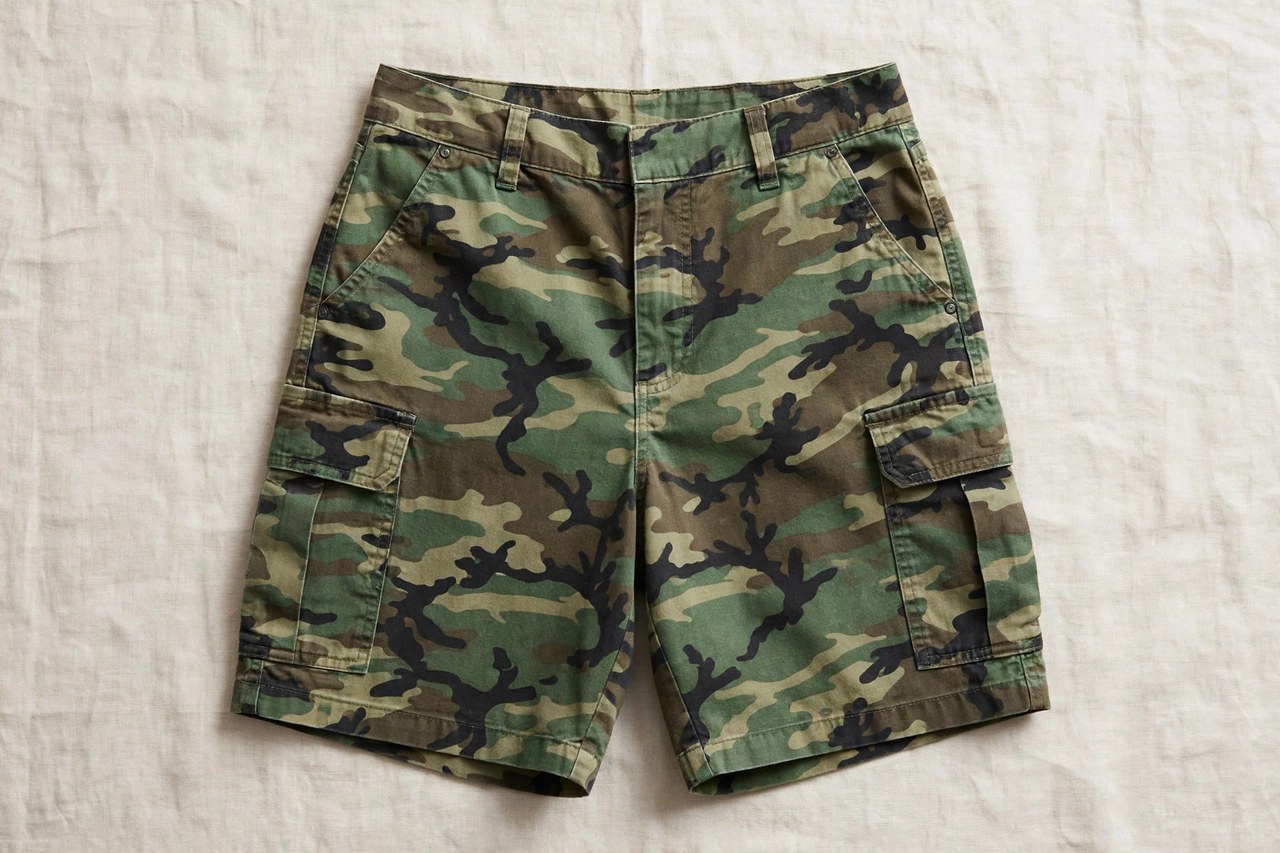
Women's camo shorts are summer's version of the cargo pant: cool, tough and full of useful pockets, in a garment that shrugs off dirt, grass stains and rough ground. They earn their keep on hikes, at campsites and lakes, during yard work and early-season field days, and in casual warm-weather outfits that want a little utility attitude. The category is wider than it first looks, running from military-style six-pocket cargo shorts built for work to quick-dry boardshorts for water, walking shorts for travel and soft knit shorts for downtime. Choosing well means matching three things to your plans: the inseam length, the pocket layout and the fabric.
Short Styles: Cargo, Board and Casual
Cargo shorts are the utility standard, with bellows thigh pockets that carry a phone, wallet, gloves or tools while keeping your hands free; they suit hiking, fishing, work and travel where pockets replace a bag. Boardshorts and swim-ready shorts use fast-drying synthetic fabric, a fixed or drawstring waist and fewer, flatter pockets; they move from trail to water without a change and dry before the drive home. Walking and Bermuda shorts run longer and cleaner, with slash pockets and a straighter leg that suits casual lunches and sightseeing as well as camp chores. Denim and twill casual shorts in camo keep the everyday jeans-short shape with five-pocket styling. Knit and lounge shorts in soft French terry or fleece are the downtime option for mornings at the cabin and evenings on the porch.
Inseams and Length
Inseam is measured along the inner leg from crotch to hem, and it decides both coverage and stride. Short shorts in the three-to-five-inch range maximize airflow and suit beach days, running around camp and anyone who prefers a leggy silhouette; they demand a fit check when sitting, since the leg opening can ride up. Mid-length shorts around five to seven inches are the everyday sweet spot for most warm-weather activity, balancing coverage and coolness. Bermuda and long shorts at nine to eleven inches reach toward the knee, giving thigh coverage that prevents chafing on long walks, keeps you comfortable on hot seats and rough surfaces, and suits settings where a longer short is expected. Field users often pick mid-to-long inseams because they protect the thigh from brush, sun and biting insects while still ventilating far better than pants.
Fabrics for Heat and Hard Use
Summer shorts live or die by their fabric. Cotton twill breathes and feels familiar but holds sweat and dries slowly on humid days. Cotton-polyester ripstop is the field favorite: lighter than pure cotton, resistant to tearing on snags, and quicker to dry. Nylon and polyester shorts are the water and travel choice, drying in minutes, packing small and resisting wrinkles; many add a durable water-repellent finish that sheds splashes and light rain. A touch of elastane in any of these fabrics transforms the fit, letting the waistband and thigh move through a full stride, a squat or a climb into a truck bed without binding. Mesh pocket linings drain water and cut weight, quick-dry waistbands prevent the clammy band that pure cotton develops by noon, and UPF-rated fabrics add sun protection for the thighs on open water and exposed trails. For work, look for bar-tacked pocket corners and a reinforced seat, the two places summer shorts wear first.
Fit: Waist, Rise and Leg Opening
Fit checks for shorts happen in motion. The waistband should sit securely at your chosen rise — mid-rise suits most activity, high-rise pairs well with tucked and cropped tops, and low-rise has largely given way to mid-rise in utility styles — without needing constant tugging. Drawstrings and adjustable waist tabs forgive fluctuations and let one pair serve with and without a belt. Sit down, climb a step and squat in the fitting room or at home: the back waistband should not dive, the front should not dig, and the leg opening should allow the thigh to move without pinching. Leg openings that are too wide can catch on brush and gear; too narrow and they ride up with every stride, so look for a hem that follows the thigh with a finger's width of ease. Curved or contoured waistbands, higher at the back, prevent the gap that plagues straight-cut shorts on curvier figures.
Summer and Field Use — Plus Care
In the field, camo shorts pair with boots and gaiters for early-season scouting and dove or warm-weather hunts where legal and practical, and the cargo pockets carry calls, shells where permitted, and essentials close. Anglers favor quick-dry styles with a pliers pocket and drainage; hikers choose ripstop with a gusset for stride; gardeners and camp crews pick the pair they can kneel in, stain and wash without a thought. Styling casual camo shorts is simple: a plain white, black or olive tee, a chambray shirt, or a tank and an open overshirt all let the shorts carry the outfit, finished with sandals, sneakers or light hikers depending on the day. Care mirrors the fabrics: wash inside out in cold water, skip softener on technical synthetics, and hang dry when you can, since shorts dry fast and dryer heat ages elastic and drawcord tips. Empty every pocket before washing — cargo shorts are famous for smuggling tissues, tags and small tools into the machine — and mend pocket-corner tears early. Stored folded in a drawer, a good pair will be ready every time the temperature climbs.
Related Women's Camo Guides
Photos

More to Explore on Apparel Search
Looking for Women's Clothing Stores?
This guide helps you choose women's camo shorts in the right inseam, fabric and fit for summer, field and everyday wear. To browse where to buy, visit our women's clothing store directory, where you can find retailers that carry them.