The Kit
Four Pieces Do Almost All the Work
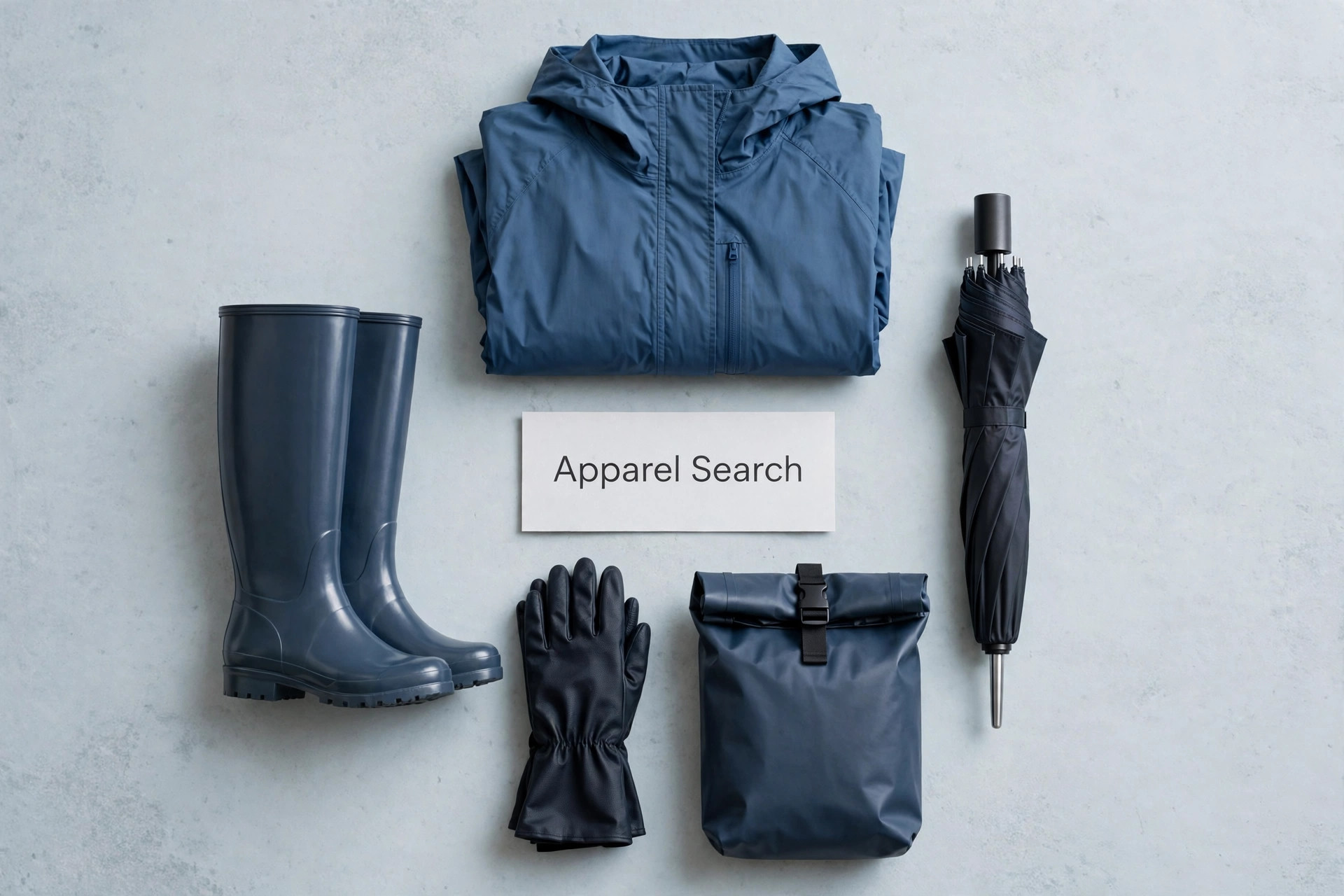
Rain gear is a small category with a big job. A waterproof coat, sealed boots, a dependable umbrella and a bag that sheds water cover nearly every wet day; the choices inside each category — trench or technical shell, ankle or tall boot, compact or full-size umbrella — are about your routes, not about fashion. This guide goes piece by piece.
Outfit assembly lives in the rainy day outfits guide; here the focus is the equipment itself — construction, buying checks, care and storage — drawing on the deeper women’s rainwear guide where a topic needs a full page of its own.
Raincoats
Raincoat Types, From Trench to Technical Shell
The trench is the polished all-rounder: belted, knee-length, presentable anywhere, waterproof when the fabric and seams are built for weather — see the women’s trench coats guide. The mackintosh-style rubberised coat is the traditional fully waterproof option, heavier and less breathable. The technical shell — membrane fabric, sealed seams, adjustable hood — is the lightest and driest for long exposure, and the least formal. Packable ponchos and cape styles trade structure for total coverage and pack-away convenience. The women’s raincoats guide compares fabrics, linings and fit checks in detail; whichever type you choose, test the closure, the hood and the length over your bulkiest layer before you commit.
Rain Boots
Boots: Height Follows Exposure
Rain boots divide by height. Ankle and Chelsea-style rain boots handle city pavements and pair with trousers. Mid-calf boots are the versatile middle for splashes and wet grass. Tall boots are for standing water, mud and heavy downpours with skirts. Construction checks matter more than looks: a lugged sole for grip, sealed or vulcanised construction, and calf room for the socks you actually wear. The women’s rain boots guide covers rubber types, wide-calf fits and the Wellington’s history.
Umbrellas & Bags
The Two Accessories That Earn Their Keep
An umbrella is a canopy plus a handle problem: canopy diameter decides coverage — compacts shelter one person in light rain, full-size canopies handle a bag as well — and a vented, flexible frame survives wind that destroys rigid ones. The women’s umbrellas guide compares sizes and windproofing. For bags, the rule is material honesty: coated canvas, synthetics and rubberised finishes shed water; untreated leather and cotton canvas absorb it. A fully closing zip, a base that can stand in a puddle without wicking, and a sealed inner pouch for electronics complete a genuinely waterproof carry.
The Checklist
Rain Gear Essentials Checklist
- Waterproof coat that closes fully and covers the hips
- Hood that turns with your head — or a rain hat
- Rain boots matched to your usual exposure
- Compact umbrella for daily carry
- Full-size or vented umbrella for heavy weather
- Waterproof or coated everyday bag
- Sealed pouch for phone and electronics
- Rain pants for cycling or long walks
- Spare socks kept at work or in the car
- Microfibre cloth for glasses and shoes
- Reproofing spray or wash-in treatment
- Boot trees or paper for drying tall boots
Tick the first four and you own a working kit; the rest adapt it to cycling, commuting and travel. The women’s rain pants guide covers the over-trouser option for riders and dog walkers.
Care & Storage
Keep It Waterproof for Years
Rain gear fails from neglect more than from wear. Wash coats as the label directs — usually cool and gentle, without fabric softener, which coats fibres and kills repellency — and revive the finish with low tumble heat before reaching for a reproofing treatment. Rinse mud from boots before it dries, dry them away from direct heat, and store them upright so shafts keep their shape. Umbrellas dry open, then store loosely closed. Everything goes away clean and completely dry, hung or loosely folded somewhere cool and dark; stored that way, good rain gear is a decade-long purchase, not a seasonal one.
Questions
Common Questions
What is the difference between waterproof and water-resistant rain gear?
Water-resistant gear has a finish that beads light rain for a short time, then soaks through. Waterproof gear uses a membrane, coating or rubber construction — usually with sealed seams — that keeps rain out through sustained exposure. For commutes and long walks, waterproof is the honest standard; water-resistant is a light-shower category.
How should rain gear be stored between seasons?
Clean and completely dry, hung or loosely folded in a cool, dark place. Boots stand upright so shafts do not crease, coats hang unbuttoned so linings air, and umbrellas are stored dry and loosely closed — storing a wet umbrella shut breeds mildew and rust. Never store rain gear in a sealed plastic bag while damp.
How often does a raincoat need reproofing?
When water stops beading on the surface and starts soaking in — typically after a season of regular wear or several washes. Many finishes revive with gentle washing and low tumble heat; when heat no longer works, a wash-in or spray-on reproofing treatment restores the repellent layer.
More to Explore
Search Apparel Search