The System
Rain Dressing Is a System, Not a Coat
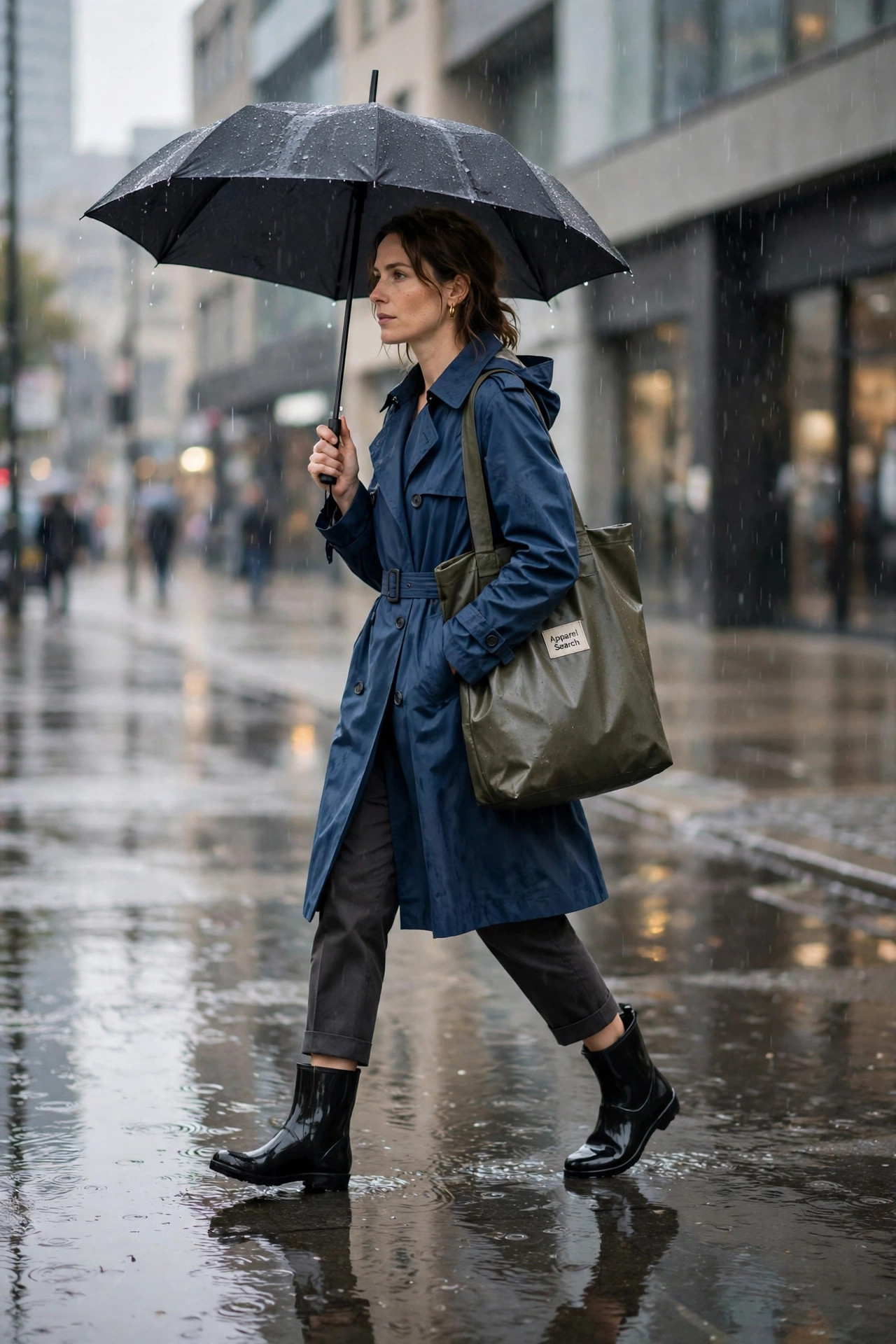
A rainy day outfit fails one piece at a time: the coat holds, but the hem soaks; the boots hold, but the bag leaks onto a laptop. The fix is to dress the whole route — waterproof layers on top, hems lifted clear of wet ground, footwear that grips and seals, and a plan for hair and bags — so no single weak point ruins the day.
Start from the forecast, not the wardrobe. How long you will actually be outside matters more than how hard it rains: ten exposed minutes call for coverage, an hour of walking calls for a sealed system. The guides in this section divide the work — the women’s raincoats guide covers the coat itself, the women’s rain boots guide covers footwear, and this page covers how the pieces combine into an outfit.
Search Apparel Search
Scenario — The Commute
Getting There Dry
The commute is the harshest scenario because it combines distance, crowds and a deadline. Wear the full system: hooded waterproof coat, cropped trousers or a midi length, and rain boots or rubber-soled ankle boots. Keep the outfit underneath simple and crease-resistant, because you will arrive wearing a coat over it in a warm train or bus. A compact umbrella handles the platform; the hood handles the windy street where umbrellas turn inside out — the women’s umbrellas guide explains windproof frames and sizes.
Waterproof Layers
Build the Layers in the Right Order
The outer layer must be waterproof, not merely shower-resistant, if you will be out longer than a few minutes. Water-resistant finishes bead light rain and then give up; sealed seams and a membrane or coated fabric keep working. Length is leverage: a coat that covers the hips keeps trouser tops and skirt waistbands dry, and a hood removes the umbrella problem in wind. The women’s trench coats guide covers the classic belted option, which doubles as rainwear when the fabric is treated and the seams are finished for weather.
Underneath, choose layers that forgive a little damp. Knits and synthetics recover; crisp cotton shirting shows every splash and creases under a coat. In cold rain add a thin insulating layer that still works when humid — fleece or a light quilted liner — rather than a bulky sweater that traps moisture against the coat lining.
Hems & Silhouette
Keep Every Hem Off the Ground
Wet hems are the signature failure of rainy dressing. Water wicks upward through fabric far beyond the splash line, so a trouser hem that brushes the pavement can be damp to the knee by the end of a block. Cropped and ankle lengths, tapered legs, midi skirts and dresses, and tucked or cuffed hems all solve the same problem. Wide-leg styles are the hardest to protect — if you wear them, pair them with a heeled rain boot that lifts the hem clear, and accept they are a light-rain choice only.
Scenario — Casual Day
Weekend Rain, Handled Lightly
A casual rainy day allows shortcuts the commute does not. A rain jacket over jeans with the hems cuffed, rubber ankle boots, and a crossbody bag worn under the coat covers errands and school runs comfortably. This is also the day for colour: rain gear is one of the few categories where a bright coat or printed boot reads as cheerful rather than loud, and it improves your visibility to drivers on grey days.
Footwear & Grip
Soles That Seal and Grip
Wet pavement punishes smooth soles. Look for lugged or patterned rubber outsoles, sealed seams, and a shaft or upper that meets your hem with no gap of bare leg for rain to run down. Height follows exposure: ankle boots for city splashes, mid-calf and tall boots for standing water and mud. Keep a rotation if you can — a boot worn two soaked days in a row needs a full day to dry inside, and alternating pairs extends the life of both.
Hair & Bags
The Two Details Everyone Forgets
Hair survives rain best when it is not fighting it: a low bun, braid or ponytail under a hood, a silk-lined hat, or styles that look intentional when slightly damp. Plan the finish at your destination — five minutes with a dryer or a smoothing product beats an hour of home styling undone by one gust. Bags need the same honesty: leather and canvas soak and stain, so switch to a coated, synthetic or rubberised bag on wet days, keep electronics in a sealed pouch inside it, and wear a crossbody under your coat when the rain is heavy.
Scenario — Evening
Evening Rain Without the Compromise
For an evening out, protect the outfit rather than replacing it: a long waterproof coat worn open over a dress, heeled rain boots or polished rubber ankle boots, and a small coated clutch instead of a delicate evening bag. Arrive, check the coat, and the outfit underneath never met the weather. If the venue has no coat check, a packable rain layer over your good coat is the unfashionable but effective answer.
By Temperature
Cold Rain and Warm Rain Are Different Problems
Cold rain is an insulation problem: add a liner or mid-layer, choose taller boots, and protect hands, because wet plus cold drains heat quickly. Warm rain is a ventilation problem: unlined coats, breathable membranes, sandals that tolerate water or short boots, and fabrics that dry fast matter more than coverage alone. The what to wear by temperature hub walks through the layering maths for each range; the rain-specific rule is to adjust the layer under the waterproof shell, never to drop the shell and hope.
Questions
Common Questions
What is the most important piece of a rainy day outfit?
The outer layer. A genuinely waterproof coat that covers your hips and closes fully does more than any other single piece, because everything underneath stays dry and wearable. After the coat, sealed footwear matters most — wet shoes are the hardest part of an outfit to recover from once you are out.
How do I keep long hems dry in the rain?
Shorten the silhouette for the day: cropped or ankle-length trousers, midi skirts and dresses that clear puddle splash, and coats long enough to cover the top of the leg. If a longer hem is unavoidable, choose a fabric that does not wick — denim and cotton absorb water upward, while synthetics and coated fabrics shed it.
Can I wear normal shoes on a rainy day if the walk is short?
Only if the ground is merely damp. Leather soles, suede and canvas soak through quickly and leather can be permanently marked by standing water. For anything beyond a door-to-door dash, a rubber-soled shoe or a rain boot is the safer call, and a spare pair at your destination solves the rest of the day.