The Carry-All, Properly Understood
Two Handles, One Big Space, Endless Variations
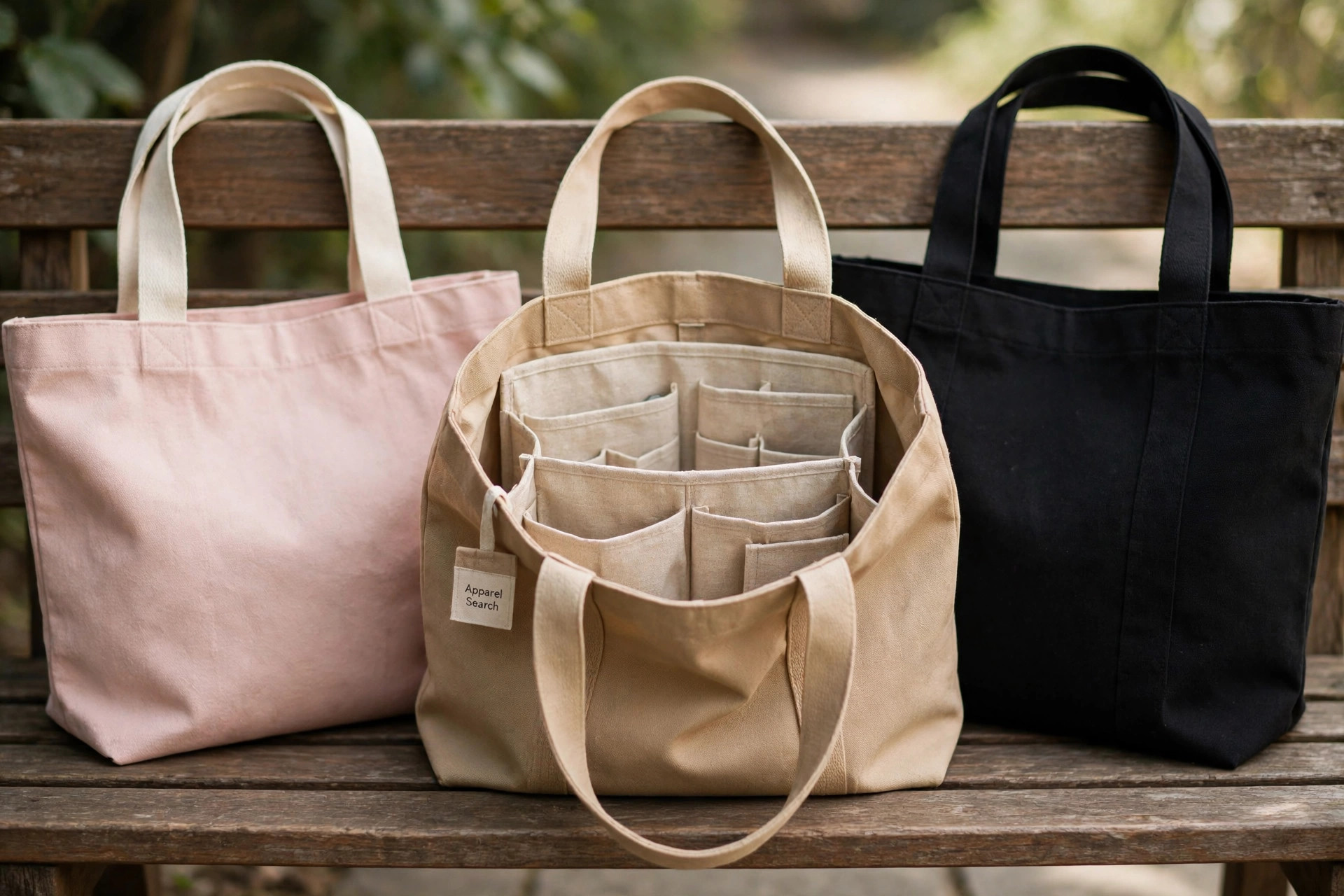
A tote is the least complicated bag ever designed: an open or closed sack with two handles. That simplicity is why choosing one takes thought — everything depends on how it closes, how big it really is, how the handles carry, and whether the inside is an organised space or a well.
If the tote’s main job is a computer, read the women’s laptop bags guide alongside it for the padding and fit tests a laptop demands.
Closure
Open Top vs Zip Top: Choose by Journey, Not Habit
An open-top tote is the fastest bag to use: things drop in and out without a pause, suiting shopping, market runs, the beach and any all-day, in-and-out carry. Its weaknesses are the mirror image — contents escape when the bag tips, rain walks in, and a crowd can reach what you cannot see. A zip-top tote fixes all three and turns the bag into something you can set down under a train seat or slide into an overhead locker without thinking twice. Magnetic snaps and tie closures sit between the two: better than nothing, no real defence against either. Commuting and travel argue for the zip; short, local carrying argues for open.
Sizes
Sizes and What Actually Fits
Tote sizes are quoted as width by height by depth, measured at the base — and the base is what matters, because many totes narrow or widen above it. Small totes (about 11–13 inches wide) are essentials bags; medium totes (13–15 inches) are the everyday default; large totes (15–17 inches) are the work-and-travel size. Run the inventory test below with your own daily load before deciding.
| Fits inside? | Small tote | Medium tote | Large tote |
|---|---|---|---|
| 13″ laptop | No | In a sleeve, snug | Yes |
| 15″ laptop | No | No | Yes, in a sleeve |
| 16″ laptop | No | No | Rarely — measure |
| Charger & cable | Pouch only | Yes, in a pouch | Yes |
| Water bottle | Small only | Yes | Yes |
| Document folder | No | Yes | Yes |
| Flat shoes | No | Yes | Yes, plus a cardigan |
Three Jobs
Work Totes, Everyday Totes and Travel Totes Are Different Bags
A work tote needs structure, a zip, a laptop’s worth of internal width and handles that survive a five-kilo daily load. An everyday tote can be softer and lighter — canvas or slouchy leather — because its load is a purse, a book, a bottle and whatever the day adds. A travel or personal-item tote is sized by a different ruler altogether: it must slide under an airline seat, so check height and depth against that space rather than litres, and prefer a zip, a trolley sleeve for a suitcase handle, and a shape that will not collapse in the footwell. One tote doing all three jobs usually ends up too formal for Saturday and too soft for Monday.
Handles
Handle Drop: the Number That Decides Comfort
The drop — from the top of the handle to the top of the bag — decides where a tote can be carried. Around 4–5 inches is hand carry only; 8–9 inches goes over the shoulder in summer clothes; 10–11 inches clears a winter coat, the test that matters for a year-round bag. Construction matters as much as length: rolled or padded handles stay comfortable under load, and reinforced attachment points — boxed stitching, rivets or tabs running down the bag’s body — keep a daily load from tearing the handles free.
Inside
Structure and Bag Organisers
A structured tote stands open on a desk, keeps its shape half-empty and protects flat things — folders, tablets, a sleeved laptop. An unstructured tote folds flat, weighs less and drapes against the body, but everything inside pools at the bottom. The popular compromise is a soft tote plus a removable bag organiser: a felt or fabric insert with a firm base and a ring of pockets that gives the bag a floor and its owner a filing system, and lifts out whole when the bag changes. If you use one, size it an inch smaller than the tote’s base so it drops in without fighting the walls.
Care
Looking After a Tote, by Material
Leather totes want a wipe with a soft cloth, conditioner a few times a year, and storage stuffed loosely out of sunlight; the women’s leather bags guide covers grades and care in depth. Canvas can usually be spot-cleaned or hand-washed — check for leather trims first, since those cannot follow it into water. Nylon is the low-effort option: a damp cloth and mild soap handle most marks. Two habits extend any tote’s life: do not routinely overload it past what its handles were built for, and empty it at night so the base is not stressed into a permanent sag.
Questions
Common Questions
Should a tote bag have a zip top?
If the tote commutes, travels or carries a laptop, yes — a zip keeps contents in when the bag tips, keeps rain out and makes the bag harder to dip into in a crowd. An open top is fine for quick, local carrying where you want to drop things in and pull them out fast, such as shopping, the beach or a short errand run.
What size tote do I need for a laptop and a working day?
A large tote — roughly 15 to 17 inches wide at the base, with a depth of 5 inches or more — swallows a 13 or 15 inch laptop in a padded sleeve, a charger pouch, a bottle and a folder with room to close. Measure the laptop first and check it against the tote’s internal width; a tote that only just fits the machine fits nothing else.
Do bag organisers really help in a tote?
In an unstructured tote, yes — a felt or fabric organiser insert gives the bag a floor, walls and pockets, so keys, phone and pens stop migrating to the bottom, and it lifts out whole when you change bags. In an already structured tote with good pockets, an organiser mostly duplicates what the bag already does and adds weight.