Banyan
Fashion Definitions — fashion history and style definitions from Apparel Search
Search Apparel Search
At a Glance
Definition: A banyan was a loose, informal dressing gown worn by men at home from the late 17th century through the 18th century, worn over a shirt and breeches for study, writing, and receiving intimate visitors.
Category: Fashion Definitions
Word Origin
The name acknowledged the garment's debt to Asia: 'banyan' referred to Indian traders, and the earliest gowns were made from Indian cottons and Chinese silks brought to Europe by the East India trade.
The banyan was a loose, informal dressing gown that men wore at home from the late 17th century through the 18th century. Cut like a long robe with wide sleeves, it went over a shirt and breeches — or over a waistcoat in cooler weather — and served for mornings in the study, for receiving intimate visitors, and for the hours of reading, writing, and business a gentleman conducted from his own house. It was the most comfortable garment he owned and, paradoxically, one of the most prestigious. Through the eras of 1700–1750 fashion and 1750–1795 fashion, the banyan remained the standard dress of a man at ease under his own roof.
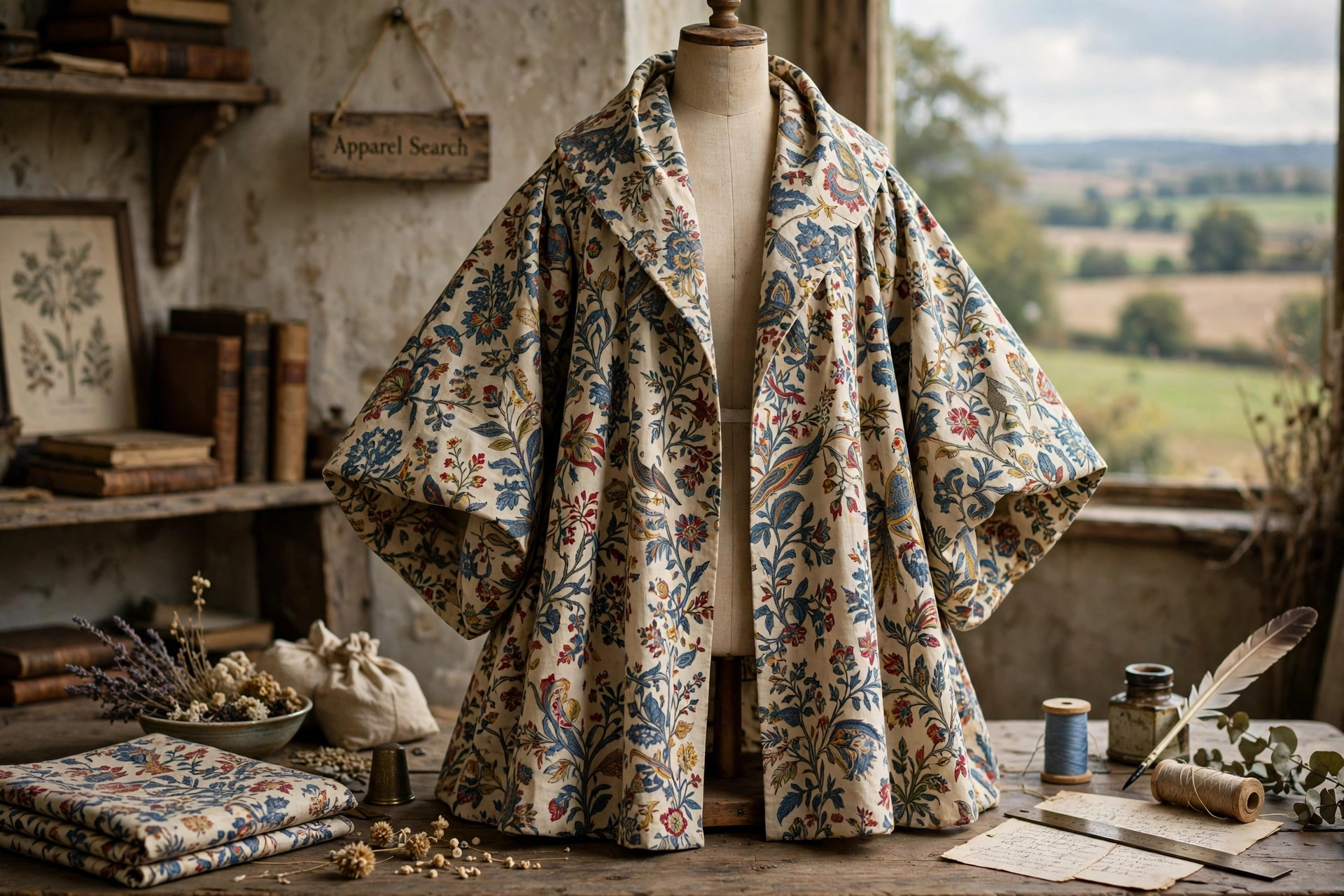
Influence of Asian Robes
European tailors modelled the banyan on the loose robes of Asia — the Indian angarkha, Persian and Turkish robes, and the Japanese kimono presented to Western merchants. The earliest banyans were T-shaped and kimono-like, wrapping at the front without buttons. Later examples took on European tailoring — fitted backs, set-in sleeves, and frogs or buttons — a hybrid of Eastern silhouette and Western cut that mirrored the period's fascination with imported goods, from tea to porcelain.
A banyan signalled intellect as much as leisure. Philosophers, writers, and scientists chose to be painted in banyans rather than in formal dress, presenting themselves as men of thought whose status came from the mind, and portraits of scholars in flowing gowns and soft caps became a visual shorthand for learning across the 18th century.
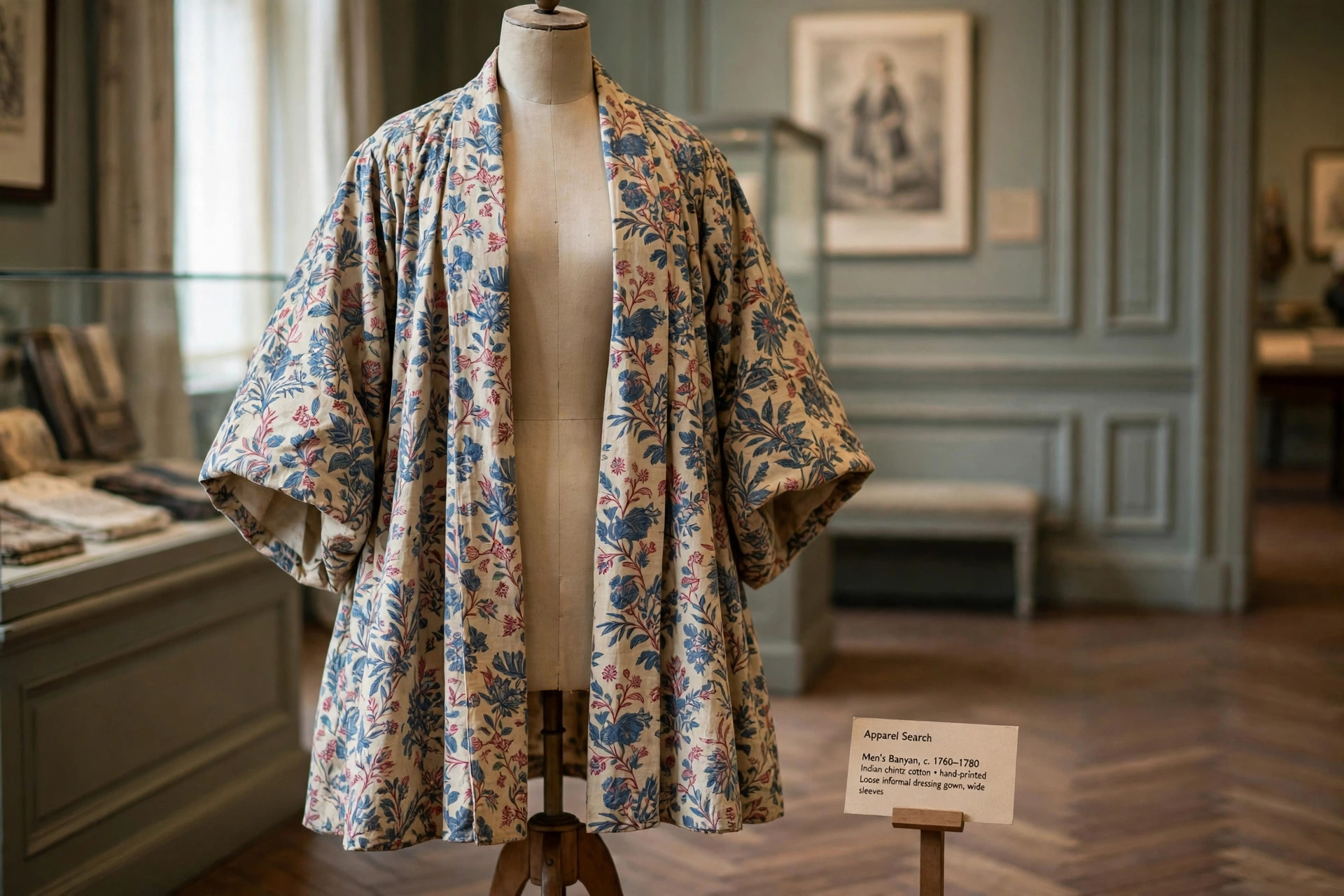
Materials and Construction
Summer banyans used Indian chintz and other painted or printed cottons, often lined with plain linen. Winter versions used wool, damask, brocade, or quilted silk, sometimes with a matching nightcap or soft cap worn instead of a wig. The gown was usually cut generously, with a shawl-like collar in later examples, deep pockets, and a sash or frogged closure.
It was emphatically not formal dress: its structured opposite was the justacorps, the fitted, skirted coat a man wore in public, and no gentleman would receive a formal caller in a banyan. By the later 18th century the banyan had become more tailored, and by the early 19th century it had evolved into the dressing gown and smoking jacket of the Victorian era — the loose robe survived, but the name 'banyan' fell away as the exotic associations that once gave it prestige became ordinary.
Legacy
The banyan established a lasting idea in menswear: that undress at home could still be considered, beautiful dress, made from fine cloth and worthy of a portrait. The modern dressing gown, robe, and lounge jacket all descend from it, and surviving chintz banyans remain among the best evidence of how the global trade in textiles reshaped what Europeans wore in private life.
Common Questions
What is a banyan?
A banyan was a loose, informal dressing gown worn by men at home in the late 17th and 18th centuries, worn over a shirt and breeches for studying, writing, and receiving intimate visitors.
Where did the banyan get its name and shape?
The name referred to Indian traders, and the shape was influenced by Asian robes, including Indian garments and the Japanese kimono. Early banyans were often made from Indian chintz and Chinese silk.
Was a banyan formal dress?
No. A banyan was undress, suitable only for home and informal company. For formal public wear a man wore a fitted coat such as the justacorps instead.