Jean Patou
Fashion Definitions — fashion designer profiles from Apparel Search
Search Apparel Search
At a Glance
Definition: Jean Patou (1880–1936) was a French fashion designer who opened his couture house in 1919, did away with the flapper look by lengthening the skirt and returning to a natural waistline, and is credited with introducing sportswear for women, inventing knitted swimwear and the tennis skirt, and first popularising the cardigan.
Pronunciation: zhahn pah-TOO
Category: Fashion Definitions
Jean Patou opened his couture house in 1919 and built his reputation on a reversal: where the flapper silhouette was short, straight and waistless, he lengthened the skirt and brought back the natural waistline. The same instinct — towards the natural and the comfortable — produced women's sportswear, knitted swimwear and the tennis skirt, and when the Depression ended the market for his clothes, his perfumes, above all Joy, carried the house through.
The Designer Who Ended the Flapper Look
Patou was born in Normandy, France, in 1880 and opened his couture house in 1919. He is known as the designer who did away with the flapper look, by lengthening the skirt and returning to a natural waistline. Both changes work against the flapper silhouette in the same direction: a longer skirt restores length, and a natural waistline restores the body's own shape as the garment's structure. He is called a revolutionary for it — a revolution that consisted of returning to something older, at the moment the prevailing style had exhausted itself. His clothes were marketed mostly to wealthy American women, the clientele with the leisure and the sporting life his direction served.
Sportswear, Swimwear and the Cardigan
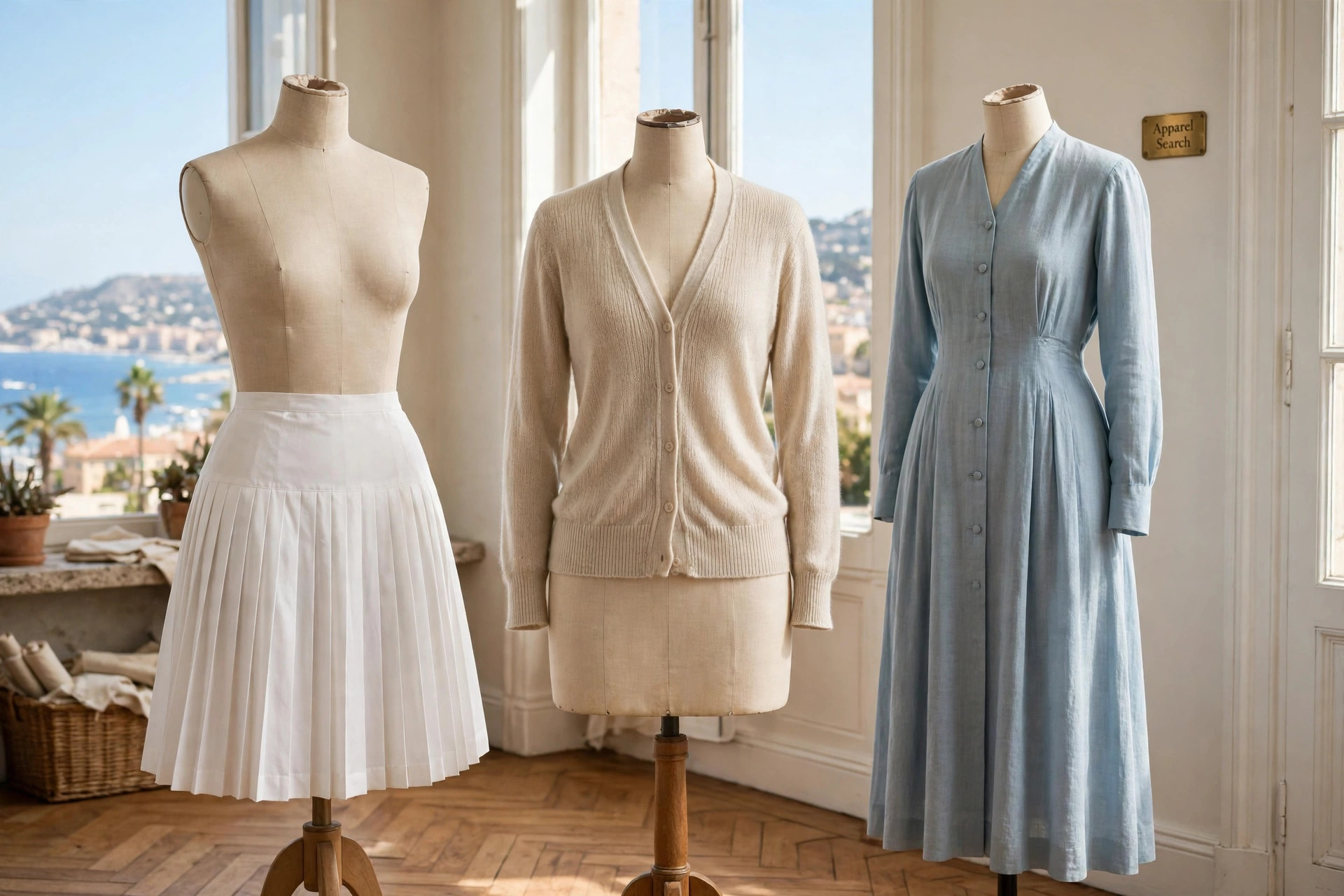
Patou is credited with introducing sportswear for women, and is considered the inventor of the knitted swimwear and the tennis skirt, and was the first designer to popularise the cardigan. Together these are garments for activity rather than display: clothes to play tennis in, to swim in, and a knitted layer to put on and take off. Knitted swimwear matters as an invention because knitting stretches, which is what a swimsuit needs and woven cloth cannot give; the tennis skirt is a purpose-designed garment for a woman playing a sport. The cardigan is a different kind of credit — the first to popularise it rather than invent it, the distinction between originating a garment and making it fashionable.
Joy: The Perfume That Carried the House
When the stock market crashed, the market for luxury fashion crashed with it, and the House of Patou survived through its perfumes. The best known is Joy, a floral scent created by Henri Almras for Patou in 1935, at the height of the Depression, for Patou's former clients who could no longer afford his Parisian haute couture clothes; another Patou perfume is Sublime, which combines floral and musky tones. Joy was positioned at the very top rather than as a cheap substitute: on its introduction American socialite Elsa Maxwell called it the world's most expensive perfume, it remained two to three times the cost of most department store scents, and each ounce is purported to contain the essence of ten thousand flowers, including Bulgarian roses and Grasse jasmine as well as Michelia champaca alba. It became the world's second best-selling scent, after Chanel No. 5. Patou died in 1936; his sister and her husband, the Barbas, continued the house. Jean Kerlo, chief perfumer for over 30 years and later director of the Perfume Museum of Versailles, and Karl Lagerfeld are among the designers associated with the house, and the Patou perfume licence later passed to Proctor & Gamble Prestige, remaining faithful to the tradition of extravagant fragrances made with extravagant ingredients.
Common Questions
How did Jean Patou change the fashionable silhouette?
Patou did away with the flapper look by lengthening the skirt and returning to a natural waistline, moving fashion towards the natural and comfortable.
What garments is Jean Patou credited with introducing?
Patou is credited with introducing sportswear for women, is considered the inventor of knitted swimwear and the tennis skirt, and was the first designer to popularise the cardigan.
What is Jean Patou's best-known perfume?
His best-known perfume is Joy, a floral scent created by Henri Almras in 1935 and described on its introduction as the world's most expensive perfume. It became the world's second best-selling scent, after Chanel No. 5.
How did the House of Patou survive the Depression?
When the stock market crashed, the market for luxury fashion crashed with it. The House of Patou survived through its perfumes, and Joy was created in 1935 for former clients who could no longer afford Patou's Parisian haute couture clothes.