British Fashion Designers
Fashion Definitions — fashion designers by country from Apparel Search
Search Apparel Search
At a Glance
Definition: British fashion designers are presented in this Apparel Search directory as the industry's great disruptors, defined by the friction between stately heritage and raw rebellion; the page names fifteen designers, from Thomas Burberry and Charles Frederick Worth to Vivienne Westwood and Alexander McQueen.
Category: Fashion Definitions
British fashion designers have long occupied a unique position as the industry's great disruptors, defined by a constant, high-tension friction between stately heritage and raw rebellion. That dual identity is anchored on one side by Savile Row, the global gold standard for bespoke tailoring, and on the other by the anarchic energy of the Punk movement. While Italian fashion is described as focusing on wearability and French fashion on artistry, British design is frequently intellectual and provocative — and this page gathers the British names the guide lists in one place.
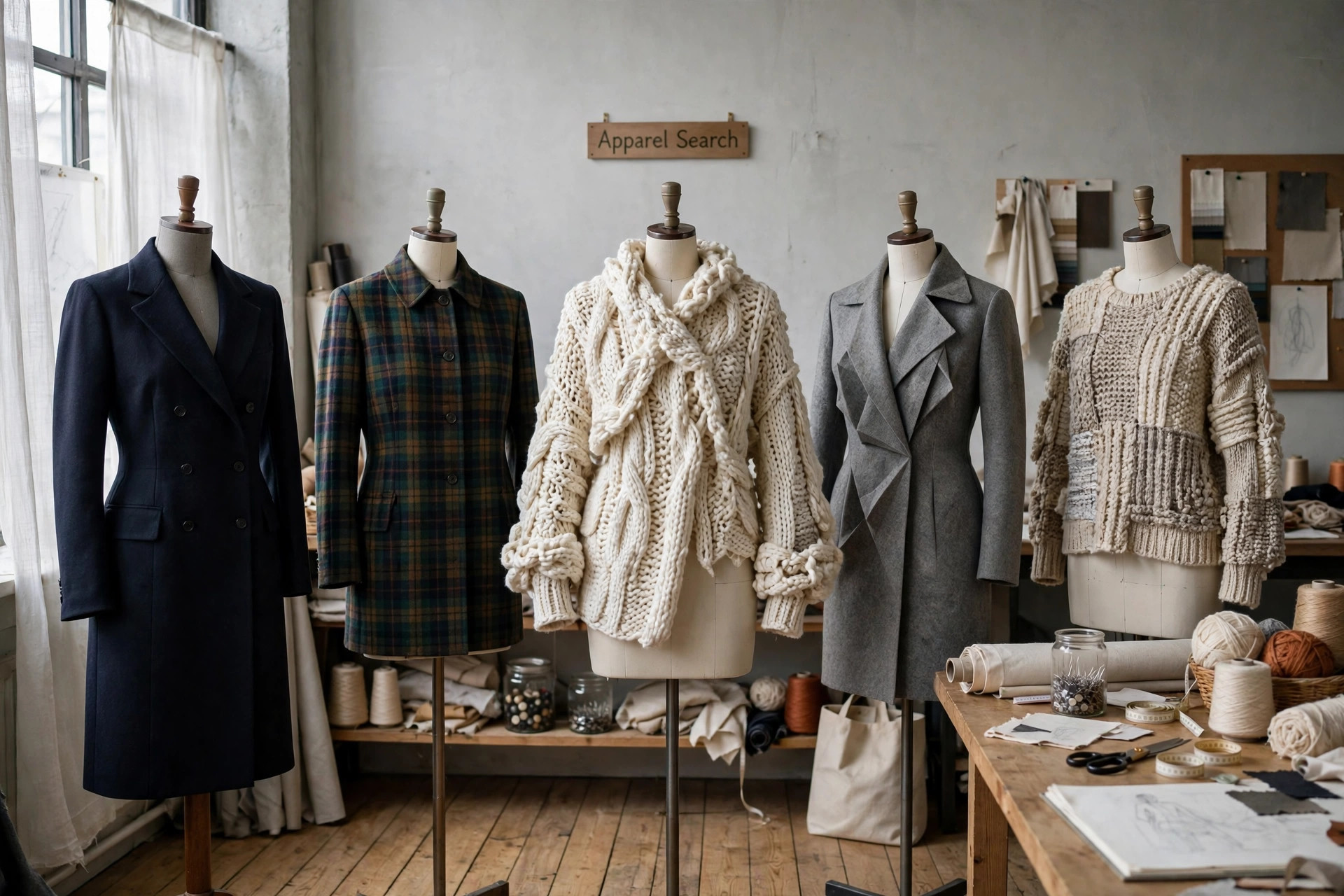
Heritage and Rebellion in One Wardrobe
The British position is built on a deliberate contradiction. Savile Row stands for bespoke tailoring at its most established — clothing made for one client, to a traditional standard described as the global gold standard. Punk stands for the opposite impulse: anarchic, do-it-yourself, and hostile to establishment polish. British design is presented as holding both at once, and the examples show how: tartan and corsetry are traditional motifs with long histories, while safety pins and distressed fabrics are DIY elements that damage or improvise rather than finish. Putting them in the same garment is the disruption in physical form. Vivienne Westwood and Alexander McQueen are the designers named for using the runway in this way, as a site for political and social commentary rather than only as a place to show clothes — blending traditional motifs like tartan and corsetry with DIY elements such as safety pins and distressed fabrics to challenge the status quo.
London as an Incubator
The second claim is institutional. London is described as home to Central Saint Martins, which has produced a disproportionate number of the creative directors currently leading major French and Italian luxury houses. If that is so, British influence travels: designers trained in London end up directing houses in Paris and Milan, so the British approach shapes collections that are not labelled British at all. The phrase used for that relationship is the research and development wing of global fashion — Britain generates the talent and the ideas, and other fashion capitals employ both at scale. Two continuing examples are given. Stella McCartney pioneered the integration of sustainability and animal rights into high luxury decades before it became an industry standard, while Jonathan Anderson has redefined gender-neutral silhouettes and sculptural accessories. One example is ethical, the other formal, which keeps the account from reducing British influence to a single theme.
Subculture, Street Style and Heritage Objects
British designers are also credited with changing how the world perceives the relationship between subculture and luxury. They were the first to legitimize street styles — from the Mod aesthetic to the Goth movement — by elevating them into high-fashion contexts. Moving styles that began outside luxury fashion into high fashion changes their status without removing their identity, and that translation of youth culture's energy into commercial power is presented as the reason the UK remains the epicentre of cool. The closing examples balance that street account with a heritage one: the technical reinvention of heritage outerwear like the Burberry trench coat, alongside the experimental knitwear of emerging London designers. Heritage is therefore not preserved untouched; it is reinvented technically, while new work continues beside it.
The British Designers Listed
The British list names fifteen designers. Eleven of them link to their Apparel Search definitions; the remaining four are named in the list without a definition link. The names appear below in the order the original list gives them:
Thomas Burberry, Hussein Chalayan, John Galliano, David Holah, Betty Jackson, Stevie Stuart, Vivienne Westwood, Charles Frederick Worth, Wale Adeyemi, Rhona Nampijja, Alexander McQueen, Giles Deacon, Julian Macdonald, Matthew Williamson, Stella McCartney.
The full international selection is gathered in the fashion designer guide, and the other national lists are gathered on the Fashion Designers by Country page.
Common Questions
What two traditions define British fashion design?
British design is defined by friction between stately heritage, anchored by Savile Row as the global gold standard for bespoke tailoring, and raw rebellion, anchored by the anarchic energy of the Punk movement.
How did Vivienne Westwood and Alexander McQueen use the runway?
They used the runway as a site for political and social commentary, blending traditional motifs like tartan and corsetry with DIY elements such as safety pins and distressed fabrics to challenge the status quo.
What did Stella McCartney pioneer in luxury fashion?
Stella McCartney pioneered the integration of sustainability and animal rights into high luxury decades before it became an industry standard.
Which designers does the British list name?
The list names fifteen designers: Thomas Burberry, Hussein Chalayan, John Galliano, David Holah, Betty Jackson, Stevie Stuart, Vivienne Westwood, Charles Frederick Worth, Wale Adeyemi, Rhona Nampijja, Alexander McQueen, Giles Deacon, Julian Macdonald, Matthew Williamson and Stella McCartney. Eleven link to their Apparel Search definitions.