Buyer's Assistant Job Description
The administrative support role that keeps a buying office accurate, ordered and on schedule
A buyer's assistant is the administrative support role inside a retail buying office: the person who raises and maintains purchase orders, logs and tracks samples, chases deliveries, files vendor information and keeps the buyer's working week organised. The role is sometimes confused with the assistant buyer, but they are different jobs with different pay and different expectations. An assistant buyer is a trainee merchant being developed to run a range; a buyer's assistant is an administrative professional whose craft is accuracy, systems and follow-through. Buying offices run on detail, and the buyer's assistant is where that detail lives. This page explains the duties honestly, the skills that make someone good at them, and the career routes the role opens.
More Buying Job Descriptions by Letter:
What a Buyer's Assistant Does
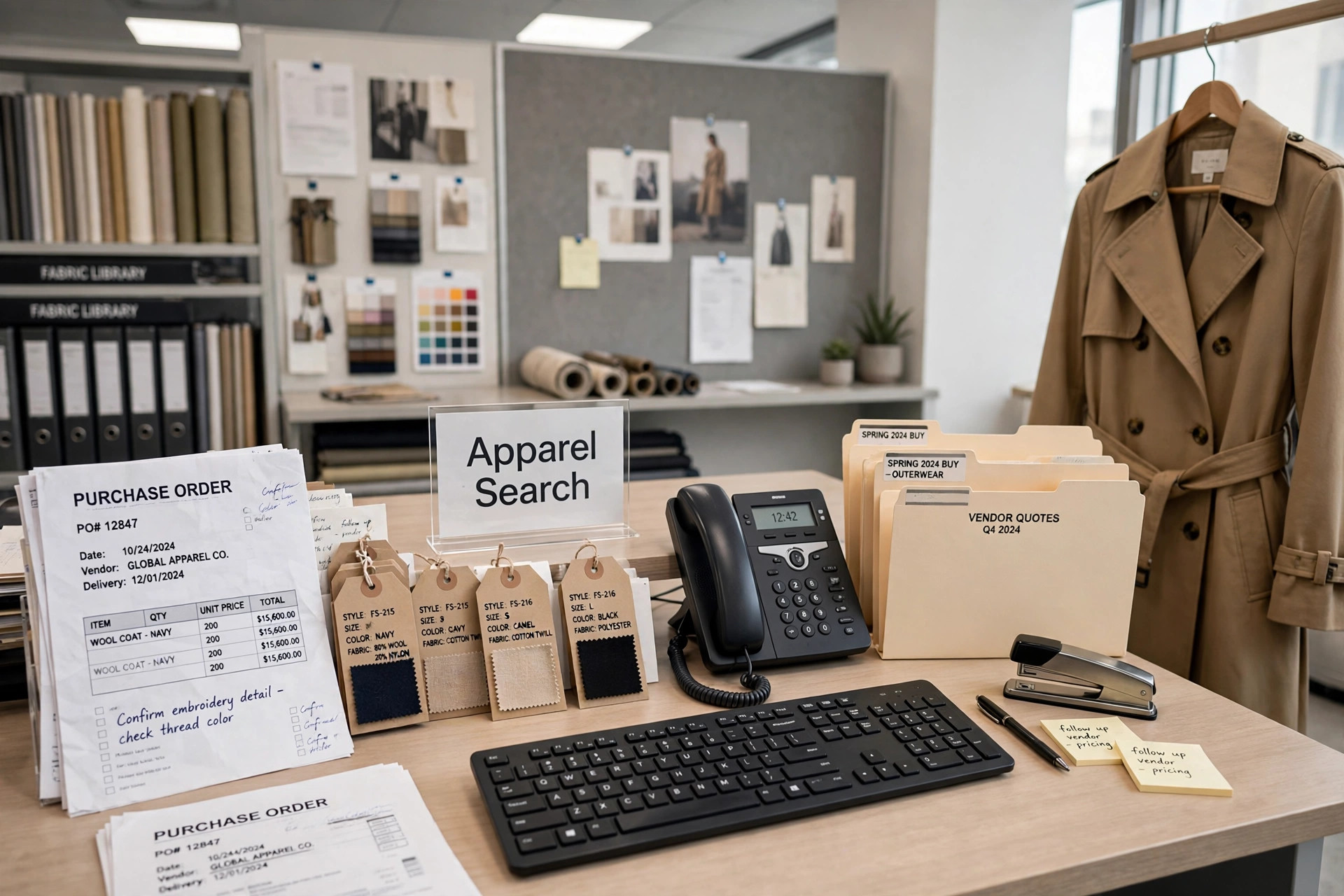
The core of the job is the purchase order lifecycle. The buyer's assistant creates orders from the buyer's confirmed details — style, colour, size breakdown, quantity, cost, selling price and delivery date — sends them to vendors, files their acknowledgements, and updates the order book whenever a cost, quantity or date changes. Because a single wrong digit can mean the wrong quantity manufactured or a delivery refused at the warehouse, this work is checked methodically, and experienced assistants develop systematic habits: confirming every change in writing, reconciling vendor confirmations against orders, and flagging discrepancies to the buyer immediately rather than filing them.
Around the orders sits the sample and delivery machinery of the department. The buyer's assistant receives, labels, photographs and logs samples, keeps the sample library findable, prepares garments for fit sessions and range reviews, and returns or files samples as directed. They track deliveries against promised dates, chase vendors and freight contacts when shipments slip, update delivery schedules the whole team relies on, arrange vendor appointments, handle the department's correspondence and invoices queries, and keep price lists, vendor files and range plans current.
Accuracy Is the Product: Why This Role Matters
Buying decisions are only as good as the records underneath them. A buyer deciding whether to repeat a style relies on order and delivery data the assistant maintains; a merchandiser planning intake relies on the same delivery schedule; a vendor manufacturing ten thousand units relies on the order the assistant sent. Errors compound quickly in this chain — a size ratio typed incorrectly is not caught until garments arrive — which is why buying offices value assistants who treat administration as a skilled discipline rather than a chore to rush.
The role also provides the department's continuity. Buyers travel to vendors, trade shows and stores; the assistant is the person in the office who knows where every sample is, what every vendor confirmed, and which delivery is at risk. Colleagues in merchandising, logistics and accounts deal with the assistant daily, so the role builds a working map of the whole retail business that few other entry-level jobs provide.
Skills and Abilities the Role Requires
The essential skills are administrative and personal rather than mercantile. Fast, accurate data entry and confident use of spreadsheets and order systems come first; the assistant handles figures all day and mistakes are expensive. Organisation follows: samples, paperwork, appointments and deadlines compete constantly, and the assistant who keeps a reliable system — and can find anything in it within a minute — becomes indispensable. Written communication must be precise, because order confirmations and delivery chases are legal-adjacent documents, not casual messages.
Employers also look for discretion, reliability and a genuine interest in the product. The assistant sees costs, margins and future ranges before they are public within the business, and is trusted accordingly. An interest in fashion helps the work make sense — knowing why a sample matters speeds up handling it correctly — but the hiring emphasis for this role is on demonstrated administrative competence: prior office, retail administration or data-handling experience counts for more than fashion enthusiasm alone.
Qualifications, Training and Career Path
There is no degree requirement for a buyer's assistant post. Employers typically ask for good general education with numeracy, proven computer and spreadsheet skills, and office or retail experience that demonstrates accuracy under volume. Fashion-related study can help an application stand out and helps the assistant understand the department, but it does not substitute for administrative evidence. Training is largely on the job: the employer's order and stock systems, the department's procedures, and the vendor base are learned in the first seasons.
The role is a recognised doorway into buying offices. A buyer's assistant who shows analytical ability and product judgement can apply for assistant buyer posts — the trainee merchant role — with the real advantage of already knowing the systems, vendors and department from inside. Others build careers in buying administration itself, becoming senior assistants or buying office coordinators supporting several buyers, or move into merchandising administration, allocation or supply-chain coordination, where the same order and delivery expertise is directly transferable.
Common Questions
What is the difference between a buyer's assistant and an assistant buyer?
A buyer's assistant is an administrative support role: orders, samples, deliveries and office organisation. An assistant buyer is a junior merchant in training, doing sales analysis and range planning toward becoming a buyer. They are separate posts with different duties and pay.
Do buyer's assistants need a fashion degree?
No. Employers prioritise accuracy, spreadsheet and systems skills, and office or retail administration experience. Fashion study can support an application, but administrative competence is what the role is hired for.
Can a buyer's assistant become a buyer?
It is a common first step into a buying office. Assistants who develop analytical skills and product judgement can move into assistant buyer roles, often within the same department whose systems and vendors they already know.