Clothing Buyer Job Description
Selecting the apparel ranges a store sells — assortment, price, quantity and timing
A clothing buyer decides which apparel a retailer will offer: which categories and styles to carry, in what quantities, at what prices, and arriving on which dates. It is the central commercial role in fashion retail, and the one most directly responsible for whether a season sells through at full price or ends in clearance. Buyers work months ahead of the customer, committing money to garments that have not been made yet, on the evidence of last season's sales, current trends and their own judgement of what their customer will want. This page sets out the clothing buyer's duties in full, the skills and qualifications the role requires, and the career structure it sits within.
More Buying Job Descriptions by Letter:
What a Clothing Buyer Does
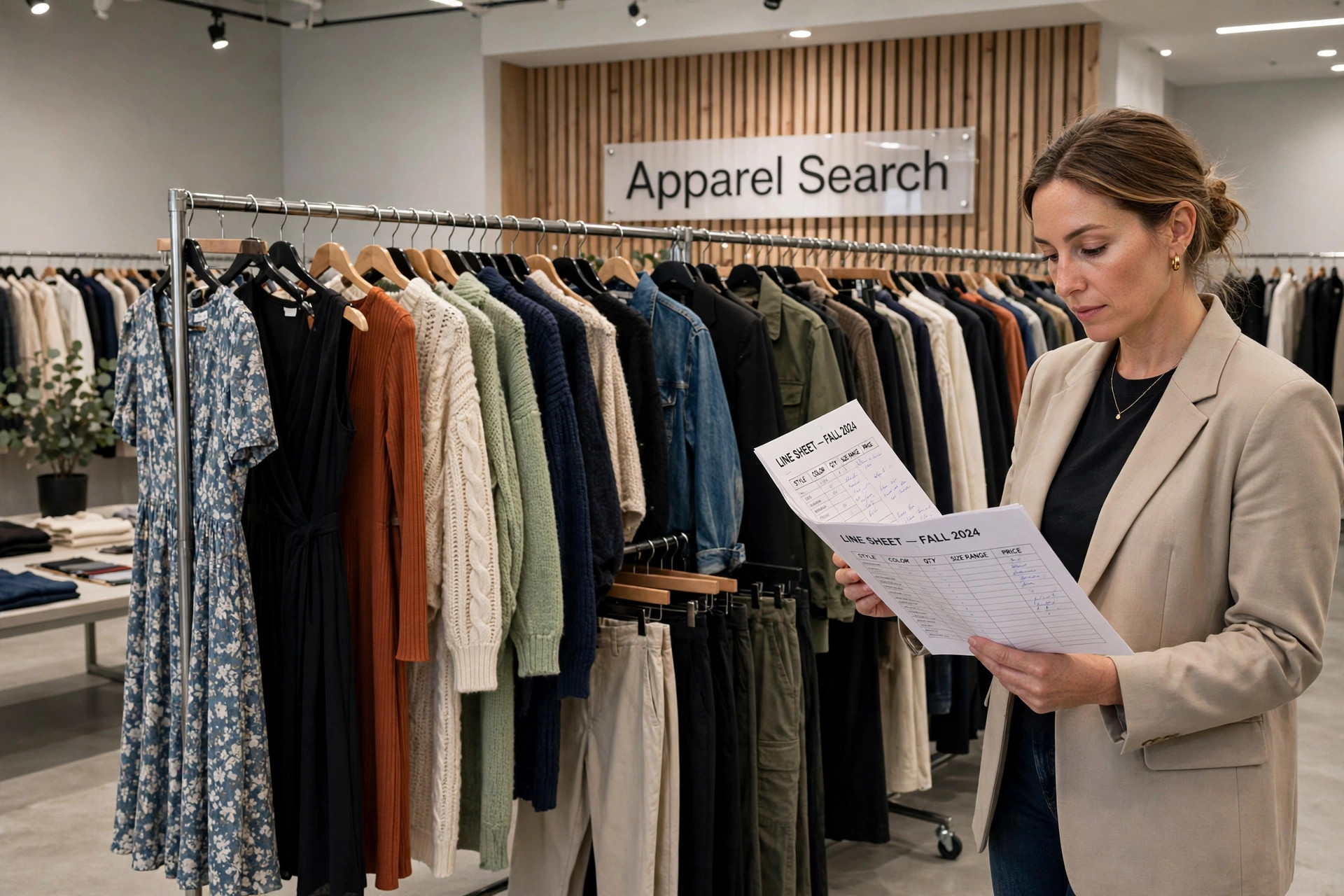
The buying cycle begins with analysis and planning. The buyer reviews the previous season style by style — what sold, at what rate, in which sizes and colours, and what had to be marked down — and studies competitors, trend information and the store's own customer before drafting a range plan: how the department's budget will be split across categories, price points and delivery phases. Only then do vendor appointments begin, where the buyer edits supplier ranges and own-label developments down to an assortment that fits the plan, the customer and the floor space available.
Selection is followed by the commercial work that makes the range real. The buyer negotiates costs, terms and delivery dates, agrees size ratios and colour depth, and places orders within an open-to-buy budget agreed with merchandising colleagues. Samples are fitted and approved, production is monitored against a critical path, and deliveries are chased so stock arrives for its planned selling window. Once selling starts, buying continues in a different mode: tracking performance weekly, repeating winners while suppliers can still deliver, transferring or promoting slow lines, and timing markdowns to clear seasonal stock at the best recoverable margin.
Assortment Judgement: The Skill That Defines the Job
A clothing buyer's defining ability is assortment judgement — building a set of garments that works as a whole. Individual good styles do not make a range: the buyer must balance fashion pieces against proven core lines, opening price points against premium ones, and depth in likely winners against breadth for customer choice, while keeping the whole offer recognisably aimed at one customer. Too safe, and the department looks stale and loses fashion credibility; too brave, and it stocks garments its customer never came to buy. Getting that balance right, season after season, is what experienced buyers are paid for.
That judgement is exercised with numbers, not instead of them. Margin structures, sell-through rates, stock turn and size-curve data all shape what a good buyer selects, and the strongest buyers move fluently between a sales report and a garment rail — using the report to decide where to look harder, and the garment to decide what the report cannot tell them about fabric, fit and quality. Vendor knowledge completes the picture: knowing which supplier executes a difficult fabric well, which one delivers late, and which one will support a fast repeat is commercial intelligence built over years.
Skills and Abilities the Role Requires
Numeracy and negotiation anchor the role. The buyer works constantly with margins, percentages, budgets and stock cover, and negotiates prices and terms with vendors whose interests differ from the store's; both must be handled precisely and without damaging the relationships the next season depends on. Analytical thinking matters just as much — reading why a style sold, not merely that it sold — because next season's money follows the explanation, not the headline figure.
Product knowledge is the other half of the job: fabric behaviour, garment construction, fit and sizing, and how quality shows in a sample. Communication and organisation run throughout, since a buyer coordinates designers and product developers, merchandisers, allocators, store teams and dozens of vendors at once, all against fixed season deadlines. Resilience is a genuine requirement: ranges are judged publicly by their results, and every buyer owns some failures each season.
Qualifications, Training and Career Path
There is no single mandatory qualification, but most clothing buyers reach the role through the buying ladder: a fashion buying, fashion business or merchandising degree or diploma — ideally with a placement year — followed by buyer's assistant and assistant buyer posts where range planning, costing and trading are learned on live departments. Employers promoting to buyer look for a record of sound assistant-level judgement: accurate analysis, well-run categories, and evidence that the candidate's product opinions have been right often enough to trust with a budget.
A buyer who performs takes on larger or more fashion-forward departments as a senior buyer, and can progress to divisional merchandise manager, responsible for several buyers and departments, and ultimately to general merchandise manager or buying director level. The skills also transfer into wholesale and brand-side roles — sales and product management for labels selling to retailers — because a person who has sat on the buying side of the table understands exactly how ranges are chosen.
Buying Agent, Clothing Buyer or Purchasing Agent?
Three titles in this corner of the trade are often confused. A clothing buyer — this page — is the in-house retail role that selects the ranges a store sells. A Buying Agent is an independent intermediary who sources overseas suppliers for clients, while a Purchasing Agent procures the materials, machinery and services a business itself needs.
Common Questions
What does a clothing buyer actually buy?
Everything a store's apparel department sells: the buyer selects styles across categories, agrees quantities, size ratios, colours, costs and delivery dates with vendors, and manages the assortment in season through repeats, promotions and markdowns.
How far ahead do clothing buyers work?
Typically two to four seasons are in progress at once at different stages: one selling, one in production or delivery, and one being planned or selected. Lead times vary by product and sourcing country, but buying decisions are usually made many months before garments reach stores.
Is clothing buying the same role in every retailer?
The commercial core is the same, but emphasis differs: fashion-led retailers weight trend judgement more heavily, value retailers weight price negotiation and volume, and own-label businesses add product development work with designers and factories.
More to Explore
- Fashion Schools and Education
- Fashion Careers
- Fashion Industry Buyers Guide
- Apparel Links
- Runway Shows
- Fashion Week
- Fashion Magazines
- Fashion Designers
- Fashion Forecasting
- Color Trend Forecasting
- Clothing Merchandising
- Color Standards
- Fashion Freelancers
- Stylist Agencies
- Fashion Artists Guide
- Clothing Industry Portal