Men's Outerwear Buyer Job Description
Buying men's coats and technical jackets for customers who purchase rarely and expect years of service
A men's outerwear buyer serves the most deliberate purchaser in clothing retail. Many men buy a serious coat only every few years, research it like equipment, and expect it to perform through hundreds of wears — so this buyer's range is built on verified specifications, honest construction and fits that accommodate layering, rather than rapid novelty. Tailored wool overcoats for commuting sit beside expedition-grade parkas and featherweight rain shells, each justified by numbers a sceptical customer will read on the ticket. Below is how those ranges are specified, sized and traded.
More Buying Job Descriptions by Letter:
Two Wardrobes in One Department: Tailored and Technical
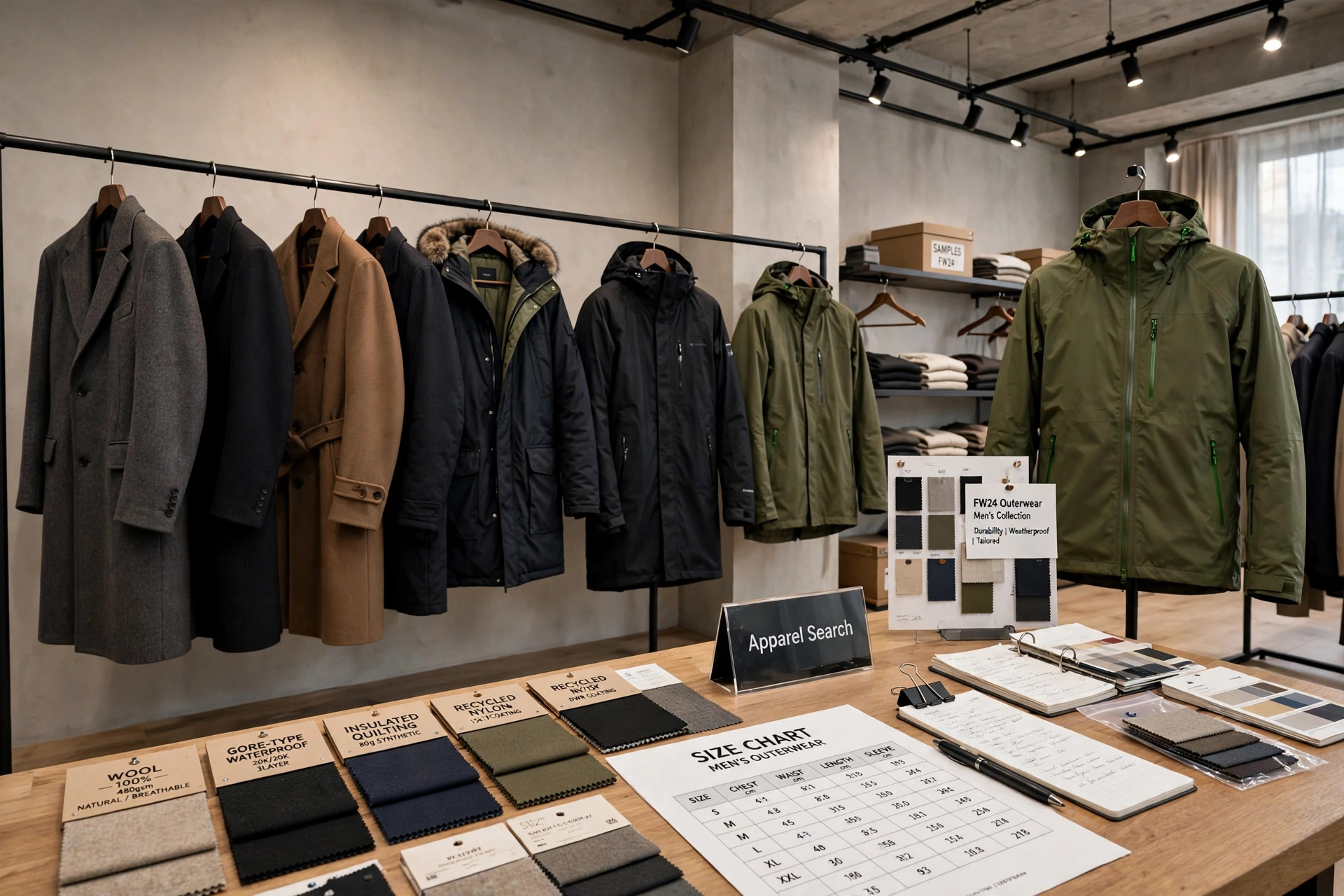
The men's range divides into coats worn over tailoring and jackets built for weather. On the tailored side the buyer selects single-breasted overcoats, raglan-sleeve styles and pea coats in wool and wool-cashmere cloth, judging lapel shape, shoulder construction and whether the block genuinely fits over a suit jacket without pulling. Colours stay disciplined — navy, charcoal, black, camel — because this customer is replacing a workhorse, not collecting statements.
The technical side is specified like gear. Waterproof jackets are compared on membrane ratings, taped-seam coverage and hood design that works with and without a helmet or hat; insulated pieces are weighed by fill type and warmth-to-weight ratio; softshells and fleece layers are bought as a system the customer can combine. The buyer keeps the two wardrobes merchandised as distinct propositions, since mixing performance claims into the tailored story confuses both audiences.
Specifications, Testing and Warranty Thinking
Numbers on a men's outerwear ticket invite verification, so the buyer demands evidence: hydrostatic head results for waterproof fabrics, down fill-power certificates, abrasion scores for shell cloth and zip-cycle test data for main closures. Samples are wear-trialled by staff through genuine winter weeks where possible, and failures — a collar that will not sit, pockets that swallow gloves awkwardly, a lining that twists — are fed back before bulk production rather than discovered through returns.
Repairability shapes selection too. Buttons that can be replaced, zips from makers with obtainable spares, and cuffs that a tailor can adjust all extend a coat's working life, and this buyer treats published repair services and spare-part availability as purchasing criteria. Warranty return rates per supplier are tracked season over season; a maker whose seams fail in year two loses depth in year three, however strong its brand pull.
Sizing for Layering, Height and Long Replacement Cycles
Fit work centres on what goes underneath. Chest measurements are graded to swallow knitwear and tailoring, sleeve lengths are checked against shirt cuffs, and the range carries short, regular and long fittings in core styles because height variation is where men's outerwear most often disappoints. Extended sizes at both ends of the curve receive protected depth — the tall customer who finds a coat that fits becomes notably loyal.
Replacement timing drives the stock plan. With purchase intervals measured in years, demand for a given style is steadier but less trend-elastic than in womenswear; the buyer therefore commits to fewer fashion experiments and deeper continuity, keeping proven blocks available across consecutive winters with fabric refreshes instead of silhouette churn. Clearance is used sparingly on tailored classics, which can anchor an early-season offer next year without damaging their price credibility.
Suppliers, Price Justification and the Considered Sale
Men's outerwear tickets run high, and each price must be explainable in materials and construction: cloth mill of origin, insulation grade, seam taping, hardware provenance. The buyer prepares that justification for sales staff in plain language, because the sale is typically assisted — a conversation comparing two or three finalists — and an assistant who can articulate why one parka costs twice another closes it. Training sessions with vendor technical staff are scheduled before peak season, not after.
Negotiation focuses on total value over the garment's life: fabric upgrades at agreed volumes, spare buttons and zip pulls supplied as standard, and marketing support for the education content — care guides, waterproofing explainers — that this customer reads. Long relationships with mills and makers matter; the buyer protects continuity styles by forecasting honestly with key suppliers a full season ahead.
Routes Into Men's Outerwear and Onward Steps
The typical background blends menswear buying with outdoor-trade literacy: assistant buying on men's tailoring or casualwear, selling in a technical outdoor retailer, or product-line work for a performance brand. Interviews probe specification knowledge hard — a candidate who cannot discuss membrane ratings, down versus synthetic trade-offs or graded fit blocks will struggle to convince a panel.
Career movement from this chair often goes toward head-of-menswear roles, where coat expertise signals commercial maturity, or deeper into the performance industry as a senior buyer for an outdoor specialist. The analytical habits the category enforces — evidence-led selection, warranty economics, patient stock commitment — are precisely what divisional roles are hired for.
Common Questions
What specifications does a men's outerwear buyer check?
Waterproof membrane ratings and seam taping, insulation type and fill power, shell abrasion resistance and zip durability, all evidenced by test reports. Samples are also wear-trialled, because pocket placement, collar behaviour and lining quality only reveal themselves in use.
Why do men's outerwear ranges change more slowly?
Because customers replace coats infrequently and buy proven styles. The buyer keeps successful fit blocks running across seasons with fabric updates, rather than forcing silhouette changes that a replacement-driven customer has not asked for.
How are men's coats sized differently from women's?
Grading allows for layers underneath — knitwear or a suit jacket — and core styles are offered in short, regular and long fittings, since height and arm length cause more fit failures in men's outerwear than chest size alone.